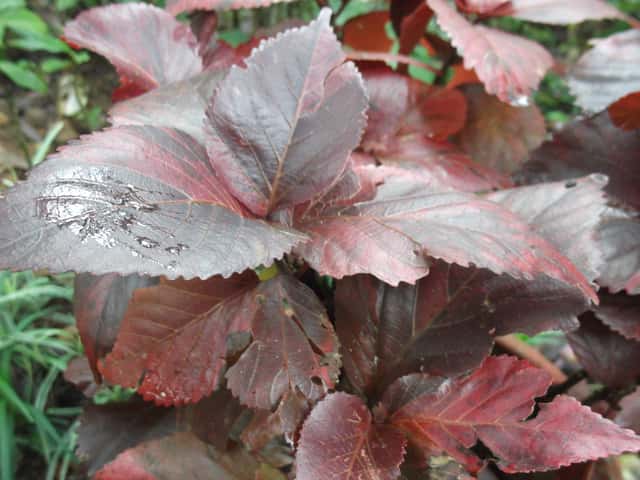
Euphorbiaceae
Jacob's Coat (Acalypha wilkesiana)
Acalypha wilkesiana
An easy-care tropical shrub that thrives in full sun to partial shade with consistently moist, well-drained soil. Water every 5 days, mist regularly for humidity, and fertilize monthly during the growing season. Prune in spring to maintain shape and promote bushy growth.
Every 5 days
Bright indirect
15° - 35°C
50% - 80%
Categories
What is Jacob's Coat?
Jacob's Coat (Acalypha wilkesiana) is a easy-care plant from the Euphorbiaceae family. Acalypha wilkesiana, commonly known as Jacob's Coat or Copperleaf, is a fast-growing tropical evergreen shrub from the Euphorbiaceae family. Native to the Pacific Islands (Fiji and neighboring South Pacific islands), it is prized for its strikingly colorful foliage that comes in mottled combinations...
Jacob's Coat grows up to 3.0m, spread of 120cm, watering every 5 days, 15°C – 35°C, 50–80% humidity. It is suitable for indoor environments and safe for pets.
Unlike many tropical plants, Jacob's Coat tolerates watering mistakes. Best for beginners. Unlike many popular species, Jacob's Coat is safe to keep around pets. Without adequate drainage, root rot can develop within 10 days.
How to Care for Jacob's Coat?
TLDR: Jacob's Coat needs Bright indirect, watering every 5 days, and temperatures between 15-35°C with 50-80% humidity.
How Often Should You Water Jacob's Coat?
Water when the top inch of soil feels dry, typically every 5 days. Keep soil consistently moist but never waterlogged. Reduce watering in winter but don't let soil dry out completely.
How Much Light Does Jacob's Coat Need?
Provide full sun for the most vibrant leaf colors. Can tolerate partial shade but foliage colors may fade. Indoors, place near a bright south or west-facing window.
What Is the Best Soil for Jacob's Coat?
Use fertile, well-draining soil rich in organic matter. A mix of potting soil with compost and perlite works well. Tolerates a wide pH range from slightly acidic to slightly alkaline.
What Pot Should You Use for Jacob's Coat?
Use a medium to large pot with drainage holes. Terracotta or ceramic pots work well as they provide good air circulation for roots. Ensure the pot is proportional to the plant size, as Copperleaf grows quickly.
Care Schedule
Fertilize
Every 30 days
Misting
Every 7 days
Repot
Every 365 days
What Is Jacob's Coat and Where Does It Come From?
Acalypha wilkesiana, commonly known as Jacob's Coat or Copperleaf, is a fast-growing tropical evergreen shrub from the Euphorbiaceae family. Native to the Pacific Islands (Fiji and neighboring South Pacific islands), it is prized for its strikingly colorful foliage that comes in mottled combinations of green, purple, yellow, orange, copper, crimson, pink, and white. The heart-shaped serrated leaves can reach 10-20 cm in length. It is widely used as an ornamental hedge or accent plant in tropical and subtropical gardens.
How to Propagate Jacob's Coat?
Stem tip cutting
Use clean, sharp tools. Bottom heat speeds rooting. Maintain consistently moist but not soggy medium.
- 1 Cut a healthy 3-4 inch stem tip at a 45-degree angle below a node
- 2 Remove lower leaves, keeping 2-3 top leaves
- 3 Dip the cut end in rooting hormone powder
- 4 Plant in moist mix of perlite and peat moss
- 5 Cover with a plastic bag to maintain humidity
- 6 Place in bright indirect light at 75F (24C)
- 7 Roots develop in approximately 45 days
Materials needed:
How Big Does Jacob's Coat Grow?
TLDR: Jacob's Coat can reach up to 3.0m tall with Fast growth rate.
Max height
3.0m
Spread
1.2m
Growth rate
Fast
Foliage
Evergreen
Warning: Toxic Plant
This plant can be toxic if ingested. Keep out of reach of:
Plant Uses
Ornamental
Great for decoration
Is your plant showing symptoms?
Click on the symptom to discover possible causes:
What Diseases Commonly Affect Jacob's Coat?
TLDR: Jacob's Coat is susceptible to 10 known diseases. Monitor regularly for early detection.
Spider Mites
Spider mites are tiny arachnids (less than 1/20 inch long) related to spiders and ticks that feed on plant sap. They thrive in hot, dry conditions and can cause significant damage to ornamental and vegetable plants. During severe infestations, crop losses can reach 14% or higher as these pests disrupt vital plant processes including photosynthesis, carbon dioxide absorption, and transpiration.
Mealybugs
Mealybugs are small, soft-bodied insects covered with a white, waxy, cottony material. They are common pests of houseplants and outdoor plants in mild climates. These sap-sucking insects feed on plant tissue, causing damage, stunted growth, and can lead to plant death if left untreated. They produce sticky honeydew which attracts sooty mold.
Whiteflies
Whiteflies are small, soft-bodied, winged insects closely related to aphids and mealybugs. They are moth-like in appearance, about 1/16 inch long, triangular in shape, and gray-white in color. These sap-sucking pests feed on plant tissue, causing yellowing, stunted growth, and wilting. They also excrete honeydew, which attracts ants and promotes sooty mold growth. Whiteflies can transmit serious plant viruses.
Scale Insects
Scale insects are small sap-sucking pests that appear as brown, shell-like bumps on plant stems and leaves. There are over 25 species, divided into armored (hard) and unarmored (soft) scales. They feed by piercing plant tissue and extracting sap, which weakens the plant and can lead to yellowing, stunted growth, and even death if left untreated. They also excrete honeydew, which attracts ants and promotes sooty mold growth.
Meaning & Symbolism
Symbolizes diversity and beauty through variety, representing the richness of embracing different colors and forms.
Fun Facts
Acalypha wilkesiana has earned the Royal Horticultural Society's Award of Garden Merit for its outstanding ornamental qualities
The leaves can display over 6 different color combinations including copper, crimson, pink, white, green, and purple on a single plant
In its native Pacific Islands habitat, it can grow up to 3 meters (10 feet) tall as a dense shrub
The plant was named after Charles Wilkes, the commander of the United States Exploring Expedition that discovered it in 1838
Frequently asked questions
How much light does Jacob's Coat need?
Is Copperleaf toxic to pets?
How do you propagate Acalypha wilkesiana?
Why are my Copperleaf leaves losing color?
Compare with similar plants
| Attribute | Difficulty | Light | Watering | Pet Safe |
|---|---|---|---|---|
| Field Maple | Easy | Bright indirect | 14d | ✓ |
| Silver Birch | Easy | Direct sun | 14d | ✓ |
| Common Blanketflower | Easy | Direct sun | 10d | ✓ |
| Cushion Bush | Easy | Direct sun | 14d | ✓ |





