Crassulaceae
How to Grow and Care for Milky Widow's Thrill (Kalanchoe laxiflora)
Kalanchoe laxiflora
A low-maintenance drought-tolerant succulent that thrives in bright light with minimal watering. Allow soil to dry completely between waterings, use well-draining cactus mix, and protect from frost. Fertilize lightly in spring and summer.
Every 14 days
Bright indirect
16° - 27°C
30% - 50%
Categories
What is Milky Widow's Thrill?
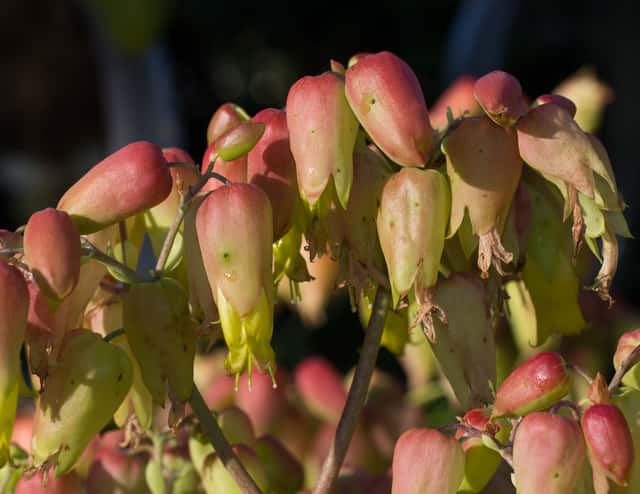
Milky Widow's Thrill (Kalanchoe laxiflora) is a easy-care plant from the Crassulaceae family. Kalanchoe laxiflora, commonly known as Milky Widow's Thrill or Bell Kalanchoe, is a charming perennial succulent shrub native to central Madagascar. It produces clusters of delicate, pendulous bell-shaped flowers in shades of pink, coral, and orange on slender, arching stems. The fleshy blue-green l...
Milky Widow's Thrill grows up to 50cm, spread of 45cm, watering every 14 days, 16°C – 27°C, 30–50% humidity. It is suitable for indoor environments and not safe for pets.
Unlike many tropical plants, Milky Widow's Thrill tolerates watering mistakes. Best for beginners. Without precautions, ingestion can cause irritation in pets. Keep out of reach of cats and dogs. Without adequate drainage, root rot can develop within 28 days.
How to Care for Milky Widow's Thrill?
TLDR: Milky Widow's Thrill needs Bright indirect, watering every 14 days, and temperatures between 16-27°C with 30-50% humidity.
How Often Should You Water Milky Widow's Thrill?
Water every 10–14 days during the growing season, allowing the soil to dry out completely between waterings. In winter, reduce to once a month. Never let the plant sit in standing water as this causes root rot.
How Much Light Does Milky Widow's Thrill Need?
Place in a bright spot with at least 4–6 hours of light per day. A south- or west-facing window is ideal indoors. Outdoors, partial sun to full sun works well. Avoid deep shade, which causes leggy growth.
What Is the Best Soil for Milky Widow's Thrill?
Use a well-draining cactus or succulent mix. Amend standard potting soil with 50% perlite or coarse sand for best drainage. A slightly acidic to neutral pH (6.0–7.0) is preferred.
What Pot Should You Use for Milky Widow's Thrill?
Use a terracotta pot with drainage holes — terracotta wicks away excess moisture, which this drought-tolerant succulent appreciates. Choose a pot only slightly larger than the root ball to prevent overwatering.
Care Schedule
Fertilize
Every 90 days
Repot
Every 730 days
What Is Milky Widow's Thrill and Where Does It Come From?
Kalanchoe laxiflora, commonly known as Milky Widow's Thrill or Bell Kalanchoe, is a charming perennial succulent shrub native to central Madagascar. It produces clusters of delicate, pendulous bell-shaped flowers in shades of pink, coral, and orange on slender, arching stems. The fleshy blue-green leaves are often edged in red, and the plant freely produces tiny plantlets (bulbils) along leaf margins — a trait called vivipary — making it easy to propagate. This compact succulent thrives in bright light and dry conditions, making it an excellent choice for sunny windowsills, rock gardens, and xeriscaping.
How to Propagate Milky Widow's Thrill?
Leaf Cutting / Bulbil Division
Kalanchoe laxiflora naturally produces miniature plantlets along its leaves (vivipary), making propagation almost effortless. Simply collect the small bulbils and set them on soil.
- 1 Gently detach healthy leaf bulbils that naturally form along leaf margins
- 2 Place bulbils on the surface of moist, well-draining cactus mix — do not bury
- 3 Keep in bright indirect light and mist lightly every few days
- 4 Tiny roots and shoots emerge in 2–4 weeks; water sparingly once rooted
Materials needed:
Stem Cutting
Let the cut end callus thoroughly before planting to prevent rot. Avoid watering until you feel slight resistance when tugging the cutting.
- 1 Cut a healthy stem 8–10 cm long with a clean, sharp blade
- 2 Allow the cut end to callus in a dry, shaded spot for 2–3 days
- 3 Insert the callused end into dry cactus mix
- 4 Water sparingly after 1 week; roots form in 3–5 weeks
Materials needed:
How Big Does Milky Widow's Thrill Grow?
TLDR: Milky Widow's Thrill can reach up to 50cm tall with Slow growth rate.
Max height
50cm
Spread
45cm
Growth rate
Slow
Foliage
Evergreen
Warning: Toxic Plant
This plant can be toxic if ingested. Keep out of reach of:
Plant Uses
Ornamental
Great for decoration
Is your plant showing symptoms?
Click on the symptom to discover possible causes:
What Diseases Commonly Affect Milky Widow's Thrill?
TLDR: Milky Widow's Thrill is susceptible to 10 known diseases. Monitor regularly for early detection.
Root Rot
Root rot is a serious fungal disease that affects the root system of plants, causing them to decay and die. It is primarily caused by overwatering, poor drainage, or soil-borne fungi such as Pythium, Phytophthora, Rhizoctonia, and Fusarium. The disease thrives in waterlogged conditions where roots are deprived of oxygen, making them susceptible to fungal infection.
Overwatering
Overwatering occurs when plants receive too much water, depriving roots of oxygen and causing root rot. This environmental stress is one of the most common causes of houseplant death, as waterlogged soil prevents roots from breathing and functioning properly.
Mealybugs
Mealybugs are small, soft-bodied insects covered with a white, waxy, cottony material. They are common pests of houseplants and outdoor plants in mild climates. These sap-sucking insects feed on plant tissue, causing damage, stunted growth, and can lead to plant death if left untreated. They produce sticky honeydew which attracts sooty mold.
Powdery Mildew
Powdery mildew is a common fungal disease caused by various fungi species including Erysiphe, Podosphaera, Oïdium, and Leveillula. It affects over 10,000 plant species worldwide. The disease thrives in warm, dry climates with high humidity and appears as a distinctive white powdery coating on plant surfaces.
Meaning & Symbolism
Milky Widow's Thrill symbolizes resilience and quiet strength — a plant that thrives where little else can, blooming beautifully against the odds.
Fun Facts
Kalanchoe laxiflora naturally produces tiny plantlets along its leaf margins, a rare trait called vivipary, making it one of the easiest succulents to propagate.
The species name "laxiflora" comes from Latin meaning "loosely flowered," referring to the delicate, pendulous way its bell-shaped blooms hang from slender stalks.
Native to the rocky highlands of central Madagascar, this plant has adapted to survive in thin, nutrient-poor soils where rainfall is scarce and unpredictable.
Despite its delicate appearance, Milky Widow's Thrill is classified as an invasive species in some warm regions like Hawaii and parts of Australia due to its vigorous self-propagating nature.
Frequently asked questions
How often should I water Kalanchoe laxiflora?
Is Milky Widow's Thrill toxic to cats and dogs?
Why is my Kalanchoe laxiflora not flowering?
How do I propagate Milky Widow's Thrill?
What soil does Kalanchoe laxiflora need?
Compare with similar plants
| Attribute | Difficulty | Light | Watering | Pet Safe |
|---|---|---|---|---|
| Small Scabious | Easy | Direct sun | 7d | ✓ |
| Field Maple | Easy | Bright indirect | 14d | ✓ |
| Silver Birch | Easy | Direct sun | 14d | ✓ |
| Red valerian | Easy | Direct sun | 10d | ✓ |



