Asphodelaceae
Orange daylily: Medicinal Uses & Care Tips
Hemerocallis fulva
Extremely low-maintenance and resilient, this plant thrives in full sun and well-drained soil, tolerating a wide range of conditions including drought and poor soil.
Every 7 days
Bright indirect
-30° - 35°C
30% - 70%
Categories
What is Orange daylily?
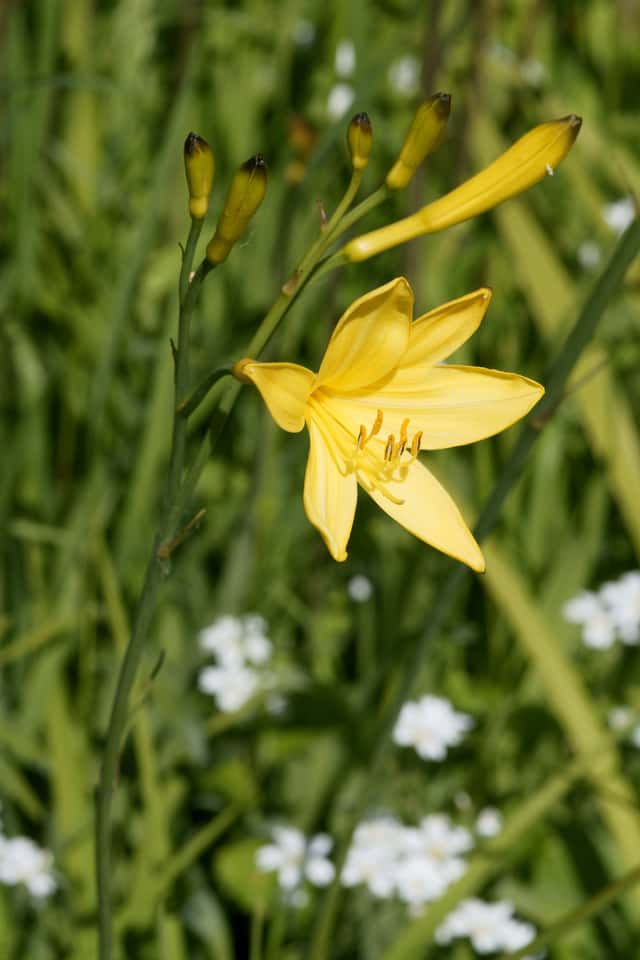
Orange daylily (Hemerocallis fulva) is a easy-care plant from the Asphodelaceae family. Hemerocallis fulva, commonly known as the orange daylily, is a vigorous and hardy perennial. It is characterized by its arching, sword-shaped green leaves and large, trumpet-shaped orange flowers that typically bloom for only one day. Despite the short life of individual flowers, the plant produces...
Orange daylily grows up to 1.0m, spread of 90cm, watering every 7 days, -30°C – 35°C, 30–70% humidity. It is not suitable for indoor environments and not safe for pets.
Unlike many tropical plants, Orange daylily tolerates watering mistakes. Best for beginners. Without precautions, ingestion can cause irritation in pets. Keep out of reach of cats and dogs.
How to Care for Orange daylily?
TLDR: Orange daylily needs Bright indirect, watering every 7 days, and temperatures between -30-35°C with 30-70% humidity.
How Often Should You Water Orange daylily?
Water regularly during the first growing season to establish roots; thereafter, it is quite drought-tolerant.
How Much Light Does Orange daylily Need?
For the most prolific blooming, plant in a location that receives at least 6 hours of direct sunlight daily.
What Is the Best Soil for Orange daylily?
While highly adaptable, it performs best in fertile, loamy soil with good drainage.
What Pot Should You Use for Orange daylily?
Best grown in open ground due to its invasive spreading habit; if potted, use a very large, deep container.
Care Schedule
Fertilize
Every 60 days
What Is Orange daylily and Where Does It Come From?
Hemerocallis fulva, commonly known as the orange daylily, is a vigorous and hardy perennial. It is characterized by its arching, sword-shaped green leaves and large, trumpet-shaped orange flowers that typically bloom for only one day. Despite the short life of individual flowers, the plant produces numerous buds on tall stalks, ensuring a long flowering period throughout the summer. It spreads effectively via underground rhizomes, making it an excellent choice for erosion control and ground cover.
How to Propagate Orange daylily?
Clump Division
- Division is the most effective way to manage the plant's spread and rejuvenate older clumps.
- 1 Dig Up Clump
In early spring or after flowering, dig up the entire root mass with a spade.
- 2 Divide Rhizomes
Use a sharp knife or spade to separate the clump into smaller sections, ensuring each has several fans of leaves and healthy roots.
- 3 Replant
Replant the divisions at the same depth as the original plant and water thoroughly.
Materials needed:
Seed Sowing
- Plants grown from seed may take 2-3 years to flower and may not look identical to the parent.
- 1 Collect Seeds
Harvest seeds from the dried pods in late summer.
- 2 Sow Seeds
Sow seeds directly into the garden or in a cold frame during the fall.
- 3 Stratification
Allow the seeds to undergo natural winter cooling to trigger germination in the spring.
Materials needed:
How Big Does Orange daylily Grow?
TLDR: Orange daylily can reach up to 1.0m tall with Fast growth rate.
Max height
1.0m
Spread
90cm
Growth rate
Fast
Foliage
Deciduous
Warning: Toxic Plant
This plant can be toxic if ingested. Keep out of reach of:
Plant Uses
Ornamental
Great for decoration
Medicinal
Medicinal properties
Medicinal Uses
- Used in traditional medicine for its diuretic properties
- Roots have been used as an anti-inflammatory treatment
Culinary Uses
- Flower buds can be eaten raw or cooked
- Dried flowers are used in traditional soups
- Young tubers are edible when cooked
Is your plant showing symptoms?
Click on the symptom to discover possible causes:
What Diseases Commonly Affect Orange daylily?
TLDR: Orange daylily is susceptible to 7 known diseases. Monitor regularly for early detection.
Rust
Rust is a common fungal disease caused by fungi in the order Pucciniales that affects a wide variety of plants. The disease gets its name from the characteristic orange, yellow, or reddish-brown pustules that appear on leaves, resembling metal rust. This obligate fungal parasite requires living plants to survive and can cause significant economic losses in agricultural crops.
Leaf Spot
Leaf spot is a common fungal disease caused by various pathogens including Alternaria, Ascochyta, Colletotrichum, Septoria, and Venturia. It primarily affects leaves, causing discolored spots that can lead to premature leaf drop if left untreated.
Aphids
Aphids are small, soft-bodied, pear-shaped insects (1/16 to 1/8 inch long) that feed by sucking nutrient-rich sap from plants. They reproduce rapidly and can quickly weaken plants, causing distorted growth and transmitting plant viruses. Aphids come in various colors including green, black, red, yellow, brown, and gray. They secrete honeydew, a sticky substance that attracts ants and encourages sooty mold growth.
Thrips
Thrips are tiny cigar-shaped insects (1/25-inch long) that damage plants by sucking plant juices and scraping at fruits, flowers, and leaves. With over 6,000 species and rapid reproduction (lifecycle as short as 14 days), they can quickly infest plants and transmit viruses like tomato spotted wilt virus.
Meaning & Symbolism
In Chinese culture, it is known as the 'forget-worry herb' and is a traditional symbol of motherhood.
Compare with similar plants
| Attribute | Difficulty | Light | Watering | Pet Safe |
|---|---|---|---|---|
| Field Maple | Easy | Bright indirect | 14d | ✓ |
| Silver Birch | Easy | Direct sun | 14d | ✓ |
| Cushion Bush | Easy | Direct sun | 14d | ✓ |
| Peruvian peppertree | Easy | Direct sun | 14d | ⚠️ |





