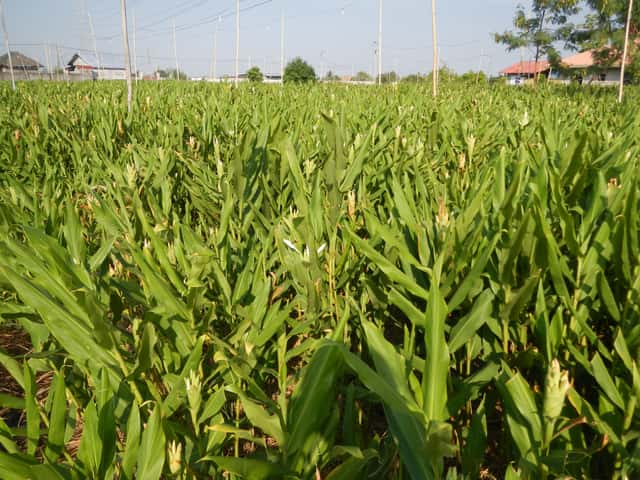
Zingiberaceae
White Ginger Lily: The Fragrant Butterfly-Shaped Flower
Hedychium coronarium
White Ginger Lily is an easy-to-grow plant that thrives in moist, humus-rich soil with full sun to partial shade. Water frequently to keep soil consistently moist, especially during the growing season. Fertilize monthly in spring and summer with a balanced fertilizer. Divide rhizomes every 2 years to maintain vigor. Provide protection from frost in cooler climates.
Every 4 days
Bright indirect
10° - 35°C
60% - 90%
Categories
What is White Ginger Lily?
White Ginger Lily (Hedychium coronarium) is a easy-care plant from the Zingiberaceae family. Hedychium coronarium, commonly known as White Ginger Lily or Butterfly Lily, is a robust perennial herb in the Zingiberaceae family, native to the Himalayas and Southeast Asia. Renowned for its intensely fragrant, white butterfly-shaped flowers, this striking plant grows up to 1.8 m tall with bold l...
White Ginger Lily grows up to 1.8m, with spread of 120cm, watering every 4 days, 10°C – 35°C, 60–90% humidity. It is not suitable for indoor environments and safe for pets.
Unlike many tropical plants, White Ginger Lily tolerates watering mistakes. Best for beginners. Unlike many popular species, White Ginger Lily is safe to keep around pets.
How to Care for White Ginger Lily?
TLDR: White Ginger Lily needs Bright indirect, watering every 4 days, and temperatures between 10-35°C with 60-90% humidity.
How Often Should You Water White Ginger Lily?
Keep soil consistently moist but not waterlogged. Water every 3-5 days during summer growing season, reducing frequency in winter during dormancy. The plant thrives in conditions mimicking monsoon seasons — warm, wet, and well-fed. Avoid standing water which can cause root rot.
How Much Light Does White Ginger Lily Need?
Prefers full sun to partial shade, requiring at least 4-6 hours of direct sunlight daily for abundant flowering. In very hot climates, some afternoon shade is beneficial. Can grow with only 2-3 hours of sun, but flowering will be reduced. Bright, indirect light works well in less sunny spots.
What Is the Best Soil for White Ginger Lily?
Thrives in moist, humus-rich, well-draining soil. Amend with compost, leaf mold, and coarse sand for optimal drainage while retaining moisture. Ideal pH 6.0-7.0. Avoid heavy clay soils that hold excess water. Mulching around the base helps retain soil moisture.
What Pot Should You Use for White Ginger Lily?
Large ceramic or terracotta pots with adequate drainage holes. For container growing, use pots at least 40 cm in diameter and 30 cm deep, as the plant has robust spreading rhizomes. Choose materials that retain moderate moisture without waterlogging.
Care Schedule
Fertilize
Every 30 days
Misting
Every 3 days
Repot
Every 730 days
What Is White Ginger Lily and Where Does It Come From?
Hedychium coronarium, commonly known as White Ginger Lily or Butterfly Lily, is a robust perennial herb in the Zingiberaceae family, native to the Himalayas and Southeast Asia. Renowned for its intensely fragrant, white butterfly-shaped flowers, this striking plant grows up to 1.8 m tall with bold lance-shaped leaves on tall, erect stems. It is the national flower of Cuba and has naturalized across tropical regions worldwide. Blooming in summer through fall, its flowers are most fragrant in the evening, attracting night-flying pollinators.
How to Propagate White Ginger Lily?
Rhizome Division
Divide in early spring before new growth starts. Use a clean, sharp knife to minimize disease risk. Each rhizome section must have at least one visible growing bud for success.
- 1 Carefully dig up the clump at the end of winter or early spring
- 2 Divide rhizomes with a clean knife, ensuring each section has at least one shoot bud
- 3 Allow cut surfaces to dry for a few hours to prevent disease
- 4 Plant each section in moist, humus-rich soil 5-10 cm deep
- 5 Water thoroughly after planting and keep soil moist
Materials needed:
Seed Propagation
Seeds lose viability quickly, so sow immediately after collection. Keep substrate consistently moist during germination.
- 1 Collect seeds when fruits are ripe and red
- 2 Sow immediately in moist, well-draining seed mix
- 3 Maintain temperature of 22-28°C with high humidity
- 4 Germination occurs in 4-8 weeks
- 5 Transplant seedlings when 10-15 cm tall
Materials needed:
How Big Does White Ginger Lily Grow?
TLDR: White Ginger Lily can reach up to 1.8m tall with Fast growth rate.
Max height
1.8m
Spread
1.2m
Growth rate
Fast
Foliage
Deciduous
Plant Uses
Ornamental
Great for decoration
Medicinal
Medicinal properties
Aromatic
Pleasant fragrance
Medicinal Uses
- Traditional febrifuge used to treat fever
- Anti-rheumatic and natural analgesic
- Used to treat arthritis, asthma, and bronchial diseases
- Ground rhizome used as digestive tonic
- Documented anti-inflammatory and hepatoprotective properties
Is your plant showing symptoms?
Click on the symptom to discover possible causes:
What Diseases Commonly Affect White Ginger Lily?
TLDR: White Ginger Lily is susceptible to 7 known diseases. Monitor regularly for early detection.
Root Rot
Root rot is a serious fungal disease that affects the root system of plants, causing them to decay and die. It is primarily caused by overwatering, poor drainage, or soil-borne fungi such as Pythium, Phytophthora, Rhizoctonia, and Fusarium. The disease thrives in waterlogged conditions where roots are deprived of oxygen, making them susceptible to fungal infection.
Leaf Spot
Leaf spot is a common fungal disease caused by various pathogens including Alternaria, Ascochyta, Colletotrichum, Septoria, and Venturia. It primarily affects leaves, causing discolored spots that can lead to premature leaf drop if left untreated.
Aphids
Aphids are small, soft-bodied, pear-shaped insects (1/16 to 1/8 inch long) that feed by sucking nutrient-rich sap from plants. They reproduce rapidly and can quickly weaken plants, causing distorted growth and transmitting plant viruses. Aphids come in various colors including green, black, red, yellow, brown, and gray. They secrete honeydew, a sticky substance that attracts ants and encourages sooty mold growth.
Spider Mites
Spider mites are tiny arachnids (less than 1/20 inch long) related to spiders and ticks that feed on plant sap. They thrive in hot, dry conditions and can cause significant damage to ornamental and vegetable plants. During severe infestations, crop losses can reach 14% or higher as these pests disrupt vital plant processes including photosynthesis, carbon dioxide absorption, and transpiration.
Meaning & Symbolism
Symbolizes purity, elegance, and love. As the national flower of Cuba ("mariposa"), it represents freedom and tropical beauty. In Asian cultures, it is associated with fertility and good fortune. In India, the flowers are used in religious garlands and festive ceremonies, representing devotion and celebration.
Fun Facts
It is the national flower of Cuba, affectionately called "mariposa" (butterfly)
Its intense fragrance is strongest at dusk and night, attracting moth pollinators
In India and Southeast Asia, flowers are strung into garlands for religious ceremonies
It can grow more than 30 cm per week during the active growing season
Frequently asked questions
How often should I water my White Ginger Lily?
Can White Ginger Lily be grown in a pot?
Why is my White Ginger Lily not flowering?
Is White Ginger Lily toxic to pets and humans?
How do I propagate White Ginger Lily?
Compare with similar plants
| Attribute | Difficulty | Light | Watering | Pet Safe |
|---|---|---|---|---|
| Peace Lily | Easy | Low light | 4d | ⚠️ |
| Swiss Cheese Plant | Easy | Partial shade | 10d | ⚠️ |
| Golden Pothos | Easy | Low light | 8d | ⚠️ |
| ZZ Plant | Easy | Low light | 18d | ⚠️ |





