Poaceae
Manila Grass (Zoysia matrella): Complete Care Guide
Zoysia matrella
Low-maintenance grass that thrives in full sun. Water every 4 days during establishment; once established, it is drought-tolerant. Fertilize every 30 days during the growing season and mow regularly to maintain an ideal height of 1–2 inches.
Every 4 days
Direct sun
18° - 35°C
30% - 60%
Categories
What is Manila Grass?
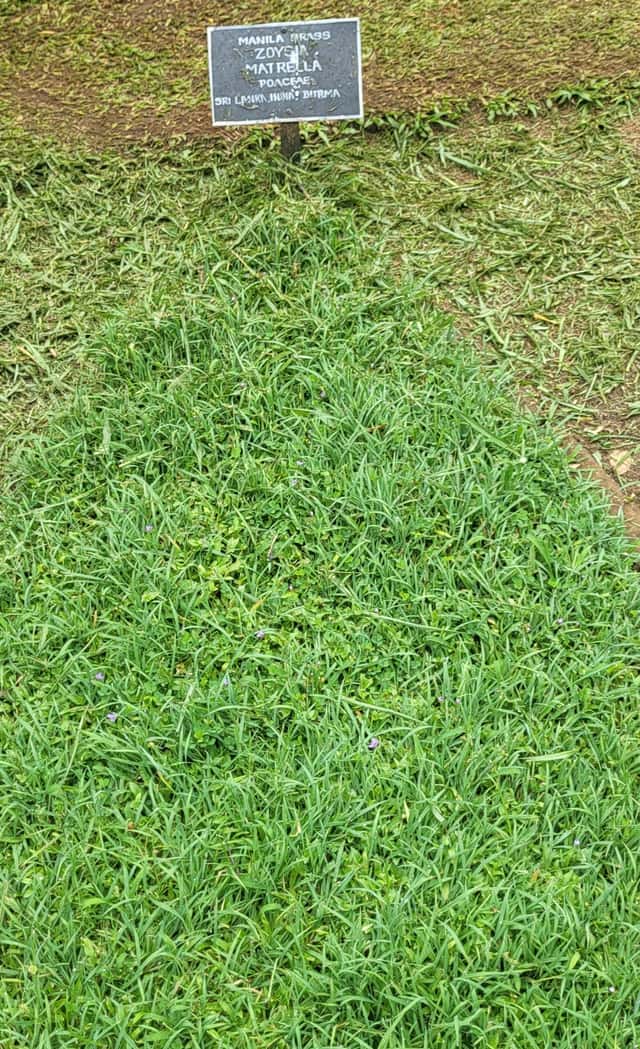
Manila Grass (Zoysia matrella) is a easy-care plant from the Poaceae family. Zoysia matrella, commonly known as Manila grass, is a fine-textured warm-season turfgrass native to Southeast Asia. It forms a dense, soft, low-maintenance carpet highly valued in ornamental lawns, golf courses, and residential gardens in tropical and subtropical climates.
Manila Grass grows up to 20cm, spread of 100cm, watering every 4 days, 18°C – 35°C, 30–60% humidity. It is not suitable for indoor environments and safe for pets.
Unlike many tropical plants, Manila Grass tolerates watering mistakes. Best for beginners. Unlike many popular species, Manila Grass is safe to keep around pets.
How to Care for Manila Grass?
TLDR: Manila Grass needs Direct sun, watering every 4 days, and temperatures between 18-35°C with 30-60% humidity.
How Often Should You Water Manila Grass?
Water deeply every 4 days, moistening soil to 4–6 inches depth. Once established, Manila grass tolerates dry spells and requires less frequent watering. Avoid overwatering as it promotes fungal disease.
How Much Light Does Manila Grass Need?
Requires full sun for at least 6 hours daily. Tolerates partial shade but the turf thins out. Plant in open, well-lit areas for best performance.
What Is the Best Soil for Manila Grass?
Adapts to sandy, clay, or mixed soils as long as they are well-draining. Prefers pH 6.0–7.5. Avoid compacted or waterlogged soils.
What Pot Should You Use for Manila Grass?
For outdoor lawns, plant sod directly in the ground. For decorative containers or planters, use shallow, wide containers with drainage holes filled with sandy potting mix.
Care Schedule
Fertilize
Every 30 days
What Is Manila Grass and Where Does It Come From?
Zoysia matrella, commonly known as Manila grass, is a fine-textured warm-season turfgrass native to Southeast Asia. It forms a dense, soft, low-maintenance carpet highly valued in ornamental lawns, golf courses, and residential gardens in tropical and subtropical climates.
How to Propagate Manila Grass?
Sod Division
Plant at the start of the rainy season to reduce irrigation needs. Press sod firmly into the soil for good root contact.
- 1 Cut sod plugs or rolls with intact roots
- 2 Plant directly in prepared soil, spaced 8–12 inches apart
- 3 Water thoroughly after planting and keep moist for 2 weeks
- 4 Allow full coverage in 4–8 weeks
Materials needed:
Seeding
Germination can be uneven; mix seeds with fine sand for more uniform distribution.
- 1 Prepare soil by loosening and leveling the surface
- 2 Broadcast seeds evenly at the recommended rate
- 3 Cover lightly with a thin layer of topsoil
- 4 Water daily with a fine mist until germination
Materials needed:
How Big Does Manila Grass Grow?
TLDR: Manila Grass can reach up to 20cm tall with Slow growth rate.
Max height
20cm
Spread
1.0m
Growth rate
Slow
Foliage
Evergreen
Plant Uses
Ornamental
Great for decoration
Ground Cover
Soil coverage
Is your plant showing symptoms?
Click on the symptom to discover possible causes:
What Diseases Commonly Affect Manila Grass?
TLDR: Manila Grass is susceptible to 11 known diseases. Monitor regularly for early detection.
Leaf Spot
Leaf spot is a common fungal disease caused by various pathogens including Alternaria, Ascochyta, Colletotrichum, Septoria, and Venturia. It primarily affects leaves, causing discolored spots that can lead to premature leaf drop if left untreated.
Root Rot
Root rot is a serious fungal disease that affects the root system of plants, causing them to decay and die. It is primarily caused by overwatering, poor drainage, or soil-borne fungi such as Pythium, Phytophthora, Rhizoctonia, and Fusarium. The disease thrives in waterlogged conditions where roots are deprived of oxygen, making them susceptible to fungal infection.
Pythium Root Rot
Pythium root rot is a serious fungal disease caused by various Pythium species including P. aphanidermatum, P. ultimum, and P. irregulare. These water molds are present in practically all cultivated soils and attack plant roots under wet conditions, causing rapid wet rot that can extend into the stem. The disease is favored by poor drainage, overwatering, and specific temperatures depending on the species.
Rust
Rust is a common fungal disease caused by fungi in the order Pucciniales that affects a wide variety of plants. The disease gets its name from the characteristic orange, yellow, or reddish-brown pustules that appear on leaves, resembling metal rust. This obligate fungal parasite requires living plants to survive and can cause significant economic losses in agricultural crops.
Meaning & Symbolism
Symbolizes resilience and adaptability, thriving across diverse soil and climate conditions.
Fun Facts
Native to Southeast Asia, Manila grass has been used for centuries in temple gardens and palace grounds across Japan and the Philippines.
It is one of the most wear-resistant grasses available, widely used on premium golf courses worldwide.
Its extremely fine texture — blades less than 2 mm wide — creates a carpet-like surface resembling velvet.
Although slow to establish, once mature it forms such a dense mat that weeds have little chance to invade.
Frequently asked questions
How often should I water Manila grass?
Does Manila grass grow in shade?
When and how should I fertilize Manila grass?
Is Manila grass toxic to pets?
How do I control fungal patches on Manila grass?
Compare with similar plants
| Attribute | Difficulty | Light | Watering | Pet Safe |
|---|---|---|---|---|
| Field Maple | Easy | Bright indirect | 14d | ✓ |
| Silver Birch | Easy | Direct sun | 14d | ✓ |
| Cushion Bush | Easy | Direct sun | 14d | ✓ |
| Peruvian peppertree | Easy | Direct sun | 14d | ⚠️ |