Lamiaceae
Holy Basil (Tulsi): The Sacred Medicinal Herb
Ocimum tenuiflorum
Holy Basil is an easy herb to grow in warm, sunny conditions. It loves direct sunlight (at least 6 hours daily), well-draining fertile soil, and consistent moisture without waterlogging. Pinch flower heads to encourage bushier growth and more leaf production. It thrives in containers indoors or in warm garden beds.
Every 3 days
Direct sun
18° - 35°C
50% - 70%
Categories
What is Holy Basil?
Holy Basil (Ocimum tenuiflorum) is a easy-care plant from the Lamiaceae family. Holy Basil (Ocimum tenuiflorum), also known as Tulsi, is a sacred aromatic herb native to the Indian subcontinent and Southeast Asia. Revered in Hinduism as a manifestation of the goddess Lakshmi, it has been used for over 3,000 years in Ayurvedic medicine. This upright, bushy subshrub grows 30–60 c...
Holy Basil grows up to 60cm, spread of 50cm, watering every 3 days, 18°C – 35°C, 50–70% humidity. It is suitable for indoor environments and safe for pets.
Unlike many tropical plants, Holy Basil tolerates watering mistakes. Best for beginners. Unlike many popular species, Holy Basil is safe to keep around pets. Without adequate drainage, root rot can develop within 7 days.
How to Care for Holy Basil?
TLDR: Holy Basil needs Direct sun, watering every 3 days, and temperatures between 18-35°C with 50-70% humidity.
How Often Should You Water Holy Basil?
Water every 2–4 days, checking that the top inch of soil is dry before watering again. Water deeply but allow good drainage. Avoid wetting the foliage to prevent fungal issues. During hot summers, water more frequently.
How Much Light Does Holy Basil Need?
Place in the sunniest spot available — south or west-facing windows indoors, or full sun outdoors. Holy Basil needs at least 6 hours of direct sunlight daily for strong growth and optimal essential oil production.
What Is the Best Soil for Holy Basil?
Use light, well-draining soil rich in organic matter. A mix of potting soil with added perlite works well in containers. Avoid heavy clay soils that retain moisture. Preferred pH is 6.0–7.5.
What Pot Should You Use for Holy Basil?
Terracotta or ceramic pot with drainage holes, at least 20 cm diameter. Terracotta helps prevent overwatering by allowing soil to breathe.
Care Schedule
Fertilize
Every 30 days
Repot
Every 180 days
What Is Holy Basil and Where Does It Come From?
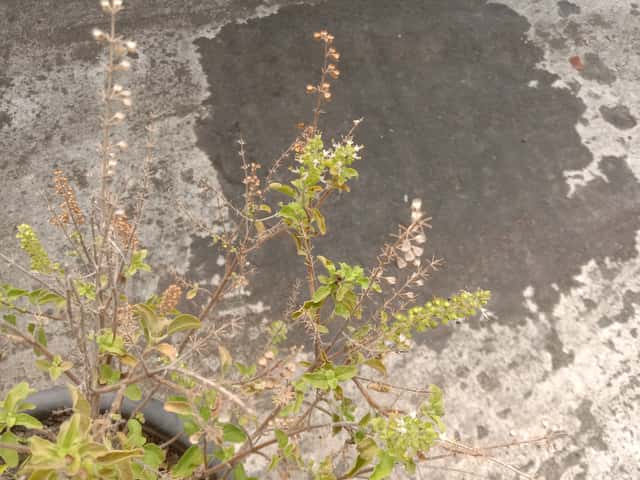
Holy Basil (Ocimum tenuiflorum), also known as Tulsi, is a sacred aromatic herb native to the Indian subcontinent and Southeast Asia. Revered in Hinduism as a manifestation of the goddess Lakshmi, it has been used for over 3,000 years in Ayurvedic medicine. This upright, bushy subshrub grows 30–60 cm tall with fragrant green or purple leaves and small purple-pink flower spikes that bloom in summer.
How to Propagate Holy Basil?
Seed Germination
Start seeds indoors 6 weeks before the last frost date. Seeds require light for germination so do not cover deeply.
- 1 Sow seeds on the surface of moist potting mix
- 2 Press lightly — seeds need light to germinate
- 3 Keep soil consistently moist and warm (24–29°C)
- 4 Germination occurs in 1–2 weeks
- 5 Thin seedlings to 30 cm apart once established
Materials needed:
Stem Cutting
Use clean scissors. Cuttings root quickly in warm conditions (above 20°C).
- 1 Take a 10 cm cutting just below a leaf node
- 2 Remove lower leaves, leaving 2–3 at the top
- 3 Place cutting in a glass of water in bright indirect light
- 4 Change water every 2–3 days
- 5 Transplant when roots reach 3–4 cm
Materials needed:
How Big Does Holy Basil Grow?
TLDR: Holy Basil can reach up to 60cm tall with Medium growth rate.
Max height
60cm
Spread
50cm
Growth rate
Medium
Foliage
Evergreen
Plant Uses
Medicinal
Medicinal properties
Aromatic
Pleasant fragrance
Edible
Can be consumed
Medicinal Uses
- Adaptogen — helps the body manage stress and anxiety
- Supports immune function and respiratory health
- Used to treat fever, cough, and bronchitis in Ayurvedic medicine
- Anti-inflammatory and antioxidant properties from eugenol and flavonoids
- Traditionally used for digestive complaints, arthritis, and eye diseases
- Applied topically for skin conditions and insect bites
Culinary Uses
- Fresh leaves used in Thai cuisine, especially in stir-fries (pad kra pao)
- Leaves brewed as Tulsi tea — an herbal infusion popular across South Asia
- Adds pungent, clove-like aroma to curries and fish dishes
- Used to flavor herbal drinks, juices, and wellness teas
Is your plant showing symptoms?
Click on the symptom to discover possible causes:
What Diseases Commonly Affect Holy Basil?
TLDR: Holy Basil is susceptible to 10 known diseases. Monitor regularly for early detection.
Root Rot
Root rot is a serious fungal disease that affects the root system of plants, causing them to decay and die. It is primarily caused by overwatering, poor drainage, or soil-borne fungi such as Pythium, Phytophthora, Rhizoctonia, and Fusarium. The disease thrives in waterlogged conditions where roots are deprived of oxygen, making them susceptible to fungal infection.
Overwatering
Overwatering occurs when plants receive too much water, depriving roots of oxygen and causing root rot. This environmental stress is one of the most common causes of houseplant death, as waterlogged soil prevents roots from breathing and functioning properly.
Powdery Mildew
Powdery mildew is a common fungal disease caused by various fungi species including Erysiphe, Podosphaera, Oïdium, and Leveillula. It affects over 10,000 plant species worldwide. The disease thrives in warm, dry climates with high humidity and appears as a distinctive white powdery coating on plant surfaces.
Downy Mildew
Downy mildew is a fungal-like disease caused by oomycetes (water molds) that thrives in cool, wet conditions. It affects a wide range of plants, causing yellowing leaves with fuzzy white-gray growth underneath, leading to defoliation and reduced yields if left untreated.
Meaning & Symbolism
Holy Basil is considered a sacred plant in Hinduism, embodying the goddess Lakshmi. The name Tulasi means "the incomparable one" in Sanskrit. It is worshipped daily in many Hindu homes and features in the Tulsi Vivah festival, which marks the beginning of the Hindu wedding season.
Fun Facts
Tulsi has been mentioned in Ayurvedic scriptures as early as 1500 BC in the Rig Veda
The name Tulasi means "the incomparable one" in Sanskrit
Holy Basil contains eugenol — the same aromatic compound found in cloves
The Tulsi Vivah festival ceremonially weds the holy basil plant to the god Vishnu, marking the start of the Hindu wedding season
Frequently asked questions
How often should I water Holy Basil?
Does Holy Basil need full sun?
Is Holy Basil safe for pets?
How do I keep my Tulsi plant bushy?
Can I grow Holy Basil indoors?
Compare with similar plants
| Attribute | Difficulty | Light | Watering | Pet Safe |
|---|---|---|---|---|
| Small Scabious | Easy | Direct sun | 7d | ✓ |
| Field Maple | Easy | Bright indirect | 14d | ✓ |
| Silver Birch | Easy | Direct sun | 14d | ✓ |
| Red valerian | Easy | Direct sun | 10d | ✓ |


