Ericaceae
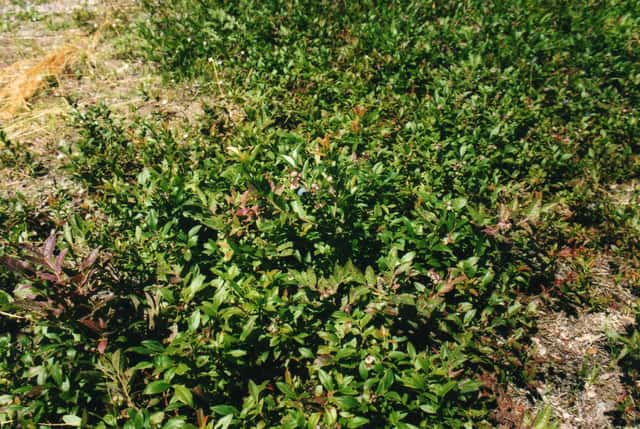
Lowbush Blueberry: Ground Cover Plant
Vaccinium angustifolium
Hardy and low-maintenance once established. Prefers acidic, peaty soil and full sun. Drought tolerant but benefits from consistent moisture during fruiting. Prune every year or two to stimulate new growth and improve berry production.
Every 7 days
Bright indirect
-40° - 30°C
40% - 70%
Categories
What is Lowbush Blueberry?
Lowbush Blueberry (Vaccinium angustifolium) is a easy-care plant from the Ericaceae family. Vaccinium angustifolium, commonly known as the Lowbush Blueberry, is a low-growing native shrub of northeastern North America. It produces small, intensely flavored blueberries beloved by wildlife and humans alike. Its brilliant red autumn foliage makes it equally valued as an ornamental ground cove...
Lowbush Blueberry grows up to 60cm, spread of 60cm, watering every 7 days, -40°C – 30°C, 40–70% humidity. It is not suitable for indoor environments and safe for pets.
Unlike many tropical plants, Lowbush Blueberry tolerates watering mistakes. Best for beginners. Unlike many popular species, Lowbush Blueberry is safe to keep around pets.
How to Care for Lowbush Blueberry?
TLDR: Lowbush Blueberry needs Bright indirect, watering every 7 days, and temperatures between -40-30°C with 40-70% humidity.
How Often Should You Water Lowbush Blueberry?
Water weekly during the growing season. Once established, lowbush blueberry is drought tolerant. Avoid waterlogging — ensure good drainage.
How Much Light Does Lowbush Blueberry Need?
Requires full sun to high indirect light (10,000–40,000 lux) for best berry production. Will tolerate partial shade but yields may decrease.
What Is the Best Soil for Lowbush Blueberry?
Thrives in acidic, peaty soil with pH 4.0–5.5. Amend with sulfur or peat moss if soil is too alkaline. Avoid lime.
Care Schedule
Fertilize
Every 90 days
Misting
Every 3 days
Rotate
Every 7 days
Repot
Every 365 days
What Is Lowbush Blueberry and Where Does It Come From?
Vaccinium angustifolium, commonly known as the Lowbush Blueberry, is a low-growing native shrub of northeastern North America. It produces small, intensely flavored blueberries beloved by wildlife and humans alike. Its brilliant red autumn foliage makes it equally valued as an ornamental ground cover.
How Big Does Lowbush Blueberry Grow?
TLDR: Lowbush Blueberry can reach up to 60cm tall with Medium growth rate.
Max height
60cm
Spread
60cm
Growth rate
Medium
Foliage
Deciduous
Plant Uses
Edible
Can be consumed
Ornamental
Great for decoration
Ground Cover
Soil coverage
Culinary Uses
- Fresh eating
- Jams and preserves
- Pies and muffins
- Smoothies
- Dried fruit
Is your plant showing symptoms?
Click on the symptom to discover possible causes:
What Diseases Commonly Affect Lowbush Blueberry?
TLDR: Lowbush Blueberry is susceptible to 4 known diseases. Monitor regularly for early detection.
Powdery Mildew
Powdery mildew is a common fungal disease caused by various fungi species including Erysiphe, Podosphaera, Oïdium, and Leveillula. It affects over 10,000 plant species worldwide. The disease thrives in warm, dry climates with high humidity and appears as a distinctive white powdery coating on plant surfaces.
Gray Mold (Botrytis Blight)
Gray mold, caused by the fungus Botrytis cinerea, is one of the most common fungal diseases in plants. It affects over 200 plant species, including ornamentals, vegetables, fruits, and houseplants. The disease thrives in cool, humid conditions with poor air circulation, causing grayish spots and soft rot on infected tissues.
Root Rot
Root rot is a serious fungal disease that affects the root system of plants, causing them to decay and die. It is primarily caused by overwatering, poor drainage, or soil-borne fungi such as Pythium, Phytophthora, Rhizoctonia, and Fusarium. The disease thrives in waterlogged conditions where roots are deprived of oxygen, making them susceptible to fungal infection.
Anthracnose
Anthracnose is a fungal disease caused by fungi in the genus Colletotrichum that affects many plants, including vegetables, fruits, and trees. The disease thrives in cool, wet conditions, causing dark, sunken lesions on leaves, stems, flowers, and fruits.
Fun Facts
One of the hardiest fruiting shrubs, surviving temperatures as low as -40°C.
Wild blueberry fields in Maine and Atlantic Canada are among the largest in the world.
The berries contain some of the highest antioxidant levels of any fruit.
Compare with similar plants
| Attribute | Difficulty | Light | Watering | Pet Safe |
|---|---|---|---|---|
| Azalea | Medium | Partial shade | 3d | ⚠️ |
| Field Maple | Easy | Bright indirect | 14d | ✓ |
| Silver Birch | Easy | Direct sun | 14d | ✓ |
| Cushion Bush | Easy | Direct sun | 14d | ✓ |





