Meliaceae
Neem Tree (Azadirachta indica): The Sacred Medicinal Tree of India
Azadirachta indica
Neem is an extremely low-maintenance tree best suited for outdoor tropical and subtropical environments. It thrives in full sun and well-draining soil, requiring minimal watering once established. It is highly drought-tolerant and performs best in USDA zones 8–11. Avoid waterlogged soil, which is the main threat to this species.
Every 14 days
Direct sun
14° - 46°C
30% - 60%
Categories
What is Neem?
Neem (Azadirachta indica) is a easy-care plant from the Meliaceae family. Azadirachta indica, commonly known as Neem or Margosa, is a fast-growing evergreen tree native to the Indian subcontinent and Southeast Asia. Belonging to the mahogany family Meliaceae, it is one of the most versatile and celebrated trees in traditional medicine and sustainable agriculture. Neem can...
Neem grows up to 20.0m, spread of 2500cm, watering every 14 days, 14°C – 46°C, 30–60% humidity. It is not suitable for indoor environments and safe for pets.
Unlike many tropical plants, Neem tolerates watering mistakes. Best for beginners. Unlike many popular species, Neem is safe to keep around pets.
How to Care for Neem?
TLDR: Neem needs Direct sun, watering every 14 days, and temperatures between 14-46°C with 30-60% humidity.
How Often Should You Water Neem?
Water young trees regularly (every 7–14 days) during the first 2–3 years of establishment. Once mature, neem trees are highly drought-tolerant and rely on deep roots to access subsoil moisture. Avoid overwatering, which leads to root rot.
How Much Light Does Neem Need?
Neem requires full sun and thrives in direct sunlight for 6–8+ hours per day. Seedlings can tolerate partial shade initially, but mature trees need maximum light to grow vigorously and produce seeds.
What Is the Best Soil for Neem?
Plant in deep, well-draining loamy or sandy-loam soil. Neem tolerates poor, rocky, and even slightly saline soils. Avoid heavy clay or waterlogged conditions. Ideal soil pH is 5.5–7.5.
What Pot Should You Use for Neem?
Large outdoor containers (100L+) can be used for young neem trees, but the species develops a deep taproot and is best grown directly in the ground. Choose unglazed terracotta pots for breathability if container-growing.
Care Schedule
Fertilize
Every 90 days
What Is Neem and Where Does It Come From?
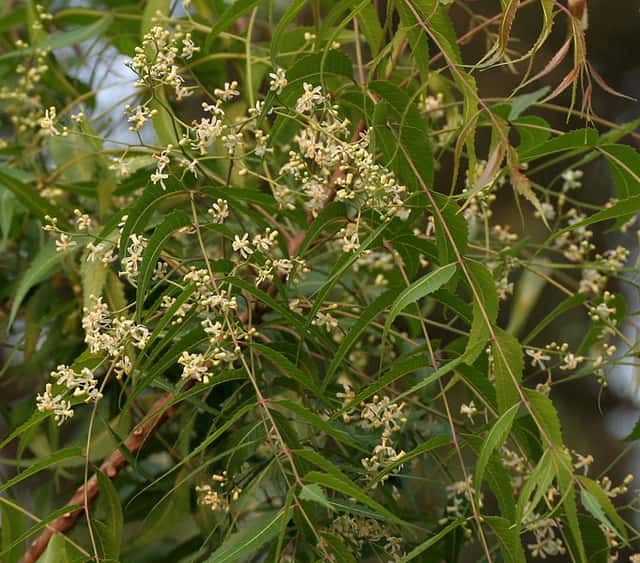
Azadirachta indica, commonly known as Neem or Margosa, is a fast-growing evergreen tree native to the Indian subcontinent and Southeast Asia. Belonging to the mahogany family Meliaceae, it is one of the most versatile and celebrated trees in traditional medicine and sustainable agriculture. Neem can reach heights of 15–20 meters with a broad, spreading crown. Its small white fragrant flowers bloom in drooping clusters, and the olive-like fruits contain seeds rich in azadirachtin, the compound responsible for its powerful insecticidal properties.
How to Propagate Neem?
Seed Germination
Use only fresh seeds; neem seeds lose viability within weeks of harvest. Direct sowing in the field is also effective.
- 1 Collect fresh neem seeds as viability decreases rapidly after harvest
- 2 Remove the outer fruit pulp and plant seeds immediately
- 3 Sow 1–2 cm deep in well-draining seedling mix
- 4 Keep moist and in a warm spot (26–35°C); germination occurs in 1–3 weeks
- 5 Transplant to final location when seedling reaches 30–50 cm
Materials needed:
Stem Cutting
Cuttings are less reliable than seeds for neem. Use clean, sharp pruning tools.
- 1 Take semi-hardwood cuttings 15–20 cm long from healthy branches
- 2 Dip the cut end in rooting hormone powder
- 3 Insert into a mix of perlite and coarse sand
- 4 Keep in a humid, shaded environment until roots develop (4–6 weeks)
- 5 Gradually acclimate to full sun before transplanting
Materials needed:
How Big Does Neem Grow?
TLDR: Neem can reach up to 20.0m tall with Fast growth rate.
Max height
20.0m
Spread
25.0m
Growth rate
Fast
Foliage
Evergreen
Plant Uses
Ornamental
Great for decoration
Medicinal
Medicinal properties
Aromatic
Pleasant fragrance
Medicinal Uses
- Antiseptic and wound healing (leaves, bark)
- Treatment of skin conditions: eczema, boils, ringworm (leaf paste/oil)
- Anti-malarial properties (leaf extracts)
- Dental health: neem twigs used as natural toothbrushes
- Anti-inflammatory and fever reducer (bark tea)
- Anthelmintic – treatment of intestinal worms (seed oil)
- Ayurvedic medicine for over 4,000 years across India and Southeast Asia
Culinary Uses
- Young leaves and flowers consumed as vegetables in South and Southeast Asian cuisine
- Intensely bitter flavor used in traditional Indian dishes
- Neem flowers used in Tamil Nadu cuisine (e.g., Ugadi pachadi)
Is your plant showing symptoms?
Click on the symptom to discover possible causes:
What Diseases Commonly Affect Neem?
TLDR: Neem is susceptible to 12 known diseases. Monitor regularly for early detection.
Root Rot
Root rot is a serious fungal disease that affects the root system of plants, causing them to decay and die. It is primarily caused by overwatering, poor drainage, or soil-borne fungi such as Pythium, Phytophthora, Rhizoctonia, and Fusarium. The disease thrives in waterlogged conditions where roots are deprived of oxygen, making them susceptible to fungal infection.
Canker
Canker is a disease caused by various fungi and bacteria that create necrotic, sunken areas on bark of branches, stems, and trunks. Pathogens enter through wounds and natural openings, especially when plants are stressed. Canker can gradually weaken or kill branches by disrupting water and nutrient flow.
Leaf Spot
Leaf spot is a common fungal disease caused by various pathogens including Alternaria, Ascochyta, Colletotrichum, Septoria, and Venturia. It primarily affects leaves, causing discolored spots that can lead to premature leaf drop if left untreated.
Anthracnose
Anthracnose is a fungal disease caused by fungi in the genus Colletotrichum that affects many plants, including vegetables, fruits, and trees. The disease thrives in cool, wet conditions, causing dark, sunken lesions on leaves, stems, flowers, and fruits.
Meaning & Symbolism
The neem tree is considered sacred in Indian culture, associated with the goddess Shitala and symbolizing protection, healing, and purification. Known as the "village pharmacy," it represents the union of nature and medicine.
Fun Facts
Neem contains over 140 bioactive compounds, making it one of the most chemically complex plants known to science.
A single neem tree can produce 30–50 kg of seeds per year, which are cold-pressed to produce neem oil.
Neem trees can live for over 200 years and continue producing seeds and medicine throughout their life.
In some Indian villages, the neem tree is planted at the entrance of homes as a natural air purifier and guardian against disease.
Frequently asked questions
How often should I water a neem tree?
Can neem trees grow indoors?
Is neem toxic to pets?
What makes neem so special medically?
How fast does a neem tree grow?
Compare with similar plants
| Attribute | Difficulty | Light | Watering | Pet Safe |
|---|---|---|---|---|
| Field Maple | Easy | Bright indirect | 14d | ✓ |
| Silver Birch | Easy | Direct sun | 14d | ✓ |
| Cushion Bush | Easy | Direct sun | 14d | ✓ |
| Peruvian peppertree | Easy | Direct sun | 14d | ⚠️ |