Crassulaceae
October Daphne (Sedum sieboldii): Complete Care Guide
Sedum sieboldii
A low-maintenance, drought-tolerant succulent that thrives in full sun and well-draining soil. Water sparingly, allowing soil to dry completely between waterings. Perfect for rock gardens, hanging baskets, and container arrangements.
Every 21 days
Bright indirect
-15° - 21°C
30% - 50%
Categories
What is October Daphne?
October Daphne (Sedum sieboldii) is a easy-care plant from the Crassulaceae family. Sedum sieboldii, commonly known as October Daphne, is a charming trailing succulent native to Japan. It features whorls of three blue-green, coin-shaped leaves with rosy-pink edges that trail gracefully over rocks and container edges. In autumn, it produces clusters of small, star-shaped pink flower...
October Daphne grows up to 25cm, spread of 45cm, watering every 21 days, -15°C – 21°C, 30–50% humidity. It is suitable for indoor environments and not safe for pets.
Unlike many tropical plants, October Daphne tolerates watering mistakes. Best for beginners. Without precautions, ingestion can cause irritation in pets. Keep out of reach of cats and dogs. Without adequate drainage, root rot can develop within 42 days.
How to Care for October Daphne?
TLDR: October Daphne needs Bright indirect, watering every 21 days, and temperatures between -15-21°C with 30-50% humidity.
How Often Should You Water October Daphne?
Water deeply but infrequently — every 2-3 weeks in summer, reducing to once a month in winter. Always allow the soil to dry out completely before watering again. Never let the plant sit in waterlogged soil as this causes root rot.
How Much Light Does October Daphne Need?
Provide bright, direct sunlight for at least 4-6 hours daily. Outdoors, full sun is ideal. Indoors, place near a south-facing window. Insufficient light causes elongated, weak stems and loss of the characteristic blue-green leaf colour.
What Is the Best Soil for October Daphne?
Use a gritty, well-draining succulent or cactus mix. Add perlite or coarse sand to improve drainage. Avoid heavy clay soils that retain moisture, as Sedum sieboldii is very sensitive to wet roots.
What Pot Should You Use for October Daphne?
Terracotta pot or shallow rock garden planter — terracotta wicks away moisture and helps prevent overwatering. Ensure drainage holes are present. Shallow, wide containers suit its trailing growth habit.
Care Schedule
Fertilize
Every 90 days
Repot
Every 730 days
What Is October Daphne and Where Does It Come From?
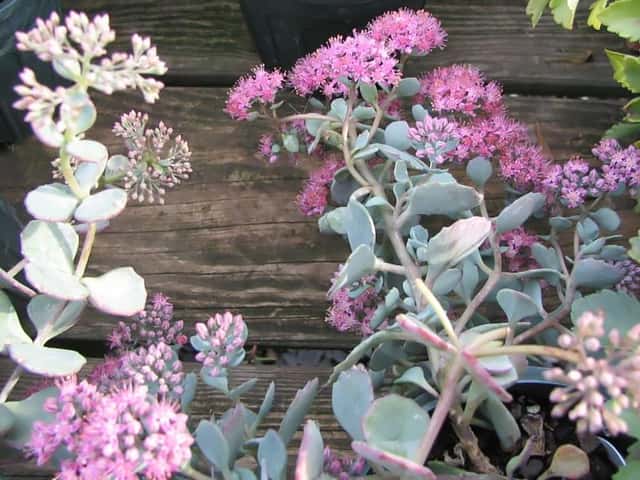
Sedum sieboldii, commonly known as October Daphne, is a charming trailing succulent native to Japan. It features whorls of three blue-green, coin-shaped leaves with rosy-pink edges that trail gracefully over rocks and container edges. In autumn, it produces clusters of small, star-shaped pink flowers that attract pollinators. The plant dies back to its rootstock in winter and re-emerges each spring, making it a delightful surprise in the garden.
How to Propagate October Daphne?
Stem cutting
Avoid overwatering during rooting — the cutting is prone to rot if kept too wet. Rooting hormone is optional but can improve success.
- 1 Select a healthy stem tip with 2-3 leaf whorls
- 2 Allow the cut end to callous for 1-2 days in a dry location
- 3 Place the calloused cutting in barely moist, well-draining succulent mix
- 4 Keep in bright indirect light and mist lightly until roots establish
Materials needed:
Division
Division is best done in spring when the plant is actively growing. Divisions establish quickly.
- 1 In early spring when new growth appears, carefully lift the plant
- 2 Divide the root clump into sections with at least one growing shoot each
- 3 Replant divisions in well-draining succulent mix
- 4 Water lightly and place in bright light
Materials needed:
How Big Does October Daphne Grow?
TLDR: October Daphne can reach up to 25cm tall with Slow growth rate.
Max height
25cm
Spread
45cm
Growth rate
Slow
Foliage
Deciduous
Warning: Toxic Plant
This plant can be toxic if ingested. Keep out of reach of:
Plant Uses
Ornamental
Great for decoration
Ground Cover
Soil coverage
Is your plant showing symptoms?
Click on the symptom to discover possible causes:
What Diseases Commonly Affect October Daphne?
TLDR: October Daphne is susceptible to 11 known diseases. Monitor regularly for early detection.
Root Rot
Root rot is a serious fungal disease that affects the root system of plants, causing them to decay and die. It is primarily caused by overwatering, poor drainage, or soil-borne fungi such as Pythium, Phytophthora, Rhizoctonia, and Fusarium. The disease thrives in waterlogged conditions where roots are deprived of oxygen, making them susceptible to fungal infection.
Crown Rot
Crown rot is a serious fungal disease that attacks the crown (base) of the plant where the stem meets the soil. It is caused by various fungal pathogens including Phytophthora, Fusarium, and Rhizoctonia. The disease thrives in waterlogged conditions and can quickly spread to kill the entire plant if not addressed promptly.
Overwatering
Overwatering occurs when plants receive too much water, depriving roots of oxygen and causing root rot. This environmental stress is one of the most common causes of houseplant death, as waterlogged soil prevents roots from breathing and functioning properly.
Aphids
Aphids are small, soft-bodied, pear-shaped insects (1/16 to 1/8 inch long) that feed by sucking nutrient-rich sap from plants. They reproduce rapidly and can quickly weaken plants, causing distorted growth and transmitting plant viruses. Aphids come in various colors including green, black, red, yellow, brown, and gray. They secrete honeydew, a sticky substance that attracts ants and encourages sooty mold growth.
Meaning & Symbolism
A symbol of endurance and quiet beauty — blooming brilliantly when autumn arrives and other plants are fading, representing resilience and the beauty found in life's later seasons.
Fun Facts
Native to Japan, Sedum sieboldii was introduced to the Western world by the German naturalist Philipp Franz von Siebold in the 19th century.
Unlike many succulents, October Daphne is deciduous — it completely dies back to its roots each winter and reappears in spring.
The leaves grow in attractive whorls of three, giving the plant a distinctive, sculptural appearance unlike most other sedums.
It is one of the hardiest sedums, tolerating temperatures as low as -15°C (5°F) — making it suitable for USDA zones 3-9.
Frequently asked questions
How often should I water October Daphne?
Why are my October Daphne leaves turning yellow?
Is October Daphne toxic to cats and dogs?
Does October Daphne come back every year?
Can I grow October Daphne indoors?
Compare with similar plants
| Attribute | Difficulty | Light | Watering | Pet Safe |
|---|---|---|---|---|
| Field Maple | Easy | Bright indirect | 14d | ✓ |
| Silver Birch | Easy | Direct sun | 14d | ✓ |
| Cushion Bush | Easy | Direct sun | 14d | ✓ |
| Peruvian peppertree | Easy | Direct sun | 14d | ⚠️ |