Oleaceae
Olive tree: Edible Plant
Olea europaea
The Olive tree is a hardy plant that thrives in full sun and well-drained soil. It requires moderate watering and tolerates periods of drought once established.
Every 14 days
Direct sun
-9° - 38°C
20% - 50%
Categories
What is Olive tree?
Olive tree (Olea europaea) is a easy-care plant from the Oleaceae family. The Olive tree (Olea europaea) is a medium-sized evergreen tree native to the Mediterranean region, Asia, and Africa. It is widely cultivated for its fruit, olives, and the oil extracted from them, olive oil. It features distinct silvery-green leaves and a gnarled, gray bark that becomes rougher wit...
Olive tree grows up to 9.0m, spread of 900cm, watering every 14 days, -9°C – 38°C, 20–50% humidity. It is suitable for indoor environments and safe for pets.
Unlike many tropical plants, Olive tree tolerates watering mistakes. Best for beginners. Unlike many popular species, Olive tree is safe to keep around pets. Without adequate drainage, root rot can develop within 28 days.
How to Care for Olive tree?
TLDR: Olive tree needs Direct sun, watering every 14 days, and temperatures between -9-38°C with 20-50% humidity.
How Often Should You Water Olive tree?
Water deeply when the soil is dry to the touch, especially during periods of active growth. Avoid overwatering to prevent root rot, as it is highly drought-tolerant.
How Much Light Does Olive tree Need?
Place the olive tree in a location that receives at least 6 to 8 hours of direct sunlight per day. Indoors, place it near a sunny window or use grow lights.
What Is the Best Soil for Olive tree?
Use a well-drained substrate, preferably a cactus and succulent mix or sandy soil with good aeration. The ideal pH ranges from slightly acidic to alkaline (6.0-8.0).
What Pot Should You Use for Olive tree?
Terracotta or ceramic pots with ample drainage holes are ideal, as they allow moisture to evaporate and prevent waterlogging. Choose a pot large enough to accommodate root growth.
Care Schedule
Fertilize
Every 90 days
Rotate
Every 30 days
Repot
Every 730 days
What Is Olive tree and Where Does It Come From?
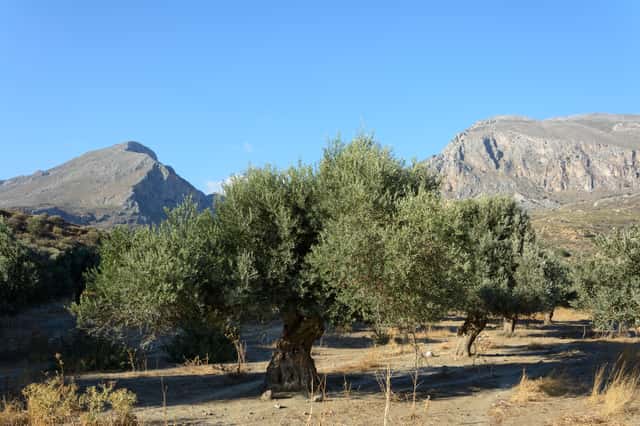
The Olive tree (Olea europaea) is a medium-sized evergreen tree native to the Mediterranean region, Asia, and Africa. It is widely cultivated for its fruit, olives, and the oil extracted from them, olive oil. It features distinct silvery-green leaves and a gnarled, gray bark that becomes rougher with age. It is a universal symbol of peace, longevity, and prosperity.
How to Propagate Olive tree?
Stem Cutting Propagation
- Use cuttings from young, vigorous branches
- Maintain a stable room temperature and avoid drafts
- Patience is key, as rooting can take time
- 1 Prepare the Cutting
Cut a semi-hardwood branch 6-8 inches (15-20 cm) long from a healthy olive tree, removing the lower leaves.
- 2 Apply Hormone
Dip the base of the cutting in rooting hormone to increase the chances of success.
- 3 Plant
Plant the cutting in a light, well-drained substrate, such as a mix of sand and peat, ensuring at least one node is buried.
- 4 Maintain Humidity
Keep the substrate slightly moist and the cutting in an environment with high humidity and indirect light, covering it with a clear plastic bag if necessary.
Materials needed:
Seed Propagation
- The success rate of seed germination is generally low
- Plants grown from seeds may not be identical to the parent plant
- Scarification and stratification are crucial to break dormancy
- 1 Prepare the Seed
Remove the olive pulp and scarify the seed (lightly sand or nick the hard shell) to facilitate germination.
- 2 Cold Stratification
Place the seeds in a moist substrate in a plastic bag and refrigerate for 2-3 months to simulate winter conditions.
- 3 Plant
Plant the seeds in a well-drained substrate, covering them lightly with soil.
- 4 Care for Germination
Keep the substrate moist and in a warm location with indirect light. Germination can be irregular and slow.
Materials needed:
How Big Does Olive tree Grow?
TLDR: Olive tree can reach up to 9.0m tall with Slow growth rate.
Max height
9.0m
Spread
9.0m
Growth rate
Slow
Foliage
Evergreen
Plant Uses
Ornamental
Great for decoration
Edible
Can be consumed
Medicinal Uses
- Olive oil (rich in antioxidants, anti-inflammatory, beneficial for cardiovascular health)
- Olive leaves (tea for blood pressure control and antimicrobial properties)
Culinary Uses
- Olives (consumed fresh, pickled, or as an ingredient in various dishes)
- Olive oil (used for cooking, dressing salads, and as a base for sauces)
Is your plant showing symptoms?
Click on the symptom to discover possible causes:
What Diseases Commonly Affect Olive tree?
TLDR: Olive tree is susceptible to 12 known diseases. Monitor regularly for early detection.
Anthracnose
Anthracnose is a fungal disease caused by fungi in the genus Colletotrichum that affects many plants, including vegetables, fruits, and trees. The disease thrives in cool, wet conditions, causing dark, sunken lesions on leaves, stems, flowers, and fruits.
Verticillium Wilt
Verticillium wilt is a soil-borne fungal disease caused primarily by the fungi Verticillium dahliae and V. albo-atrum. These pathogens infect plant roots and grow within the vascular tissues, blocking water and nutrient transport, resulting in wilting and eventual plant death. The disease affects over 350 plant species including vegetables, fruits, ornamental flowers, and trees. The fungi can survive in soil for more than 10 years as resistant structures called microsclerotia.
Crown Gall
Crown gall is a bacterial disease caused by Agrobacterium tumefaciens that affects over 140 species of plants. The bacteria insert DNA into plant cells, causing them to divide uncontrollably and form large tumor-like growths (galls) primarily on roots, stems, and at the soil line. These galls restrict water and nutrient flow, severely impacting plant health and potentially killing the plant.
Scale Insects
Scale insects are small sap-sucking pests that appear as brown, shell-like bumps on plant stems and leaves. There are over 25 species, divided into armored (hard) and unarmored (soft) scales. They feed by piercing plant tissue and extracting sap, which weakens the plant and can lead to yellowing, stunted growth, and even death if left untreated. They also excrete honeydew, which attracts ants and promotes sooty mold growth.
Meaning & Symbolism
The olive tree is a universal symbol of peace, wisdom, longevity, fertility, and victory. In Mediterranean culture, it is revered for its resilience and the abundance of its fruit.
Compare with similar plants
| Attribute | Difficulty | Light | Watering | Pet Safe |
|---|---|---|---|---|
| Field Maple | Easy | Bright indirect | 14d | ✓ |
| Silver Birch | Easy | Direct sun | 14d | ✓ |
| Cushion Bush | Easy | Direct sun | 14d | ✓ |
| Peruvian peppertree | Easy | Direct sun | 14d | ⚠️ |