Rosaceae
Arizona rosewood: Full Sun Plant
Vauquelinia californica
Extremely hardy and drought-tolerant once established. It requires full sun and well-draining soil to thrive, making it ideal for low-maintenance desert landscapes.
Every 30 days
Direct sun
-9° - 43°C
10% - 40%
Categories
What is Arizona rosewood?
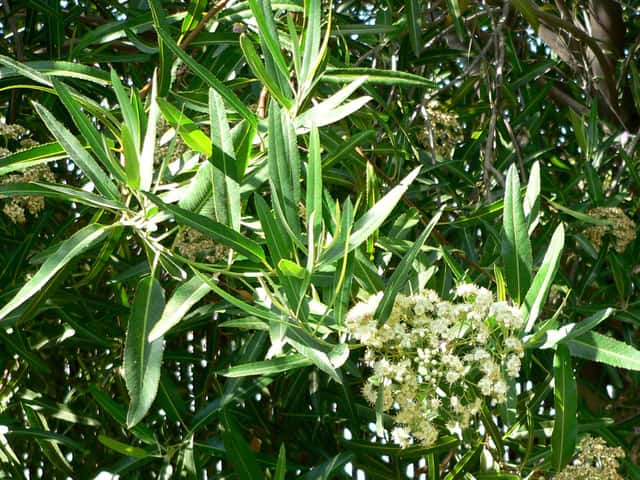
Arizona rosewood (Vauquelinia californica) is a easy-care plant from the Rosaceae family. Arizona Rosewood is a robust, evergreen shrub or small tree native to the Sonoran Desert. It is highly valued in xeriscaping for its resemblance to oleander but without the high toxicity. The plant features dark green, leathery, lance-shaped leaves with serrated edges. In late spring and early summe...
Arizona rosewood grows up to 6.1m, spread of 365cm, watering every 30 days, -9°C – 43°C, 10–40% humidity. It is not suitable for indoor environments and safe for pets.
Unlike many tropical plants, Arizona rosewood tolerates watering mistakes. Best for beginners. Unlike many popular species, Arizona rosewood is safe to keep around pets.
How to Care for Arizona rosewood?
TLDR: Arizona rosewood needs Direct sun, watering every 30 days, and temperatures between -9-43°C with 10-40% humidity.
How Often Should You Water Arizona rosewood?
Water weekly during the first two growing seasons to establish a deep root system. Once established, it only needs supplemental water during extreme drought.
How Much Light Does Arizona rosewood Need?
This plant requires full, direct sunlight for at least 6 to 8 hours a day to maintain its dense foliage and produce flowers.
What Is the Best Soil for Arizona rosewood?
Tolerates a wide range of soils including alkaline, rocky, and poor soils, provided they do not hold standing water.
What Pot Should You Use for Arizona rosewood?
Best grown in the ground; if using a container, use a very large, well-draining terracotta pot with a cactus/succulent mineral mix.
What Is Arizona rosewood and Where Does It Come From?
Arizona Rosewood is a robust, evergreen shrub or small tree native to the Sonoran Desert. It is highly valued in xeriscaping for its resemblance to oleander but without the high toxicity. The plant features dark green, leathery, lance-shaped leaves with serrated edges. In late spring and early summer, it produces dense, flat-topped clusters of small, creamy white flowers that attract pollinators. Its bark is attractive and becomes shaggy with age, adding winter interest to the landscape.
How to Propagate Arizona rosewood?
Seed Propagation
- Keep the soil consistently moist but not waterlogged during the germination period.
- 1 Seed Collection
Collect seeds from the dried brown capsules in late summer or fall.
- 2 Stratification
Provide a period of cold, moist stratification for 30-60 days to improve germination rates.
- 3 Sowing
Sow seeds in a well-draining sandy seed-starting mix and cover lightly with soil.
Materials needed:
Semi-Hardwood Cuttings
- Use a bottom heat mat to encourage root development, as this species is notoriously slow to root from cuttings.
- 1 Cutting Selection
Take 4-6 inch cuttings from semi-hardwood growth during the active summer growing season.
- 2 Hormone Application
Dip the cut end into a high-strength rooting hormone powder or gel.
- 3 Planting
Insert the cutting into a sterile mix of perlite and peat moss, keeping it under high humidity.
Materials needed:
How Big Does Arizona rosewood Grow?
TLDR: Arizona rosewood can reach up to 6.1m tall with Slow growth rate.
Max height
6.1m
Spread
3.6m
Growth rate
Slow
Foliage
Evergreen
Plant Uses
Ornamental
Great for decoration
Is your plant showing symptoms?
Click on the symptom to discover possible causes:
What Diseases Commonly Affect Arizona rosewood?
TLDR: Arizona rosewood is susceptible to 2 known diseases. Monitor regularly for early detection.
Root Rot
Root rot is a serious fungal disease that affects the root system of plants, causing them to decay and die. It is primarily caused by overwatering, poor drainage, or soil-borne fungi such as Pythium, Phytophthora, Rhizoctonia, and Fusarium. The disease thrives in waterlogged conditions where roots are deprived of oxygen, making them susceptible to fungal infection.
Spider Mites
Spider mites are tiny arachnids (less than 1/20 inch long) related to spiders and ticks that feed on plant sap. They thrive in hot, dry conditions and can cause significant damage to ornamental and vegetable plants. During severe infestations, crop losses can reach 14% or higher as these pests disrupt vital plant processes including photosynthesis, carbon dioxide absorption, and transpiration.
Meaning & Symbolism
Represents resilience, endurance, and the ability to thrive in the harsh conditions of the American Southwest.
Compare with similar plants
| Attribute | Difficulty | Light | Watering | Pet Safe |
|---|---|---|---|---|
| Field Maple | Easy | Bright indirect | 14d | ✓ |
| Silver Birch | Easy | Direct sun | 14d | ✓ |
| Cushion Bush | Easy | Direct sun | 14d | ✓ |
| Peruvian peppertree | Easy | Direct sun | 14d | ⚠️ |





