Euphorbiaceae
Pencil Cactus (Euphorbia tirucalli)
Euphorbia tirucalli
Easy to care for in bright light with infrequent watering. Drought-tolerant. Avoid overwatering at all costs. Wear gloves and eye protection when handling — sap causes severe burns.
Every 21 days
Direct sun
10° - 38°C
20% - 50%
Categories
What is Pencil Cactus?
Pencil Cactus (Euphorbia tirucalli) is a easy-care plant from the Euphorbiaceae family. Euphorbia tirucalli, commonly known as Pencil Cactus or Pencil Tree, is a striking succulent shrub native to tropical and subtropical Africa. Despite its common name, it is not a true cactus but belongs to the Euphorbiaceae family. It produces dense clusters of cylindrical, pencil-thin green stems t...
Pencil Cactus grows up to 9.0m, spread of 180cm, watering every 21 days, 10°C – 38°C, 20–50% humidity. It is suitable for indoor environments and not safe for pets.
Unlike many tropical plants, Pencil Cactus tolerates watering mistakes. Best for beginners. Without precautions, ingestion can cause irritation in pets. Keep out of reach of cats and dogs. Without adequate drainage, root rot can develop within 42 days.
How to Care for Pencil Cactus?
TLDR: Pencil Cactus needs Direct sun, watering every 21 days, and temperatures between 10-38°C with 20-50% humidity.
How Often Should You Water Pencil Cactus?
Water deeply every 3 weeks in spring and summer, once a month or less in fall and winter. Always let the soil dry completely between waterings. Never leave standing water in the saucer.
How Much Light Does Pencil Cactus Need?
Needs bright direct light to thrive — ideally a south or west-facing window. Outdoors it tolerates full sun. Low light causes leggy, pale growth.
What Is the Best Soil for Pencil Cactus?
Use a well-draining cactus or succulent mix with added perlite or coarse sand. Never use moisture-retaining mixes. Ensure the pot has drainage holes.
What Pot Should You Use for Pencil Cactus?
Terracotta pot with drainage holes — promotes fast drying essential for this drought-tolerant species. Avoid glazed or plastic pots that retain moisture.
Care Schedule
Fertilize
Every 60 days
What Is Pencil Cactus and Where Does It Come From?
Euphorbia tirucalli, commonly known as Pencil Cactus or Pencil Tree, is a striking succulent shrub native to tropical and subtropical Africa. Despite its common name, it is not a true cactus but belongs to the Euphorbiaceae family. It produces dense clusters of cylindrical, pencil-thin green stems that turn brilliant orange-red in cooler temperatures or high light conditions — a cultivar known as Firesticks. The plant produces a highly caustic white latex sap that is one of the most dangerous among houseplants, capable of causing severe chemical burns and temporary blindness on eye contact.
How to Propagate Pencil Cactus?
Stem Cutting
Never skip the callousing step — wet cuttings rot immediately. Keep away from children and pets during propagation.
- 1 Wear thick gloves and eye protection before cutting
- 2 Cut a healthy stem 10-15 cm long using clean, sharp scissors
- 3 Allow the cutting to dry and callous in open air for 7-10 days
- 4 Insert the calloused end into dry cactus mix or coarse sand
- 5 Water sparingly after 2 weeks; roots form in 4-6 weeks
Materials needed:
How Big Does Pencil Cactus Grow?
TLDR: Pencil Cactus can reach up to 9.0m tall with Fast growth rate.
Max height
9.0m
Spread
1.8m
Growth rate
Fast
Foliage
Evergreen
Warning: Toxic Plant
This plant can be toxic if ingested. Keep out of reach of:
Plant Uses
Ornamental
Great for decoration
Medicinal
Medicinal properties
Medicinal Uses
- Traditionally used in Brazilian folk medicine for warts, tumors, and infections — NOT proven safe or effective; use is strongly discouraged due to genotoxic risk
Is your plant showing symptoms?
Click on the symptom to discover possible causes:
What Diseases Commonly Affect Pencil Cactus?
TLDR: Pencil Cactus is susceptible to 8 known diseases. Monitor regularly for early detection.
Root Rot
Root rot is a serious fungal disease that affects the root system of plants, causing them to decay and die. It is primarily caused by overwatering, poor drainage, or soil-borne fungi such as Pythium, Phytophthora, Rhizoctonia, and Fusarium. The disease thrives in waterlogged conditions where roots are deprived of oxygen, making them susceptible to fungal infection.
Overwatering
Overwatering occurs when plants receive too much water, depriving roots of oxygen and causing root rot. This environmental stress is one of the most common causes of houseplant death, as waterlogged soil prevents roots from breathing and functioning properly.
Mealybugs
Mealybugs are small, soft-bodied insects covered with a white, waxy, cottony material. They are common pests of houseplants and outdoor plants in mild climates. These sap-sucking insects feed on plant tissue, causing damage, stunted growth, and can lead to plant death if left untreated. They produce sticky honeydew which attracts sooty mold.
Scale Insects
Scale insects are small sap-sucking pests that appear as brown, shell-like bumps on plant stems and leaves. There are over 25 species, divided into armored (hard) and unarmored (soft) scales. They feed by piercing plant tissue and extracting sap, which weakens the plant and can lead to yellowing, stunted growth, and even death if left untreated. They also excrete honeydew, which attracts ants and promotes sooty mold growth.
Meaning & Symbolism
A symbol of resilience and survival in harsh environments. In Brazilian folk medicine it carries controversial significance as a traditional cancer remedy — scientifically unproven and potentially harmful.
Fun Facts
Despite the name, Pencil Cactus is not a true cactus — it belongs to the Euphorbiaceae family, the same family as the poinsettia
Its sap is one of the most caustic found in any houseplant — capable of causing chemical burns and temporary blindness
In full sun and cool temperatures, stems turn brilliant orange-red, earning the cultivar name 'Firesticks'
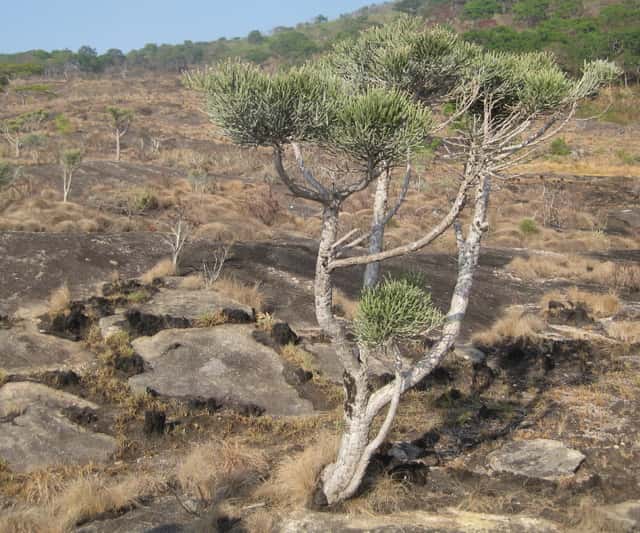
In its native tropical Africa, it can grow into a tree up to 9 metres tall
Frequently asked questions
Is Pencil Cactus toxic to cats and dogs?
How often should I water my Pencil Cactus?
Why is my Pencil Cactus turning red or orange?
Can I grow a Pencil Cactus indoors?
Is Euphorbia tirucalli a true cactus?
Compare with similar plants
| Attribute | Difficulty | Light | Watering | Pet Safe |
|---|---|---|---|---|
| Field Maple | Easy | Bright indirect | 14d | ✓ |
| Silver Birch | Easy | Direct sun | 14d | ✓ |
| Cushion Bush | Easy | Direct sun | 14d | ✓ |
| Peruvian peppertree | Easy | Direct sun | 14d | ⚠️ |