Arecaceae
Pindo Palm: Complete Care Guide for Butia capitata
Butia capitata
A low-maintenance palm perfect for sunny gardens and landscapes. Water deeply every 2 weeks. Fertilize twice a year. Trim dead fronds annually. Highly cold-hardy for a palm.
Every 14 days
Direct sun
-9° - 38°C
40% - 70%
Categories
What is Pindo Palm?
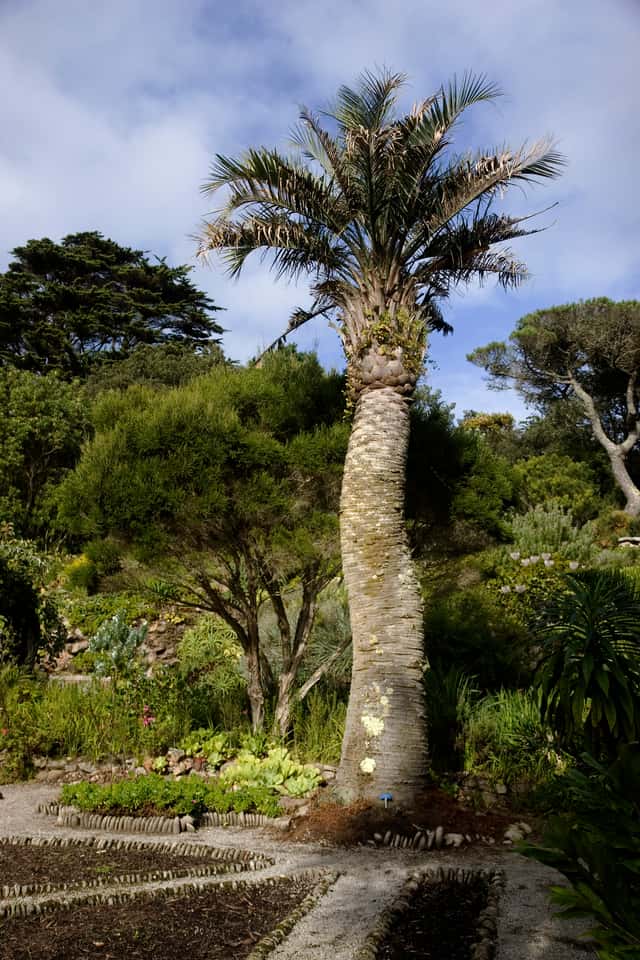
Pindo Palm (Butia capitata) is a easy-care plant from the Arecaceae family. Butia capitata, commonly known as the Pindo Palm or Jelly Palm, is a slow-growing feather palm native to southern Brazil, Uruguay, and Argentina. It is prized for its graceful blue-gray arching fronds and clusters of edible orange-yellow fruits used to make jellies and wines.
Pindo Palm grows up to 6.0m, spread of 300cm, watering every 14 days, -9°C – 38°C, 40–70% humidity. It is not suitable for indoor environments and safe for pets.
Unlike many tropical plants, Pindo Palm tolerates watering mistakes. Best for beginners. Unlike many popular species, Pindo Palm is safe to keep around pets.
How to Care for Pindo Palm?
TLDR: Pindo Palm needs Direct sun, watering every 14 days, and temperatures between -9-38°C with 40-70% humidity.
How Often Should You Water Pindo Palm?
Water deeply every 14 days, allowing the soil to dry out between waterings. The Pindo Palm is highly drought-tolerant and very susceptible to root rot from overwatering.
How Much Light Does Pindo Palm Need?
The Pindo Palm thrives in full sun and requires at least 6 hours of direct sunlight daily. It will grow more slowly in partial shade.
What Is the Best Soil for Pindo Palm?
Prefers well-draining sandy or loamy soil. Avoid heavy clay soils that retain moisture. Ideal pH range is 6.0–7.5.
What Pot Should You Use for Pindo Palm?
Large ceramic or concrete container with drainage holes. Lightweight plastic pots are unsuitable for this large-growing palm.
Care Schedule
Fertilize
Every 180 days
What Is Pindo Palm and Where Does It Come From?
Butia capitata, commonly known as the Pindo Palm or Jelly Palm, is a slow-growing feather palm native to southern Brazil, Uruguay, and Argentina. It is prized for its graceful blue-gray arching fronds and clusters of edible orange-yellow fruits used to make jellies and wines.
How to Propagate Pindo Palm?
Seed Propagation
Germination is slow and erratic. Keep substrate slightly moist, never waterlogged. Fresh seeds yield better results.
- 1 Collect ripe fruits and completely remove the pulp
- 2 Lightly scarify the endocarp with sandpaper
- 3 Sow in sandy, moist substrate 2-3 cm deep
- 4 Keep in a warm location (25-30°C) with bright indirect light
- 5 Wait for irregular germination — can take 6 to 24 months
Materials needed:
How Big Does Pindo Palm Grow?
TLDR: Pindo Palm can reach up to 6.0m tall with Slow growth rate.
Max height
6.0m
Spread
3.0m
Growth rate
Slow
Foliage
Evergreen
Plant Uses
Ornamental
Great for decoration
Edible
Can be consumed
Culinary Uses
- jellies
- jams
- juices
- wines
- ice cream
- liqueurs
Is your plant showing symptoms?
Click on the symptom to discover possible causes:
What Diseases Commonly Affect Pindo Palm?
TLDR: Pindo Palm is susceptible to 5 known diseases. Monitor regularly for early detection.
Root Rot
Root rot is a serious fungal disease that affects the root system of plants, causing them to decay and die. It is primarily caused by overwatering, poor drainage, or soil-borne fungi such as Pythium, Phytophthora, Rhizoctonia, and Fusarium. The disease thrives in waterlogged conditions where roots are deprived of oxygen, making them susceptible to fungal infection.
Phytophthora Root Rot
Disease caused by fungus-like organisms (oomycetes) that live in soil and can survive for years. It affects roots, stem, and crown of plants, being especially severe in waterlogged or poorly drained soils. It is the second most common cause of root rot in trees and shrubs.
Scale Insects
Scale insects are small sap-sucking pests that appear as brown, shell-like bumps on plant stems and leaves. There are over 25 species, divided into armored (hard) and unarmored (soft) scales. They feed by piercing plant tissue and extracting sap, which weakens the plant and can lead to yellowing, stunted growth, and even death if left untreated. They also excrete honeydew, which attracts ants and promotes sooty mold growth.
Aphids
Aphids are small, soft-bodied, pear-shaped insects (1/16 to 1/8 inch long) that feed by sucking nutrient-rich sap from plants. They reproduce rapidly and can quickly weaken plants, causing distorted growth and transmitting plant viruses. Aphids come in various colors including green, black, red, yellow, brown, and gray. They secrete honeydew, a sticky substance that attracts ants and encourages sooty mold growth.
Meaning & Symbolism
Symbol of resilience and generosity, the Pindo Palm represents the connection between people and nature in southern South America.
Fun Facts
The Pindo Palm can live for over 100 years under suitable conditions
Its fruits have a unique flavor reminiscent of pineapple and vanilla
It is one of the most cold-hardy palms in the world
The palm is sometimes called the Jelly Palm because its fruits are used to make jelly
Frequently asked questions
How often should I water my Pindo Palm?
Is the Pindo Palm cold-hardy?
Are Pindo Palm fruits edible?
How tall does a Pindo Palm grow?
Is the Pindo Palm toxic to pets?
Compare with similar plants
| Attribute | Difficulty | Light | Watering | Pet Safe |
|---|---|---|---|---|
| Field Maple | Easy | Bright indirect | 14d | ✓ |
| Silver Birch | Easy | Direct sun | 14d | ✓ |
| Common Blanketflower | Easy | Direct sun | 10d | ✓ |
| Cushion Bush | Easy | Direct sun | 14d | ✓ |





