Saxifragaceae
Piggyback Plant (Tolmiea menziesii): Complete Care Guide
Tolmiea menziesii
The Piggyback Plant is easy to care for. Keep the soil consistently moist but never waterlogged. Place in bright to medium indirect light and maintain cool to moderate temperatures (10–24°C). High humidity is beneficial. Fertilize monthly during spring and summer. Prune spent leaves to encourage bushier growth.
Every 7 days
Partial shade
10° - 24°C
50% - 80%
Categories
What is Piggyback Plant?
Piggyback Plant (Tolmiea menziesii) is a easy-care plant from the Saxifragaceae family. Tolmiea menziesii, commonly known as the Piggyback Plant, is a charming evergreen perennial native to the moist, shady forests of the Pacific Northwest coast of North America. It earns its whimsical name from its unique ability to produce tiny plantlets directly at the base of its mature leaves — ba...
Piggyback Plant grows up to 60cm, with spread of 55cm, watering every 7 days, 10°C – 24°C, 50–80% humidity. It is suitable for indoor environments and safe for pets.
Unlike many tropical plants, Piggyback Plant tolerates watering mistakes. Best for beginners. Unlike many popular species, Piggyback Plant is safe to keep around pets. Without adequate drainage, root rot can develop within 14 days.
How to Care for Piggyback Plant?
TLDR: Piggyback Plant needs Partial shade, watering every 7 days, and temperatures between 10-24°C with 50-80% humidity.
How Often Should You Water Piggyback Plant?
Water every 5–9 days, keeping the soil evenly moist. Allow only the very top of the soil to dry slightly between waterings. Reduce watering frequency in winter when growth slows. Never let the plant sit in standing water, as it is susceptible to root rot.
How Much Light Does Piggyback Plant Need?
Tolerates a range of light conditions, from medium to bright indirect light. Avoid direct sun, which scorches the soft leaves. In very low light, growth slows and stems become leggy. A north or east-facing window is ideal indoors.
What Is the Best Soil for Piggyback Plant?
Plant in rich, organic, well-draining soil with good moisture retention. A mix of potting soil with added peat or coco coir and perlite works well. Ensure good drainage to prevent root rot. Prefers slightly acidic to neutral pH (5.5–7.0).
What Pot Should You Use for Piggyback Plant?
A terracotta or ceramic pot with drainage holes is ideal to maintain moisture balance without waterlogging. Hanging baskets work beautifully for indoor use, showcasing the cascading growth habit.
Care Schedule
Fertilize
Every 30 days
Misting
Every 3 days
Repot
Every 365 days
What Is Piggyback Plant and Where Does It Come From?
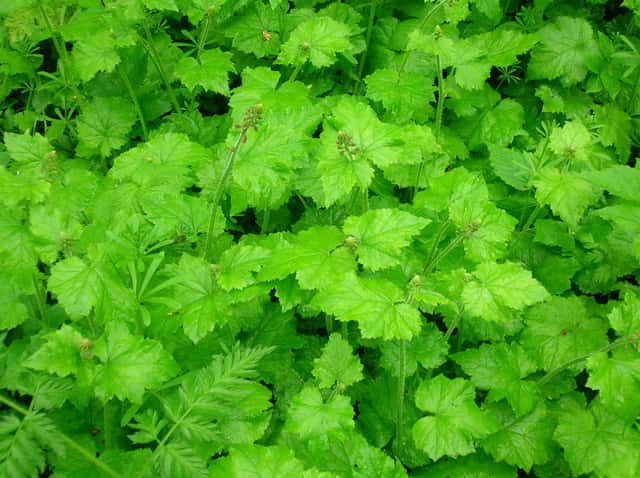
Tolmiea menziesii, commonly known as the Piggyback Plant, is a charming evergreen perennial native to the moist, shady forests of the Pacific Northwest coast of North America. It earns its whimsical name from its unique ability to produce tiny plantlets directly at the base of its mature leaves — babies riding "piggyback" on the parent leaf. With soft, hairy, maple-like leaves and a lush mounding habit, it makes an attractive ground cover outdoors and a delightful cascading houseplant indoors.
How to Propagate Piggyback Plant?
Division
Divide in spring for best results. Keep newly divided plants away from direct sun until roots are established.
- 1 Remove the parent plant from its pot and gently separate the root clumps into smaller sections.
- 2 Ensure each section has healthy roots and at least one shoot.
- 3 Plant each division into fresh, moist potting mix.
- 4 Water thoroughly and place in bright indirect light.
- 5 Keep moist until established — usually 2–4 weeks.
Materials needed:
Leaf plantlet cutting
Choose leaves with visible, plump plantlets. Keep humidity high during rooting by covering loosely with a plastic bag.
- 1 Select a mature leaf that has a well-developed plantlet growing at its base.
- 2 Cut the leaf with its stalk intact using clean scissors.
- 3 Place the leaf stalk in a small pot of moist potting mix, burying the base of the stalk.
- 4 Keep the soil moist and place in indirect light.
- 5 Roots should develop in 3–6 weeks. Once established, remove the old parent leaf.
Materials needed:
How Big Does Piggyback Plant Grow?
TLDR: Piggyback Plant can reach up to 60cm tall with Fast growth rate.
Max height
60cm
Spread
55cm
Growth rate
Fast
Foliage
Evergreen
Plant Uses
Ornamental
Great for decoration
Ground Cover
Soil coverage
Is your plant showing symptoms?
Click on the symptom to discover possible causes:
What Diseases Commonly Affect Piggyback Plant?
TLDR: Piggyback Plant is susceptible to 10 known diseases. Monitor regularly for early detection.
Powdery Mildew
Powdery mildew is a common fungal disease caused by various fungi species including Erysiphe, Podosphaera, Oïdium, and Leveillula. It affects over 10,000 plant species worldwide. The disease thrives in warm, dry climates with high humidity and appears as a distinctive white powdery coating on plant surfaces.
Root Rot
Root rot is a serious fungal disease that affects the root system of plants, causing them to decay and die. It is primarily caused by overwatering, poor drainage, or soil-borne fungi such as Pythium, Phytophthora, Rhizoctonia, and Fusarium. The disease thrives in waterlogged conditions where roots are deprived of oxygen, making them susceptible to fungal infection.
Gray Mold (Botrytis Blight)
Gray mold, caused by the fungus Botrytis cinerea, is one of the most common fungal diseases in plants. It affects over 200 plant species, including ornamentals, vegetables, fruits, and houseplants. The disease thrives in cool, humid conditions with poor air circulation, causing grayish spots and soft rot on infected tissues.
Leaf Spot
Leaf spot is a common fungal disease caused by various pathogens including Alternaria, Ascochyta, Colletotrichum, Septoria, and Venturia. It primarily affects leaves, causing discolored spots that can lead to premature leaf drop if left untreated.
Meaning & Symbolism
The Piggyback Plant symbolizes vitality, renewal, and maternal care. Its continuous production of plantlets on existing leaves represents the cycle of life, nurturing, and regeneration — a fitting symbol for gardeners who love sharing plants with others.
Fun Facts
The Piggyback Plant is one of the few houseplants that produces fully formed plantlets on its leaves — a phenomenon called 'foliar embryony'.
It is native to the fog-shrouded forests of the Pacific Northwest coast, from northern California to Alaska.
In the wild, Tolmiea menziesii forms dense mats as ground cover in moist, shaded forest floors.
The species was named after Dr. William Fraser Tolmie, a Scottish physician and botanist who worked for the Hudson's Bay Company in the Pacific Northwest in the 1830s.
Frequently asked questions
How often should I water the Piggyback Plant?
Is the Piggyback Plant toxic to cats and dogs?
Why does my Piggyback Plant have brown leaf tips?
How do I propagate the Piggyback Plant?
Can the Piggyback Plant tolerate low light?
Compare with similar plants
| Attribute | Difficulty | Light | Watering | Pet Safe |
|---|---|---|---|---|
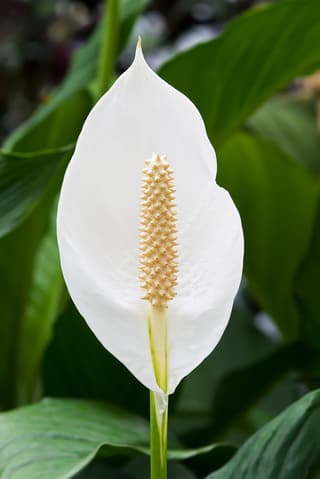
| Peace Lily | Easy | Low light | 4d | ⚠️ |
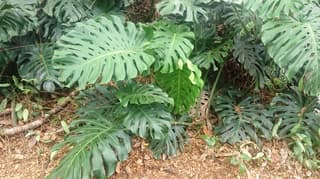
| Swiss Cheese Plant | Easy | Partial shade | 10d | ⚠️ |
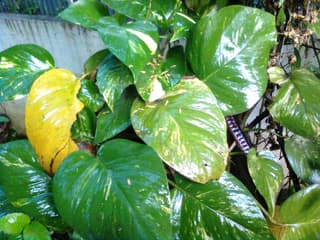
| Golden Pothos | Easy | Low light | 8d | ⚠️ |
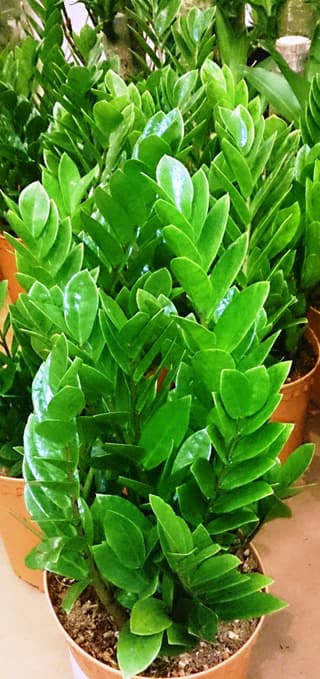
| ZZ Plant | Easy | Low light | 18d | ⚠️ |