Marantaceae
Peacock Plant: Complete Care Guide for Goeppertia makoyana
Goeppertia makoyana
Requires high humidity (above 60%), bright indirect light, and watering with filtered or settled tap water. Sensitive to drafts and sudden temperature changes. Considered challenging and best suited for experienced plant parents.
Every 7 days
Partial shade
16° - 30°C
60% - 80%
Categories
What is Peacock Plant?
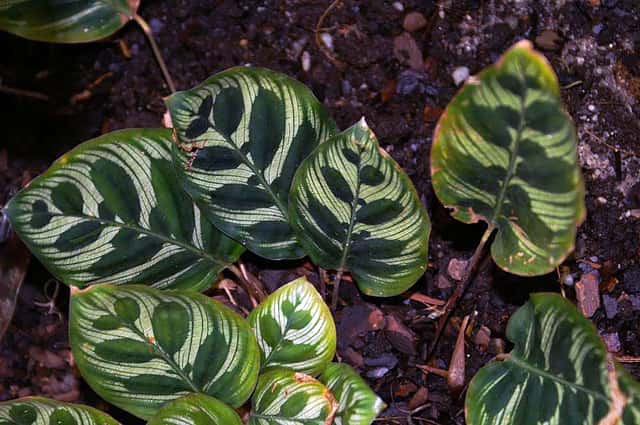
Peacock Plant (Goeppertia makoyana) is a hard-care plant from the Marantaceae family. Goeppertia makoyana, commonly known as the Peacock Plant, is a stunning tropical species native to the rainforests of eastern Brazil. Its leaves are a natural work of art: the upper surface displays light and dark green patterns resembling stained-glass cathedral windows, while the underside is pain...
Peacock Plant grows up to 60cm, with spread of 30cm, watering every 7 days, 16°C – 30°C, 60–80% humidity. It is suitable for indoor environments and safe for pets.
Unlike easy-care plants, Peacock Plant demands constant attention to humidity and light. Not recommended for beginners. Unlike many popular species, Peacock Plant is safe to keep around pets. Without adequate drainage, root rot can develop within 14 days.
How to Care for Peacock Plant?
TLDR: Peacock Plant needs Partial shade, watering every 7 days, and temperatures between 16-30°C with 60-80% humidity.
How Often Should You Water Peacock Plant?
Water approximately every 7 days when the top inch of soil dries out. Always use filtered water or tap water left to sit for 24 hours to prevent fluoride buildup, which causes brown leaf tips.
How Much Light Does Peacock Plant Need?
Place in bright indirect light away from direct sun rays, which can scorch and fade the beautiful leaf markings. East- or north-facing windows work best.
What Is the Best Soil for Peacock Plant?
Use a moist, well-draining peat-based mix amended with perlite and organic compost. Ideal pH is 6.0–7.0. Avoid compacted or heavy soils that retain excess moisture.
What Pot Should You Use for Peacock Plant?
Ceramic or terracotta pot with good drainage. Avoid oversized pots that can lead to waterlogged soil.
Care Schedule
Fertilize
Every 14 days
Misting
Every 1 days
Repot
Every 365 days
What Is Peacock Plant and Where Does It Come From?
Goeppertia makoyana, commonly known as the Peacock Plant, is a stunning tropical species native to the rainforests of eastern Brazil. Its leaves are a natural work of art: the upper surface displays light and dark green patterns resembling stained-glass cathedral windows, while the underside is painted in deep purple. Like other prayer plants, its leaves move throughout the day in response to light.
How to Propagate Peacock Plant?
Root Division
Only divide when the plant is healthy and during repotting to minimise stress. Use sterilised tools to prevent disease transmission.
- 1 Remove the plant from its pot during spring repotting
- 2 Gently separate the rhizomes into 2–3 sections, ensuring each has roots and leaves
- 3 Plant each division in an individual pot with moist peat-based mix
- 4 Maintain high humidity (above 70%) and keep the soil lightly moist until new growth appears
Materials needed:
How Big Does Peacock Plant Grow?
TLDR: Peacock Plant can reach up to 60cm tall with Slow growth rate.
Max height
60cm
Spread
30cm
Growth rate
Slow
Foliage
Evergreen
Plant Uses
Ornamental
Great for decoration
Air Purifying
Improves air quality
Is your plant showing symptoms?
Click on the symptom to discover possible causes:
What Diseases Commonly Affect Peacock Plant?
TLDR: Peacock Plant is susceptible to 11 known diseases. Monitor regularly for early detection.
Root Rot
Root rot is a serious fungal disease that affects the root system of plants, causing them to decay and die. It is primarily caused by overwatering, poor drainage, or soil-borne fungi such as Pythium, Phytophthora, Rhizoctonia, and Fusarium. The disease thrives in waterlogged conditions where roots are deprived of oxygen, making them susceptible to fungal infection.
Spider Mites
Spider mites are tiny arachnids (less than 1/20 inch long) related to spiders and ticks that feed on plant sap. They thrive in hot, dry conditions and can cause significant damage to ornamental and vegetable plants. During severe infestations, crop losses can reach 14% or higher as these pests disrupt vital plant processes including photosynthesis, carbon dioxide absorption, and transpiration.
Low Humidity Stress
Low humidity stress occurs when indoor air becomes too dry, causing plants to lose moisture faster than they can absorb it through their roots. This is especially common during winter heating periods, near radiators and heating vents, or in air-conditioned spaces. Tropical plants are particularly susceptible to low humidity damage.
Overwatering
Overwatering occurs when plants receive too much water, depriving roots of oxygen and causing root rot. This environmental stress is one of the most common causes of houseplant death, as waterlogged soil prevents roots from breathing and functioning properly.
Meaning & Symbolism
Symbol of transformation and beauty, reflecting the vibrant patterns of the peacock's plumage.
Fun Facts
Peacock Plant leaves perform nightly movements, folding upward at dusk — a behaviour called nyctinasty.
Native to the rainforests of eastern Brazil, it grows under the forest canopy in filtered, dappled light.
Despite rarely flowering indoors, it produces small clusters of purple and white flowers under ideal conditions.
It was reclassified from Calathea to Goeppertia based on modern phylogenetic studies.
Frequently asked questions
How often should I water the Peacock Plant?
Is the Peacock Plant toxic to cats and dogs?
Why are my Peacock Plant leaves curling?
Does the Peacock Plant need a lot of light?
How do I propagate the Peacock Plant?
Compare with similar plants
| Attribute | Difficulty | Light | Watering | Pet Safe |
|---|---|---|---|---|
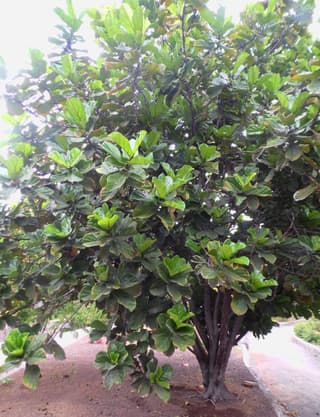
| Fiddle Leaf Fig | Hard | Bright indirect | 10d | ⚠️ |
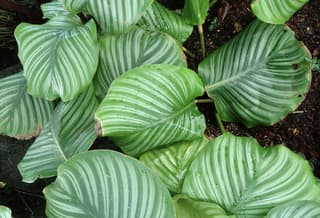
| Round-leaf Calathea | Hard | Partial shade | 7d | ✓ |
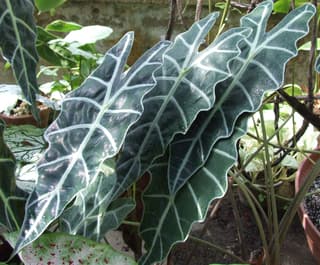
| African Mask Plant | Hard | Partial shade | 5d | ⚠️ |
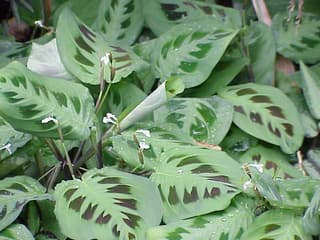
| Prayer Plant | Medium | Partial shade | 3d | ✓ |