Crassulaceae
Paddle Plant Care Guide
Kalanchoe thyrsiflora
An easy-care drought-tolerant succulent that thrives in bright light with infrequent watering. Allow soil to dry completely between waterings. Protect from frost below -1°C and avoid water on leaves.
Every 14 days
Bright indirect
10° - 29°C
30% - 50%
Categories
What is Paddle Plant?
Paddle Plant (Kalanchoe thyrsiflora) is a easy-care plant from the Crassulaceae family. Kalanchoe thyrsiflora is a striking succulent native to South Africa, prized for its large, flat, paddle-shaped leaves that form a neat basal rosette. The fleshy grey-green leaves develop vivid red margins when exposed to full sun and cool temperatures. A monocarpic species, it produces a tall flowe...
Paddle Plant grows up to 1.0m, with spread of 60cm, watering every 14 days, 10°C – 29°C, 30–50% humidity. It is suitable for indoor environments and not safe for pets.
Unlike many tropical plants, Paddle Plant tolerates watering mistakes. Best for beginners. Without precautions, ingestion can cause irritation in pets. Keep out of reach of cats and dogs. Without adequate drainage, root rot can develop within 28 days.
How to Care for Paddle Plant?
TLDR: Paddle Plant needs Bright indirect, watering every 14 days, and temperatures between 10-29°C with 30-50% humidity.
How Often Should You Water Paddle Plant?
Water only when the top 5 cm of soil is completely dry. Use the soak-and-dry method, pouring water directly onto the soil and never on the leaves. Reduce watering significantly in winter.
How Much Light Does Paddle Plant Need?
Provide at least 6 hours of bright light daily. Full sun outdoors brings out the best red leaf coloring. Indoors, place near a south or west-facing window. Avoid intense midday sun through glass which can scorch leaves.
What Is the Best Soil for Paddle Plant?
Use a well-draining succulent or cactus mix. Amend with coarse sand, perlite, or pumice for extra drainage. A mix of equal parts potting soil, sand, and perlite works well. pH should be slightly acidic to neutral (6.1-7.3).
What Pot Should You Use for Paddle Plant?
Unglazed terracotta pot with drainage holes. Terracotta wicks moisture away from roots, reducing rot risk. Choose a pot only slightly larger than the root ball.
Care Schedule
Fertilize
Every 14 days
Rotate
Every 7 days
Repot
Every 730 days
What Is Paddle Plant and Where Does It Come From?
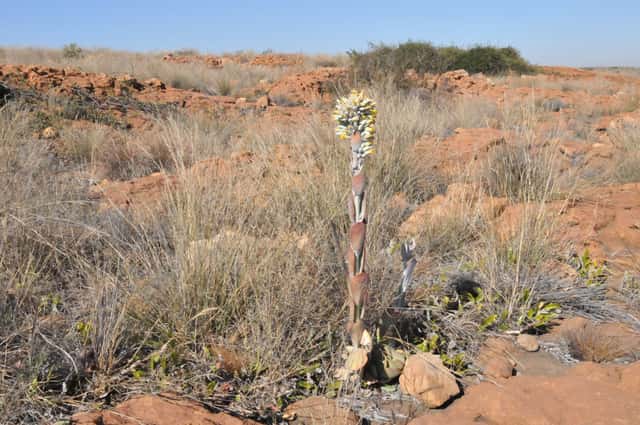
Kalanchoe thyrsiflora is a striking succulent native to South Africa, prized for its large, flat, paddle-shaped leaves that form a neat basal rosette. The fleshy grey-green leaves develop vivid red margins when exposed to full sun and cool temperatures. A monocarpic species, it produces a tall flowering stalk with sweetly scented yellow-white tubular flowers in late winter to spring, after which the main rosette dies but produces offsets.
How to Propagate Paddle Plant?
Leaf Cutting
Ensure a clean break at the leaf base for best results. Do not water until roots appear.
- 1 Select a healthy, plump leaf from the lower rosette
- 2 Gently twist the leaf off cleanly at the base
- 3 Allow the leaf to dry and callus for 2-3 days in a shaded area
- 4 Place on top of well-draining succulent soil
- 5 Mist lightly every few days until roots and a new plantlet emerge
Materials needed:
Offset Division
Offsets are produced naturally, especially after the mother plant flowers. Handle roots gently.
- 1 Wait for offsets to develop their own root system at the base of the mother plant
- 2 Gently separate the offset with roots intact
- 3 Allow the offset to dry for 1-2 days
- 4 Plant in fresh well-draining succulent mix
- 5 Water lightly after one week
Materials needed:
How Big Does Paddle Plant Grow?
TLDR: Paddle Plant can reach up to 1.0m tall with Slow growth rate.
Max height
1.0m
Spread
60cm
Growth rate
Slow
Foliage
Evergreen
Warning: Toxic Plant
This plant can be toxic if ingested. Keep out of reach of:
Plant Uses
Ornamental
Great for decoration
Medicinal
Medicinal properties
Medicinal Uses
- Traditional South African medicine uses leaves for earache relief and cold treatment
Is your plant showing symptoms?
Click on the symptom to discover possible causes:
What Diseases Commonly Affect Paddle Plant?
TLDR: Paddle Plant is susceptible to 10 known diseases. Monitor regularly for early detection.
Powdery Mildew
Powdery mildew is a common fungal disease caused by various fungi species including Erysiphe, Podosphaera, Oïdium, and Leveillula. It affects over 10,000 plant species worldwide. The disease thrives in warm, dry climates with high humidity and appears as a distinctive white powdery coating on plant surfaces.
Gray Mold (Botrytis Blight)
Gray mold, caused by the fungus Botrytis cinerea, is one of the most common fungal diseases in plants. It affects over 200 plant species, including ornamentals, vegetables, fruits, and houseplants. The disease thrives in cool, humid conditions with poor air circulation, causing grayish spots and soft rot on infected tissues.
Fusarium Wilt
Fusarium wilt is a serious fungal disease caused by the soil-borne fungus Fusarium oxysporum. The fungus invades roots and blocks the water-conducting vessels (xylem) of the plant, causing progressive wilting and eventual death. Host-specific forms of the pathogen exist that attack different plant species.
Root Rot
Root rot is a serious fungal disease that affects the root system of plants, causing them to decay and die. It is primarily caused by overwatering, poor drainage, or soil-borne fungi such as Pythium, Phytophthora, Rhizoctonia, and Fusarium. The disease thrives in waterlogged conditions where roots are deprived of oxygen, making them susceptible to fungal infection.
Meaning & Symbolism
Resilience, endurance, and prosperity. In South Africa, it symbolizes strength in adversity.
Fun Facts
Kalanchoe thyrsiflora is monocarpic — the main rosette dies after flowering, but produces offsets to carry on
The leaves can grow up to 15 cm wide and develop a white powdery coating called farina that protects against sunburn
In its native South Africa, it grows in rocky grasslands and can survive bushfires thanks to its water-storing leaves
Frequently asked questions
How often should I water my Paddle Plant?
Why are the leaves on my Paddle Plant turning red?
Is Paddle Plant toxic to pets?
How do I propagate a Paddle Plant?
Compare with similar plants
| Attribute | Difficulty | Light | Watering | Pet Safe |
|---|---|---|---|---|
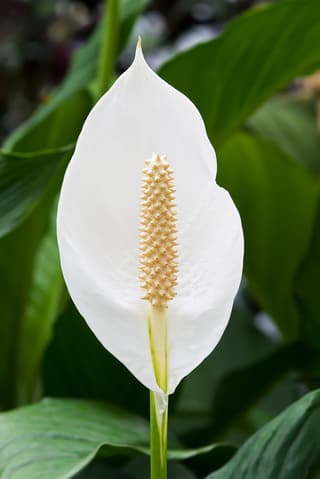
| Peace Lily | Easy | Low light | 4d | ⚠️ |
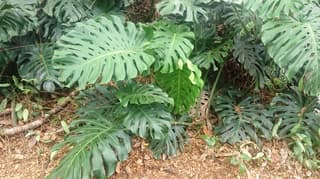
| Swiss Cheese Plant | Easy | Partial shade | 10d | ⚠️ |
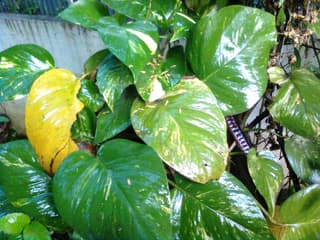
| Golden Pothos | Easy | Low light | 8d | ⚠️ |
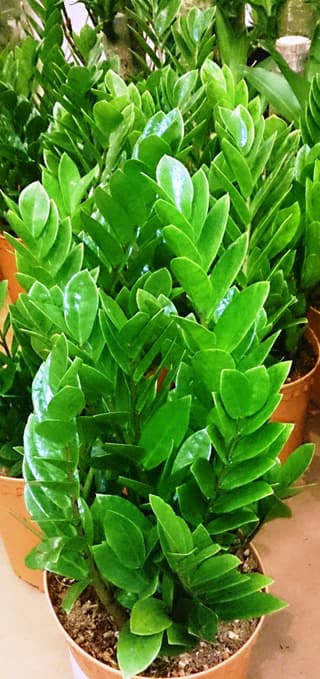
| ZZ Plant | Easy | Low light | 18d | ⚠️ |