Asphodelaceae
Zebra Plant: Low Water Needs
Haworthia fasciata
Easy-care succulent perfect for beginners. Water every 2-3 weeks allowing soil to dry completely. Prefers bright indirect light - avoid direct midday sun. Tolerates low humidity and average room temperatures. Slow-growing and rarely needs repotting.
Every 18 days
Partial shade
18° - 27°C
30% - 60%
Categories
What is Zebra Plant?
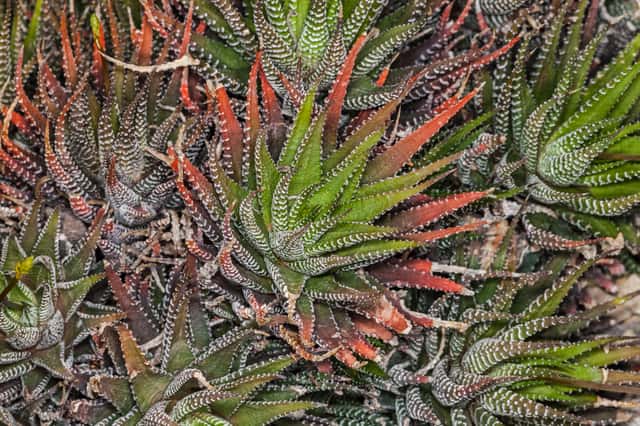
Zebra Plant (Haworthia fasciata) is a easy-care plant from the Asphodelaceae family. Haworthia fasciata, commonly known as Zebra Plant, is a small, slow-growing succulent native to South Africa. It features dark green, pointed leaves arranged in a rosette pattern, adorned with distinctive white horizontal stripes (tubercles) on the outer surface. Rarely exceeding 15 cm in height, th...
Zebra Plant grows up to 15cm, spread of 15cm, watering every 18 days, 18°C – 27°C, 30–60% humidity. It is suitable for indoor environments and safe for pets.
Unlike many tropical plants, Zebra Plant tolerates watering mistakes. Best for beginners. Unlike many popular species, Zebra Plant is safe to keep around pets. Without adequate drainage, root rot can develop within 36 days.
How to Care for Zebra Plant?
TLDR: Zebra Plant needs Partial shade, watering every 18 days, and temperatures between 18-27°C with 30-60% humidity.
How Often Should You Water Zebra Plant?
Water thoroughly but sparingly, about every 2-3 weeks. Always allow the soil to dry out completely between waterings. Reduce frequency in winter to once a month. Overwatering is the most common cause of death - when in doubt, wait longer.
How Much Light Does Zebra Plant Need?
Provide bright, indirect light. An east or west-facing window is ideal. Avoid direct midday sun which can scorch leaves and cause stress colors (red, purple, or brown hues). Can tolerate lower light but growth will be slower.
What Is the Best Soil for Zebra Plant?
Use well-draining cactus and succulent mix. Enhance drainage by adding extra perlite or coarse sand. The ideal mix contains part potting soil, part perlite, and part sand. Good drainage is essential to prevent root rot.
What Pot Should You Use for Zebra Plant?
Choose a pot with drainage holes only slightly larger than the plant. Terracotta pots are ideal as they allow soil to dry faster. These plants prefer to be slightly root-bound.
Care Schedule
Fertilize
Every 60 days
Repot
Every 1095 days
What Is Zebra Plant and Where Does It Come From?
Haworthia fasciata, commonly known as Zebra Plant, is a small, slow-growing succulent native to South Africa. It features dark green, pointed leaves arranged in a rosette pattern, adorned with distinctive white horizontal stripes (tubercles) on the outer surface. Rarely exceeding 15 cm in height, this compact plant is perfect for windowsills and desks. It is an excellent choice for beginners due to its low maintenance requirements and resilience.
How to Propagate Zebra Plant?
Offsets
Most reliable method with highest success rate. Offsets without roots take 3-4 weeks to establish.
- 1 Wait until offset has at least 4 leaves
- 2 Remove plant from pot during spring or fall repotting
- 3 Use sharp knife to separate offset close to mother plant
- 4 Include as many roots as possible when cutting
- 5 Allow offset to dry for 1-2 days before planting
- 6 Plant in cactus mix and water sparingly
Materials needed:
Leaf cuttings
Lower success rate than offsets. Takes 6-8 weeks for roots to develop. Never bury the leaf as it may rot.
- 1 Select healthy, young leaf (not from base)
- 2 Cut leaf cleanly with sharp knife
- 3 Ensure whole leaf is intact including base
- 4 Dip cut edge in rooting hormone (optional)
- 5 Let leaf dry for several days until callused
- 6 Place leaf flat on moist soil surface - do not bury
- 7 Keep in bright indirect light
Materials needed:
How Big Does Zebra Plant Grow?
TLDR: Zebra Plant can reach up to 15cm tall with Slow growth rate.
Max height
15cm
Spread
15cm
Growth rate
Slow
Foliage
Evergreen
Plant Uses
Ornamental
Great for decoration
Is your plant showing symptoms?
Click on the symptom to discover possible causes:
What Diseases Commonly Affect Zebra Plant?
TLDR: Zebra Plant is susceptible to 33 known diseases. Monitor regularly for early detection.
Root Rot
Root rot is a serious fungal disease that affects the root system of plants, causing them to decay and die. It is primarily caused by overwatering, poor drainage, or soil-borne fungi such as Pythium, Phytophthora, Rhizoctonia, and Fusarium. The disease thrives in waterlogged conditions where roots are deprived of oxygen, making them susceptible to fungal infection.
Crown Rot
Crown rot is a serious fungal disease that attacks the crown (base) of the plant where the stem meets the soil. It is caused by various fungal pathogens including Phytophthora, Fusarium, and Rhizoctonia. The disease thrives in waterlogged conditions and can quickly spread to kill the entire plant if not addressed promptly.
Pythium Root Rot
Pythium root rot is a serious fungal disease caused by various Pythium species including P. aphanidermatum, P. ultimum, and P. irregulare. These water molds are present in practically all cultivated soils and attack plant roots under wet conditions, causing rapid wet rot that can extend into the stem. The disease is favored by poor drainage, overwatering, and specific temperatures depending on the species.
Phytophthora Root Rot
Disease caused by fungus-like organisms (oomycetes) that live in soil and can survive for years. It affects roots, stem, and crown of plants, being especially severe in waterlogged or poorly drained soils. It is the second most common cause of root rot in trees and shrubs.
Meaning & Symbolism
Resilience, endurance, and adaptability. Symbolizes strength in adversity due to its ability to thrive in harsh, dry conditions with minimal care.
Compare with similar plants
| Attribute | Difficulty | Light | Watering | Pet Safe |
|---|---|---|---|---|
| Field Maple | Easy | Bright indirect | 14d | ✓ |
| Silver Birch | Easy | Direct sun | 14d | ✓ |
| Cushion Bush | Easy | Direct sun | 14d | ✓ |
| Peruvian peppertree | Easy | Direct sun | 14d | ⚠️ |





