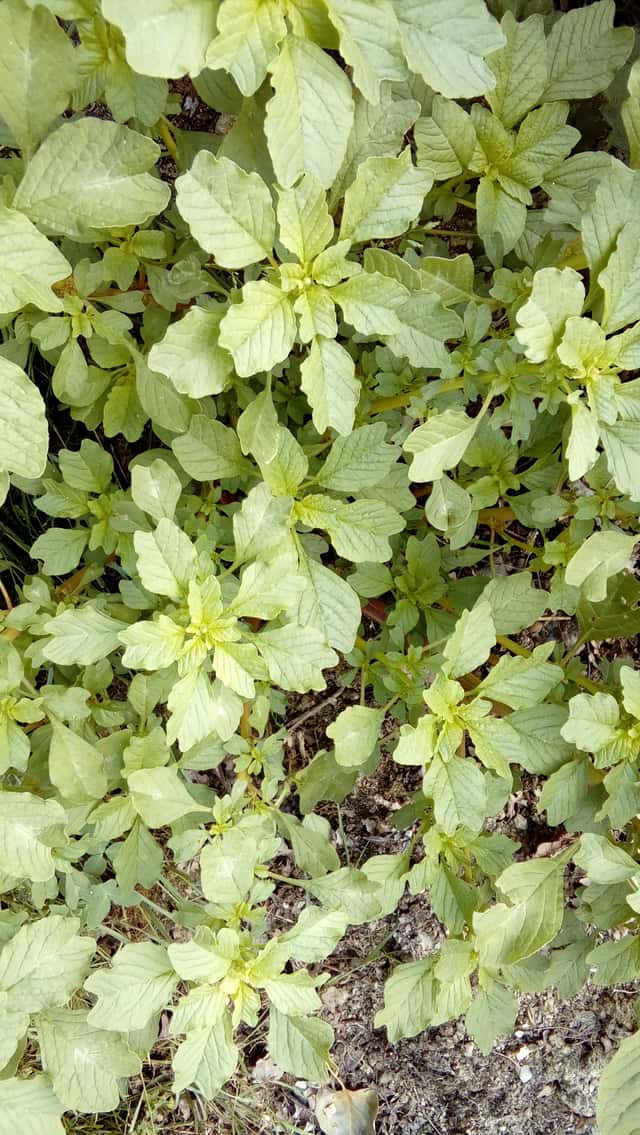
Amaranthaceae
Purple Amaranth (Amaranthus blitum): Complete Growing Guide
Amaranthus blitum
Fast-growing and easy-to-grow annual, ideal for kitchen gardens. Prefers full sun, well-draining soil and weekly watering. Very tolerant of heat and moderate drought. Harvest continuously by picking outer leaves.
Every 7 days
Bright indirect
5° - 35°C
40% - 80%
Categories
What is Purple Amaranth?
Purple Amaranth (Amaranthus blitum) is a easy-care plant from the Amaranthaceae family. Amaranthus blitum, commonly known as Purple Amaranth or Livid Amaranth, is an annual herbaceous plant in the Amaranthaceae family, native to the Mediterranean region and Southwest Asia. Widely naturalized across tropical and subtropical zones, it is valued as an edible leafy vegetable and traditiona...
Purple Amaranth grows up to 90cm, spread of 38cm, watering every 7 days, 5°C – 35°C, 40–80% humidity. It is not suitable for indoor environments and safe for pets.
Unlike many tropical plants, Purple Amaranth tolerates watering mistakes. Best for beginners. Unlike many popular species, Purple Amaranth is safe to keep around pets.
How to Care for Purple Amaranth?
TLDR: Purple Amaranth needs Bright indirect, watering every 7 days, and temperatures between 5-35°C with 40-80% humidity.
How Often Should You Water Purple Amaranth?
Water weekly, keeping soil lightly moist. In hot months check moisture every 3-4 days. Avoid waterlogging — excess water promotes root rot.
How Much Light Does Purple Amaranth Need?
Plant in full sun (minimum 6 hours of direct sunlight per day). Tolerates partial shade but growth slows and leaves lose vigor.
What Is the Best Soil for Purple Amaranth?
Use well-draining soil rich in organic matter. A mix of loam and compost works well. Ideal pH 6.0–7.5. Avoid compacted clay soils.
What Pot Should You Use for Purple Amaranth?
Large garden bed or big container with good drainage. Clay or plastic pots with adequate drainage holes work well.
Care Schedule
Fertilize
Every 30 days
What Is Purple Amaranth and Where Does It Come From?
Amaranthus blitum, commonly known as Purple Amaranth or Livid Amaranth, is an annual herbaceous plant in the Amaranthaceae family, native to the Mediterranean region and Southwest Asia. Widely naturalized across tropical and subtropical zones, it is valued as an edible leafy vegetable and traditional medicinal plant.
How to Propagate Purple Amaranth?
Direct Sowing
Prefers direct sowing over transplanting. Seeds germinate well at 20-30°C. Harvest possible from 4-6 weeks after germination.
- 1 Prepare soil by loosening and adding compost
- 2 Sow seeds directly 0.5 cm deep
- 3 Keep soil lightly moist until germination
- 4 Thin seedlings to 20-30 cm spacing
Materials needed:
How Big Does Purple Amaranth Grow?
TLDR: Purple Amaranth can reach up to 90cm tall with Fast growth rate.
Max height
90cm
Spread
38cm
Growth rate
Fast
Foliage
Deciduous
Plant Uses
Edible
Can be consumed
Medicinal
Medicinal properties
Medicinal Uses
- Leaves used in poultices to treat inflammations and boils
- Leaf decoction used in traditional medicine as an anti-inflammatory
Culinary Uses
- Young leaves eaten raw in salads
- Leaves and shoots cooked as sautéed greens or in soups
- Seeds ground into flour or used in porridges
Is your plant showing symptoms?
Click on the symptom to discover possible causes:
What Diseases Commonly Affect Purple Amaranth?
TLDR: Purple Amaranth is susceptible to 6 known diseases. Monitor regularly for early detection.
Root Rot
Root rot is a serious fungal disease that affects the root system of plants, causing them to decay and die. It is primarily caused by overwatering, poor drainage, or soil-borne fungi such as Pythium, Phytophthora, Rhizoctonia, and Fusarium. The disease thrives in waterlogged conditions where roots are deprived of oxygen, making them susceptible to fungal infection.
Damping Off
Damping off is a soil-borne fungal disease that affects seeds and young seedlings, causing rotting of stem and root tissues at and below the soil line. It is caused by several fungi including Pythium, Rhizoctonia, Fusarium, and Phytophthora. The disease thrives in cold, wet conditions with poor air circulation.
Anthracnose
Anthracnose is a fungal disease caused by fungi in the genus Colletotrichum that affects many plants, including vegetables, fruits, and trees. The disease thrives in cool, wet conditions, causing dark, sunken lesions on leaves, stems, flowers, and fruits.
Aphids
Aphids are small, soft-bodied, pear-shaped insects (1/16 to 1/8 inch long) that feed by sucking nutrient-rich sap from plants. They reproduce rapidly and can quickly weaken plants, causing distorted growth and transmitting plant viruses. Aphids come in various colors including green, black, red, yellow, brown, and gray. They secrete honeydew, a sticky substance that attracts ants and encourages sooty mold growth.
Fun Facts
Purple Amaranth is a highly nutritious edible plant rich in protein and vitamins A and C
It can reach maturity in just 6-8 weeks after germination
Used in traditional African and Asian medicine to treat inflammations and skin infections
One plant can produce thousands of tiny seeds, enabling natural self-seeding in the garden
Frequently asked questions
How often should I water Purple Amaranth?
Can Amaranthus blitum be grown in containers?
Are the leaves of Purple Amaranth edible?
Is it toxic to pets?
When can I harvest the leaves?
Compare with similar plants
| Attribute | Difficulty | Light | Watering | Pet Safe |
|---|---|---|---|---|
| Field Maple | Easy | Bright indirect | 14d | ✓ |
| Silver Birch | Easy | Direct sun | 14d | ✓ |
| Common Blanketflower | Easy | Direct sun | 10d | ✓ |
| Cushion Bush | Easy | Direct sun | 14d | ✓ |





