Oxalidaceae
Purple Shamrock: Fast Growing
Oxalis triangularis
Easy to care for houseplant that thrives in bright, indirect light. Water when top 2cm of soil is dry. Appreciates moderate humidity and temperatures between 15-23°C. Will go dormant in winter - reduce watering during this period.
Every 7 days
Partial shade
10° - 28°C
40% - 60%
Categories
What is Purple Shamrock?
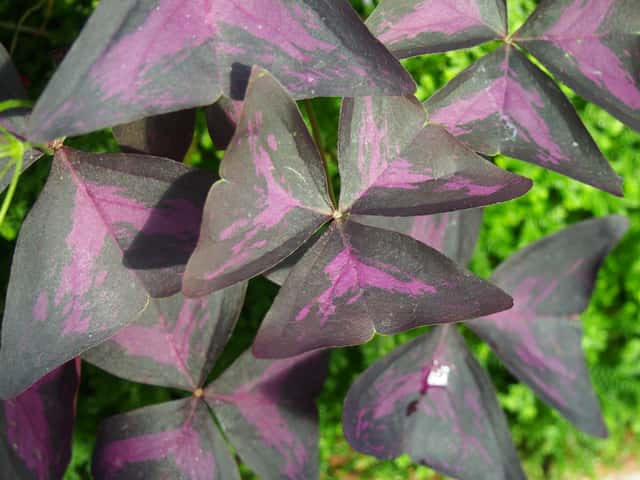
Purple Shamrock (Oxalis triangularis) is a easy-care plant from the Oxalidaceae family. Oxalis triangularis, commonly known as Purple Shamrock, is a charming perennial plant native to Brazil. Distinguished by its deep purple, triangular leaves arranged in groups of three like clover, and its delicate pink-white flowers. The leaves exhibit photonasty - opening during the day and closing...
Purple Shamrock grows up to 30cm, spread of 30cm, watering every 7 days, 10°C – 28°C, 40–60% humidity. It is suitable for indoor environments and not safe for pets.
Unlike many tropical plants, Purple Shamrock tolerates watering mistakes. Best for beginners. Without precautions, ingestion can cause irritation in pets. Keep out of reach of cats and dogs. Without adequate drainage, root rot can develop within 14 days.
How to Care for Purple Shamrock?
TLDR: Purple Shamrock needs Partial shade, watering every 7 days, and temperatures between 10-28°C with 40-60% humidity.
How Often Should You Water Purple Shamrock?
Water when the top 2cm of soil feels dry. Use room temperature water, preferably filtered or rainwater. Reduce watering significantly during winter dormancy. Never allow the bulbs to sit in waterlogged soil.
How Much Light Does Purple Shamrock Need?
Prefers bright, indirect light. Direct sunlight can scorch the delicate leaves. An east or north-facing window is ideal. The leaves and flowers are photophilic - they open in bright light and close in darkness.
What Is the Best Soil for Purple Shamrock?
Requires well-draining, rich soil with good organic content. A mix of potting soil, peat, and perlite works well. The ideal pH is slightly alkaline (7.6-7.8). Good drainage is essential to prevent bulb rot.
What Pot Should You Use for Purple Shamrock?
Use a pot with good drainage holes. A shallow, wide container works well as the plant spreads horizontally. Terracotta pots are excellent as they allow the soil to dry properly between waterings.
Care Schedule
Fertilize
Every 30 days
Rotate
Every 14 days
Repot
Every 730 days
What Is Purple Shamrock and Where Does It Come From?
Oxalis triangularis, commonly known as Purple Shamrock, is a charming perennial plant native to Brazil. Distinguished by its deep purple, triangular leaves arranged in groups of three like clover, and its delicate pink-white flowers. The leaves exhibit photonasty - opening during the day and closing at night like butterfly wings. This plant can live for over 100 years, often becoming a treasured heirloom passed through generations.
How to Propagate Purple Shamrock?
Division
Best done during spring when emerging from dormancy
- 1 Carefully remove plant from pot, avoiding damage to rhizomes
- 2 Separate rhizomes ensuring each division has 1-2 eyes (growth points)
- 3 Plant divisions in fresh potting mix at 6-8cm depth
- 4 Water lightly and place in bright, indirect light
- 5 New growth should appear within 2-4 weeks
Materials needed:
How Big Does Purple Shamrock Grow?
TLDR: Purple Shamrock can reach up to 30cm tall with Fast growth rate.
Max height
30cm
Spread
30cm
Growth rate
Fast
Foliage
Deciduous
Warning: Toxic Plant
This plant can be toxic if ingested. Keep out of reach of:
Plant Uses
Ornamental
Great for decoration
Is your plant showing symptoms?
Click on the symptom to discover possible causes:
What Diseases Commonly Affect Purple Shamrock?
TLDR: Purple Shamrock is susceptible to 28 known diseases. Monitor regularly for early detection.
Rust
Rust is a common fungal disease caused by fungi in the order Pucciniales that affects a wide variety of plants. The disease gets its name from the characteristic orange, yellow, or reddish-brown pustules that appear on leaves, resembling metal rust. This obligate fungal parasite requires living plants to survive and can cause significant economic losses in agricultural crops.
Powdery Mildew
Powdery mildew is a common fungal disease caused by various fungi species including Erysiphe, Podosphaera, Oïdium, and Leveillula. It affects over 10,000 plant species worldwide. The disease thrives in warm, dry climates with high humidity and appears as a distinctive white powdery coating on plant surfaces.
Root Rot
Root rot is a serious fungal disease that affects the root system of plants, causing them to decay and die. It is primarily caused by overwatering, poor drainage, or soil-borne fungi such as Pythium, Phytophthora, Rhizoctonia, and Fusarium. The disease thrives in waterlogged conditions where roots are deprived of oxygen, making them susceptible to fungal infection.
Crown Rot
Crown rot is a serious fungal disease that attacks the crown (base) of the plant where the stem meets the soil. It is caused by various fungal pathogens including Phytophthora, Fusarium, and Rhizoctonia. The disease thrives in waterlogged conditions and can quickly spread to kill the entire plant if not addressed promptly.
Meaning & Symbolism
Love, luck, and happiness. Known as the "flower of happiness and love"
Compare with similar plants
| Attribute | Difficulty | Light | Watering | Pet Safe |
|---|---|---|---|---|
| Field Maple | Easy | Bright indirect | 14d | ✓ |
| Silver Birch | Easy | Direct sun | 14d | ✓ |
| Common Blanketflower | Easy | Direct sun | 10d | ✓ |
| Cushion Bush | Easy | Direct sun | 14d | ✓ |





