Malvaceae
Saba Nut (Pachira glabra): Complete Care Guide
Pachira glabra
Easy-care plant suited for bright indirect light indoors. Water every 7-14 days, allowing soil to dry between waterings. Prefers humidity of 50-70% and temperatures between 15-35°C. Fertilize monthly in spring and summer.
Every 10 days
Partial shade
15° - 35°C
50% - 70%
Categories
What is Saba Nut?
Saba Nut (Pachira glabra) is a easy-care plant from the Malvaceae family. Pachira glabra, commonly known as Saba Nut or Money Tree, is a tropical tree native to eastern Brazil's Atlantic Forest. It is the species most commonly sold as the braided 'money tree' in plant shops — distinct from Pachira aquatica, which is larger and truly aquatic. P. glabra has more flexible yo...
Saba Nut grows up to 3.0m, spread of 150cm, watering every 10 days, 15°C – 35°C, 50–70% humidity. It is suitable for indoor environments and safe for pets.
Unlike many tropical plants, Saba Nut tolerates watering mistakes. Best for beginners. Unlike many popular species, Saba Nut is safe to keep around pets. Without adequate drainage, root rot can develop within 20 days.
How to Care for Saba Nut?
TLDR: Saba Nut needs Partial shade, watering every 10 days, and temperatures between 15-35°C with 50-70% humidity.
How Often Should You Water Saba Nut?
Water when the top 3-5 cm of soil is dry — approximately every 10 days. Avoid waterlogging, which causes root rot. Reduce watering frequency in winter.
How Much Light Does Saba Nut Need?
Thrives in bright indirect light near east- or north-facing windows. Avoid harsh direct sun, which can scorch the leaves. Tolerates lower light but growth slows significantly.
What Is the Best Soil for Saba Nut?
Use a well-draining potting mix — combine standard potting soil with perlite or coarse sand. Always use pots with drainage holes. Repot every 2 years to refresh the soil.
What Pot Should You Use for Saba Nut?
Ceramic or terracotta pot with drainage holes. Choose a pot 2-3 cm larger than the root ball. Avoid oversized pots that retain excess moisture.
Care Schedule
Fertilize
Every 30 days
Misting
Every 7 days
Rotate
Every 14 days
Repot
Every 730 days
What Is Saba Nut and Where Does It Come From?
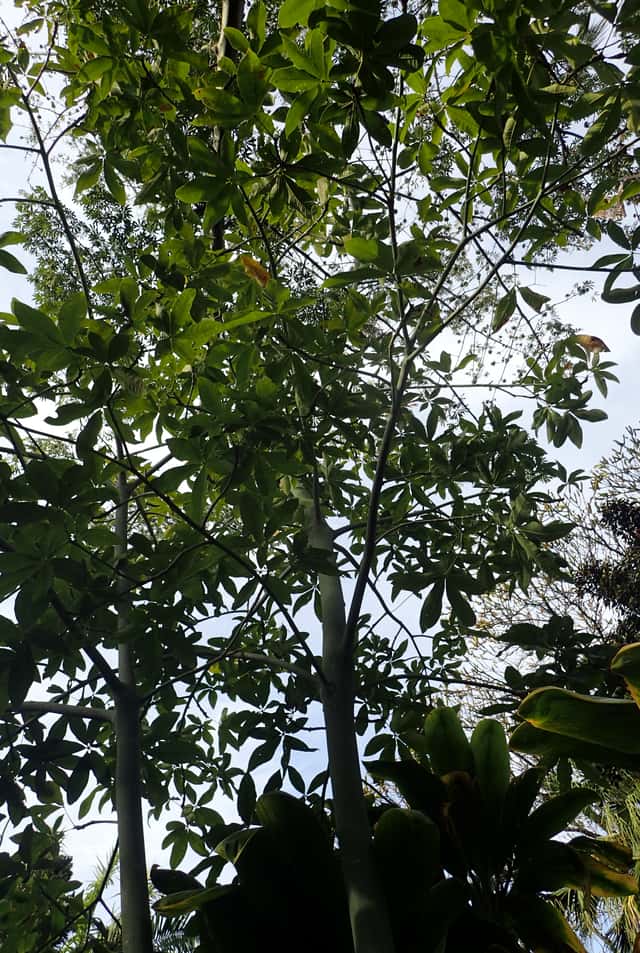
Pachira glabra, commonly known as Saba Nut or Money Tree, is a tropical tree native to eastern Brazil's Atlantic Forest. It is the species most commonly sold as the braided 'money tree' in plant shops — distinct from Pachira aquatica, which is larger and truly aquatic. P. glabra has more flexible young stems, making it ideal for braiding, and features deep-green palmate leaves and creamy-white flowers. It is non-toxic, easy to care for, and widely used in Feng Shui as a symbol of prosperity.
How to Propagate Saba Nut?
Stem Cutting
Use a sterilized cutting tool. Change water every 3-4 days if propagating in water. Spring gives the highest success rate.
- 1 Cut a healthy 10-15 cm stem with 2-3 leaves at the top
- 2 Remove lower leaves, keeping only 2 at the tip
- 3 Place in water or moist perlite mix
- 4 Keep in a warm spot with bright indirect light
- 5 Transplant when roots reach 3-5 cm
Materials needed:
Seed
Seeds lose viability quickly. Use the freshest seeds available for best results.
- 1 Use fresh seeds — viability drops rapidly after harvest
- 2 Plant 2 cm deep in moist, well-draining soil
- 3 Keep at 25-30°C in a warm, humid environment
- 4 Germination occurs in 5-10 days with near 100% success rate
Materials needed:
How Big Does Saba Nut Grow?
TLDR: Saba Nut can reach up to 3.0m tall with Fast growth rate.
Max height
3.0m
Spread
1.5m
Growth rate
Fast
Foliage
Evergreen
Plant Uses
Ornamental
Great for decoration
Edible
Can be consumed
Air Purifying
Improves air quality
Culinary Uses
- Seeds are edible when boiled or roasted, with a chestnut-like flavor
- Young leaves are edible and used locally in Brazil
Is your plant showing symptoms?
Click on the symptom to discover possible causes:
What Diseases Commonly Affect Saba Nut?
TLDR: Saba Nut is susceptible to 8 known diseases. Monitor regularly for early detection.
Root Rot
Root rot is a serious fungal disease that affects the root system of plants, causing them to decay and die. It is primarily caused by overwatering, poor drainage, or soil-borne fungi such as Pythium, Phytophthora, Rhizoctonia, and Fusarium. The disease thrives in waterlogged conditions where roots are deprived of oxygen, making them susceptible to fungal infection.
Leaf Spot
Leaf spot is a common fungal disease caused by various pathogens including Alternaria, Ascochyta, Colletotrichum, Septoria, and Venturia. It primarily affects leaves, causing discolored spots that can lead to premature leaf drop if left untreated.
Powdery Mildew
Powdery mildew is a common fungal disease caused by various fungi species including Erysiphe, Podosphaera, Oïdium, and Leveillula. It affects over 10,000 plant species worldwide. The disease thrives in warm, dry climates with high humidity and appears as a distinctive white powdery coating on plant surfaces.
Spider Mites
Spider mites are tiny arachnids (less than 1/20 inch long) related to spiders and ticks that feed on plant sap. They thrive in hot, dry conditions and can cause significant damage to ornamental and vegetable plants. During severe infestations, crop losses can reach 14% or higher as these pests disrupt vital plant processes including photosynthesis, carbon dioxide absorption, and transpiration.
Meaning & Symbolism
In Feng Shui, the Pachira is one of the most powerful symbols of wealth, luck, and positive energy. The five-lobed leaves are said to represent the five elements of nature, bringing balance and fortune to the home.
Fun Facts
Most 'money trees' sold in plant shops are Pachira glabra, not Pachira aquatica
The seeds are edible and taste similar to chestnuts when cooked
The iconic braided trunk is crafted by weaving young flexible stems together — it does not occur naturally
A single mature tree can produce 50 to 80 fruits per year
Frequently asked questions
What is the difference between Pachira glabra and Pachira aquatica?
How often should I water my Saba Nut?
Is Pachira glabra toxic to cats and dogs?
Why are the leaves on my Money Tree turning yellow?
Can I eat the seeds of Pachira glabra?
Compare with similar plants
| Attribute | Difficulty | Light | Watering | Pet Safe |
|---|---|---|---|---|
| Field Maple | Easy | Bright indirect | 14d | ✓ |
| Silver Birch | Easy | Direct sun | 14d | ✓ |
| Cushion Bush | Easy | Direct sun | 14d | ✓ |
| Peruvian peppertree | Easy | Direct sun | 14d | ⚠️ |