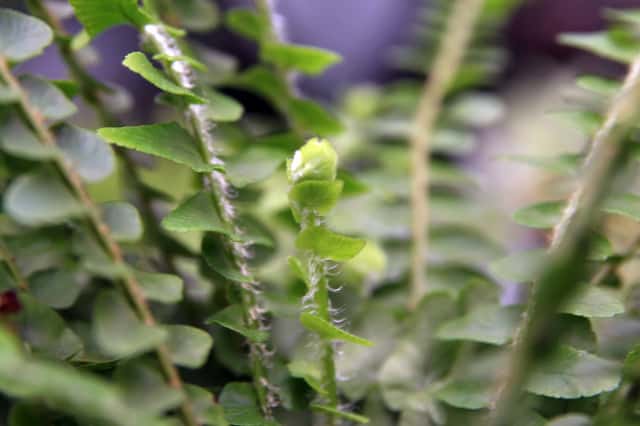
Nephrolepidaceae
Narrow Sword Fern: Complete Care Guide for Nephrolepis cordifolia
Nephrolepis cordifolia
An easy-care fern that thrives in indirect light and consistently moist soil. Maintain high humidity (50–80%), water every 4–6 days, mist regularly, and fertilize lightly every 6 weeks during the growing season. Repot every 2 years. Non-toxic to pets and humans.
Every 5 days
Partial shade
15° - 26°C
50% - 80%
Categories
What is Narrow Sword Fern?
Narrow Sword Fern (Nephrolepis cordifolia) is a easy-care plant from the Nephrolepidaceae family. Nephrolepis cordifolia, commonly known as the Narrow Sword Fern or Tuberous Sword Fern, is a robust pantropical fern distinguished by its upright, narrow fronds and distinctive underground tubers. Native to tropical and subtropical regions worldwide, it has naturalized across many continents due to...
Narrow Sword Fern grows up to 91cm, spread of 120cm, watering every 5 days, 15°C – 26°C, 50–80% humidity. It is suitable for indoor environments and safe for pets.
Unlike many tropical plants, Narrow Sword Fern tolerates watering mistakes. Best for beginners. Unlike many popular species, Narrow Sword Fern is safe to keep around pets. Without adequate drainage, root rot can develop within 10 days.
How to Care for Narrow Sword Fern?
TLDR: Narrow Sword Fern needs Partial shade, watering every 5 days, and temperatures between 15-26°C with 50-80% humidity.
How Often Should You Water Narrow Sword Fern?
Water every 4–6 days, keeping the soil evenly moist but never waterlogged. Check the top inch of soil — water when it begins to dry out. Reduce watering slightly in winter. Empty saucers after watering to prevent root rot.
How Much Light Does Narrow Sword Fern Need?
Thrives in bright, indirect light — ideally near a north or east-facing window. Avoid direct sun, which scorches fronds. It can tolerate lower light but grows more slowly. Rotate the pot every few weeks for even growth.
What Is the Best Soil for Narrow Sword Fern?
Use a well-draining, peat-based potting mix rich in organic matter. A blend of peat moss, perlite, and coarse sand works well. Maintain a slightly acidic to neutral pH (6.0–7.5). Good drainage is essential to prevent root rot.
What Pot Should You Use for Narrow Sword Fern?
Hanging basket, terracotta pot, or decorative ceramic pot with good drainage. Hanging baskets showcase the arching fronds beautifully and improve air circulation.
Care Schedule
Fertilize
Every 42 days
Misting
Every 3 days
Repot
Every 730 days
What Is Narrow Sword Fern and Where Does It Come From?
Nephrolepis cordifolia, commonly known as the Narrow Sword Fern or Tuberous Sword Fern, is a robust pantropical fern distinguished by its upright, narrow fronds and distinctive underground tubers. Native to tropical and subtropical regions worldwide, it has naturalized across many continents due to its exceptional adaptability. The plant forms lush arching clumps of bright green pinnate fronds, making it an elegant choice for both indoor and outdoor settings.
How to Propagate Narrow Sword Fern?
Rhizome Division
Divide when the plant is actively growing in spring. Keep divisions moist and out of direct sun until rooted.
- 1 Remove the plant from its pot in spring
- 2 Gently separate the root clump into sections, each with healthy fronds and roots
- 3 Plant each division in fresh, moist potting mix
- 4 Keep in a warm, humid spot and water regularly until established
Materials needed:
Spore Propagation
This method requires patience and consistent humidity. Sterilize the growing medium to prevent mold.
- 1 Collect mature spores from the undersides of fronds into a paper bag
- 2 Sprinkle spores over a tray of moist peat-based mix
- 3 Cover with clear plastic wrap to retain humidity
- 4 Keep in indirect light at 20-25°C
- 5 Transplant tiny fern plantlets once they are large enough to handle
Materials needed:
Runner/Offset Propagation
N. cordifolia produces underground tubers that can be separated and planted as new individuals.
- 1 Locate the small tuberous runners or offsets growing at the base of the plant
- 2 Detach runners that have developed small fronds
- 3 Plant in fresh moist potting mix
- 4 Keep warm and humid until established
Materials needed:
How Big Does Narrow Sword Fern Grow?
TLDR: Narrow Sword Fern can reach up to 91cm tall with Medium growth rate.
Max height
91cm
Spread
1.2m
Growth rate
Medium
Foliage
Evergreen
Plant Uses
Ornamental
Great for decoration
Air Purifying
Improves air quality
Ground Cover
Soil coverage
Is your plant showing symptoms?
Click on the symptom to discover possible causes:
What Diseases Commonly Affect Narrow Sword Fern?
TLDR: Narrow Sword Fern is susceptible to 12 known diseases. Monitor regularly for early detection.
Root Rot
Root rot is a serious fungal disease that affects the root system of plants, causing them to decay and die. It is primarily caused by overwatering, poor drainage, or soil-borne fungi such as Pythium, Phytophthora, Rhizoctonia, and Fusarium. The disease thrives in waterlogged conditions where roots are deprived of oxygen, making them susceptible to fungal infection.
Overwatering
Overwatering occurs when plants receive too much water, depriving roots of oxygen and causing root rot. This environmental stress is one of the most common causes of houseplant death, as waterlogged soil prevents roots from breathing and functioning properly.
Low Humidity Stress
Low humidity stress occurs when indoor air becomes too dry, causing plants to lose moisture faster than they can absorb it through their roots. This is especially common during winter heating periods, near radiators and heating vents, or in air-conditioned spaces. Tropical plants are particularly susceptible to low humidity damage.
Spider Mites
Spider mites are tiny arachnids (less than 1/20 inch long) related to spiders and ticks that feed on plant sap. They thrive in hot, dry conditions and can cause significant damage to ornamental and vegetable plants. During severe infestations, crop losses can reach 14% or higher as these pests disrupt vital plant processes including photosynthesis, carbon dioxide absorption, and transpiration.
Meaning & Symbolism
Symbolizes resilience, lushness, and natural vitality. In some cultures, ferns represent eternal youth and new beginnings.
Fun Facts
Nephrolepis cordifolia produces small underground tubers — a rare trait among ferns that helps it survive dry spells.
It is classified as an invasive species in some regions, including Hawaii and New Zealand, due to its vigorous spread via spores.
The fronds can grow up to 1 meter long, making it one of the more architectural indoor ferns.
It is one of the most effective ferns for indoor air purification, removing formaldehyde and other toxins.
Frequently asked questions
How often should I water the Narrow Sword Fern?
Is Nephrolepis cordifolia safe for cats and dogs?
Why are the tips of my Narrow Sword Fern turning brown?
How much light does Nephrolepis cordifolia need?
How do I propagate the Narrow Sword Fern?
Compare with similar plants
| Attribute | Difficulty | Light | Watering | Pet Safe |
|---|---|---|---|---|
| Field Maple | Easy | Bright indirect | 14d | ✓ |
| Silver Birch | Easy | Direct sun | 14d | ✓ |
| Cushion Bush | Easy | Direct sun | 14d | ✓ |
| Peruvian peppertree | Easy | Direct sun | 14d | ⚠️ |





