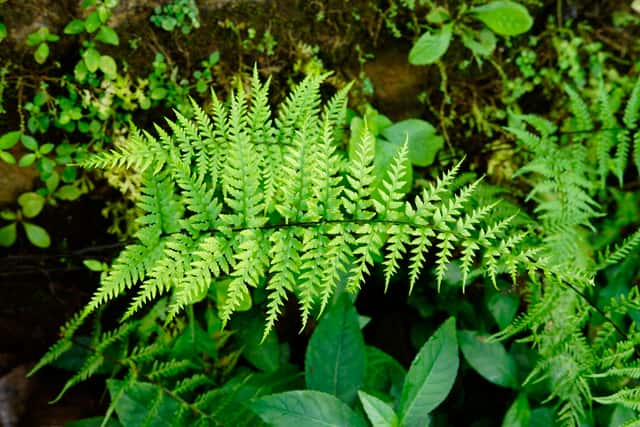
Pteridaceae
Silverback Fern (Pityrogramma calomelanos): Complete Care Guide
Pityrogramma calomelanos
Prefers bright indirect light, weekly watering to maintain moist (not soggy) soil, and high humidity between 70-90%. Well-suited for tropical gardens and bright indoor spaces.
Every 7 days
Partial shade
16° - 38°C
70% - 90%
Categories
What is Silverback Fern?
Silverback Fern (Pityrogramma calomelanos) is a easy-care plant from the Pteridaceae family. Pityrogramma calomelanos, commonly known as the Silverback Fern, is a tropical perennial fern native to the Americas. Its most distinctive feature is the white or yellowish waxy powder coating the underside of its fronds, giving them a striking silver appearance. It thrives in warm, humid environmen...
Silverback Fern grows up to 90cm, spread of 50cm, watering every 7 days, 16°C – 38°C, 70–90% humidity. It is suitable for indoor environments and safe for pets.
Unlike many tropical plants, Silverback Fern tolerates watering mistakes. Best for beginners. Unlike many popular species, Silverback Fern is safe to keep around pets. Without adequate drainage, root rot can develop within 14 days.
How to Care for Silverback Fern?
TLDR: Silverback Fern needs Partial shade, watering every 7 days, and temperatures between 16-38°C with 70-90% humidity.
How Often Should You Water Silverback Fern?
Water weekly, keeping the soil consistently moist but never waterlogged. Water at the base to avoid moisture accumulation on fronds, which can lead to fungal issues.
How Much Light Does Silverback Fern Need?
Place in bright indirect light. Avoid direct sun exposure which can scorch the fronds. North or east-facing windows are ideal for indoor cultivation.
What Is the Best Soil for Silverback Fern?
Use well-draining, organic-rich soil. A mix of potting soil, perlite, and compost works well. Maintain pH between 5.5 and 7.0.
What Pot Should You Use for Silverback Fern?
Terracotta or ceramic pots with drainage holes are ideal. Avoid oversized pots as excess medium can retain too much moisture.
Care Schedule
Fertilize
Every 30 days
Misting
Every 3 days
What Is Silverback Fern and Where Does It Come From?
Pityrogramma calomelanos, commonly known as the Silverback Fern, is a tropical perennial fern native to the Americas. Its most distinctive feature is the white or yellowish waxy powder coating the underside of its fronds, giving them a striking silver appearance. It thrives in warm, humid environments and adapts well to both indoor and outdoor cultivation.
How to Propagate Silverback Fern?
Spore Propagation
Maintain high humidity throughout the process. Use sterilized medium to prevent fungal contamination.
- 1 Collect mature fronds with golden spores on the underside
- 2 Spread spores on sterilized moist medium in a sealed container
- 3 Keep in a warm location (20-25°C) with high humidity
- 4 Wait for gametophyte development (2-4 weeks)
- 5 Once first fronds appear, transplant to individual pots
Materials needed:
Clump Division
Ensure each division has enough roots to survive independently.
- 1 Remove plant from pot in late winter or early spring
- 2 Use a sterilized knife to divide the clump into sections with roots and fronds
- 3 Plant each division in moist, well-draining medium
- 4 Keep in indirect light with high humidity until established
Materials needed:
How Big Does Silverback Fern Grow?
TLDR: Silverback Fern can reach up to 90cm tall with Medium growth rate.
Max height
90cm
Spread
50cm
Growth rate
Medium
Foliage
Evergreen
Plant Uses
Ornamental
Great for decoration
Medicinal
Medicinal properties
Medicinal Uses
- Used in traditional medicine across tropical Americas and Asia to treat wounds, bleeding, cough, pneumonia, asthma, and stomach problems.
Is your plant showing symptoms?
Click on the symptom to discover possible causes:
What Diseases Commonly Affect Silverback Fern?
TLDR: Silverback Fern is susceptible to 7 known diseases. Monitor regularly for early detection.
Leaf Spot
Leaf spot is a common fungal disease caused by various pathogens including Alternaria, Ascochyta, Colletotrichum, Septoria, and Venturia. It primarily affects leaves, causing discolored spots that can lead to premature leaf drop if left untreated.
Powdery Mildew
Powdery mildew is a common fungal disease caused by various fungi species including Erysiphe, Podosphaera, Oïdium, and Leveillula. It affects over 10,000 plant species worldwide. The disease thrives in warm, dry climates with high humidity and appears as a distinctive white powdery coating on plant surfaces.
Gray Mold (Botrytis Blight)
Gray mold, caused by the fungus Botrytis cinerea, is a widespread necrotrophic pathogen affecting over 1,400 plant species. It thrives in cool, humid conditions and attacks weakened or aging plant tissues, causing soft rot and characteristic gray fuzzy growth.
Root Rot
Root rot is a serious fungal disease that affects the root system of plants, causing them to decay and die. It is primarily caused by overwatering, poor drainage, or soil-borne fungi such as Pythium, Phytophthora, Rhizoctonia, and Fusarium. The disease thrives in waterlogged conditions where roots are deprived of oxygen, making them susceptible to fungal infection.
Fun Facts
The silver powder on the fronds is waxy secretion, not hairs — a unique mechanism to reflect light and reduce water loss.
Native to tropical Americas, the Silverback Fern has become invasive in parts of Asia and Africa due to its remarkable adaptability.
Despite its delicate appearance, it has been used in traditional medicine by various cultures to treat respiratory issues and wounds.
Frequently asked questions
How often should I water the Silverback Fern?
Is the Silverback Fern toxic to cats and dogs?
What light does the Silverback Fern need?
How do I increase humidity for the Silverback Fern?
How do I propagate the Silverback Fern?
Compare with similar plants
| Attribute | Difficulty | Light | Watering | Pet Safe |
|---|---|---|---|---|
| Field Maple | Easy | Bright indirect | 14d | ✓ |
| Silver Birch | Easy | Direct sun | 14d | ✓ |
| Cushion Bush | Easy | Direct sun | 14d | ✓ |
| Peruvian peppertree | Easy | Direct sun | 14d | ⚠️ |





