Asparagaceae
African Spear Plant: How to Care for Dracaena angolensis
Dracaena angolensis
Extremely low-maintenance. Water only when soil is completely dry (every 3-4 weeks in summer, monthly in winter). Thrives in bright indirect light but tolerates low light. Well-draining soil is essential to prevent root rot.
Every 28 days
Bright indirect
10° - 35°C
30% - 60%
Categories
What is African Spear?
African Spear (Dracaena angolensis) is a easy-care plant from the Asparagaceae family. Dracaena angolensis, commonly known as the African Spear or Cylindrical Snake Plant, is a succulent native to Angola and southern Africa. Taxonomic note: Dracaena angolensis (Welw. ex Carrière) Byng & Christenh. is an accepted synonym of Sansevieria cylindrica Bojer ex Hook. — the older name — and b...
African Spear grows up to 2.1m, spread of 61cm, watering every 28 days, 10°C – 35°C, 30–60% humidity. It is suitable for indoor environments and not safe for pets.
Unlike many tropical plants, African Spear tolerates watering mistakes. Best for beginners. Without precautions, ingestion can cause irritation in pets. Keep out of reach of cats and dogs. Without adequate drainage, root rot can develop within 56 days.
How to Care for African Spear?
TLDR: African Spear needs Bright indirect, watering every 28 days, and temperatures between 10-35°C with 30-60% humidity.
How Often Should You Water African Spear?
Water only when the potting mix is completely dry — roughly every 3-4 weeks in the growing season and once a month in winter. Never let the plant sit in standing water, as root rot is the most common cause of death for this species.
How Much Light Does African Spear Need?
Prefers bright indirect light or partial direct sun (4-6 hours). Tolerates lower light but growth slows and leaf banding may fade. Avoid full shade.
What Is the Best Soil for African Spear?
Use a well-draining cactus or succulent mix, or blend standard potting soil with coarse sand and perlite (1:1:1 ratio). Ideal pH: 6.0–7.5. Good drainage is non-negotiable.
What Pot Should You Use for African Spear?
Terracotta or ceramic pots are ideal as they allow the substrate to dry faster between waterings. Always choose pots with drainage holes.
Care Schedule
Fertilize
Every 28 days
Repot
Every 730 days
What Is African Spear and Where Does It Come From?
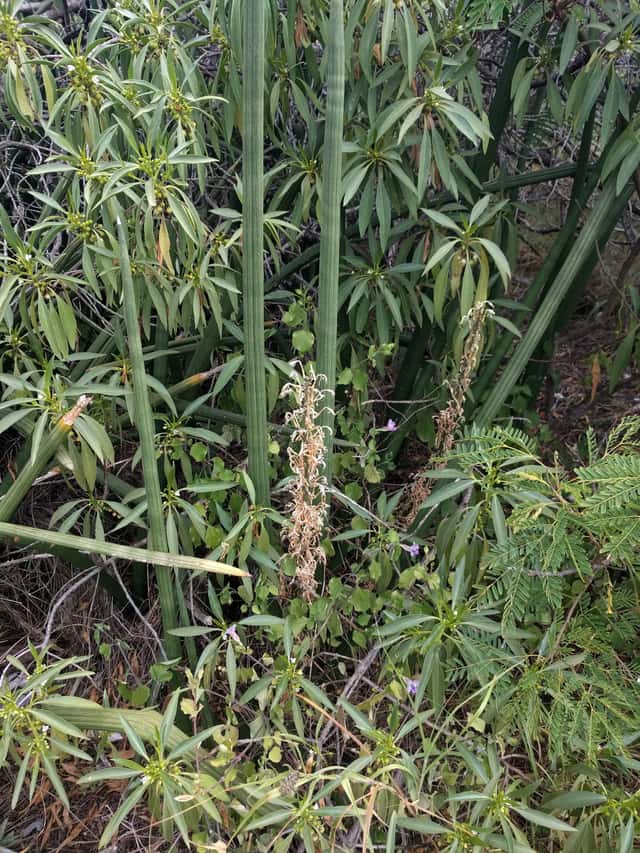
Dracaena angolensis, commonly known as the African Spear or Cylindrical Snake Plant, is a succulent native to Angola and southern Africa. Taxonomic note: Dracaena angolensis (Welw. ex Carrière) Byng & Christenh. is an accepted synonym of Sansevieria cylindrica Bojer ex Hook. — the older name — and both names refer to exactly the same species. Its upright, subcylindrical dark-green leaves with grayish banding make it a striking ornamental choice. Exceptionally drought-tolerant, it thrives on neglect and adapts to a wide range of light conditions, making it one of the most beginner-friendly houseplants available.
How to Propagate African Spear?
Division
Divide in spring for best results. Always use sterilized tools to prevent infection.
- 1 Carefully remove the plant from its pot
- 2 Separate rhizomes by hand or with a clean knife
- 3 Allow cut surfaces to dry for 1-2 days before replanting
- 4 Plant each division in dry, well-draining mix
- 5 Wait one week before first watering
Materials needed:
Leaf section cutting
Note: leaf cuttings lose variegation. For patterned plants, prefer division.
- 1 Cut a healthy leaf into 5-8 cm sections
- 2 Let cut ends dry for 2 days
- 3 Plant sections in substrate with the base end down
- 4 Keep substrate slightly moist until rooted
Materials needed:
How Big Does African Spear Grow?
TLDR: African Spear can reach up to 2.1m tall with Slow growth rate.
Max height
2.1m
Spread
61cm
Growth rate
Slow
Foliage
Evergreen
Warning: Toxic Plant
This plant can be toxic if ingested. Keep out of reach of:
Plant Uses
Ornamental
Great for decoration
Air Purifying
Improves air quality
Is your plant showing symptoms?
Click on the symptom to discover possible causes:
What Diseases Commonly Affect African Spear?
TLDR: African Spear is susceptible to 8 known diseases. Monitor regularly for early detection.
Root Rot
Root rot is a serious fungal disease that affects the root system of plants, causing them to decay and die. It is primarily caused by overwatering, poor drainage, or soil-borne fungi such as Pythium, Phytophthora, Rhizoctonia, and Fusarium. The disease thrives in waterlogged conditions where roots are deprived of oxygen, making them susceptible to fungal infection.
Overwatering
Overwatering occurs when plants receive too much water, depriving roots of oxygen and causing root rot. This environmental stress is one of the most common causes of houseplant death, as waterlogged soil prevents roots from breathing and functioning properly.
Leaf Spot
Leaf spot is a common fungal disease caused by various pathogens including Alternaria, Ascochyta, Colletotrichum, Septoria, and Venturia. It primarily affects leaves, causing discolored spots that can lead to premature leaf drop if left untreated.
Scale Insects
Scale insects are small sap-sucking pests that appear as brown, shell-like bumps on plant stems and leaves. There are over 25 species, divided into armored (hard) and unarmored (soft) scales. They feed by piercing plant tissue and extracting sap, which weakens the plant and can lead to yellowing, stunted growth, and even death if left untreated. They also excrete honeydew, which attracts ants and promotes sooty mold growth.
Meaning & Symbolism
Symbol of protection and resilience. In African folklore, the plant is associated with good luck and warding off negative energies. Its spear-like leaves are believed to protect the home in various African traditions.
Fun Facts
Can live for decades with minimal care — specimens over 20 years old in pots have been documented
Unlike flat-leaved sansevierias, its leaves are perfectly cylindrical like spears
In Africa, it is planted as a living fence to mark property boundaries thanks to its compact growth and sharp leaf tips
It is one of the few plants that produces oxygen at night, making it an excellent bedroom companion
Frequently asked questions
How often should I water my African Spear?
Is Dracaena angolensis toxic to cats and dogs?
What is the difference between Dracaena angolensis and Sansevieria cylindrica?
Does the African Spear purify the air?
Can I put my African Spear in direct sunlight?
Compare with similar plants
| Attribute | Difficulty | Light | Watering | Pet Safe |
|---|---|---|---|---|
| Field Maple | Easy | Bright indirect | 14d | ✓ |
| Silver Birch | Easy | Direct sun | 14d | ✓ |
| Cushion Bush | Easy | Direct sun | 14d | ✓ |
| Peruvian peppertree | Easy | Direct sun | 14d | ⚠️ |