Salicaceae
goat willow: Medicinal Uses & Care Tips
Salix caprea
Goat willow is a low-maintenance, hardy tree that thrives in moist to wet soils and full sun. It is ideal for naturalistic gardens and stabilizing banks.
Every 7 days
Bright indirect
-20° - 30°C
30% - 60%
Categories
What is goat willow?
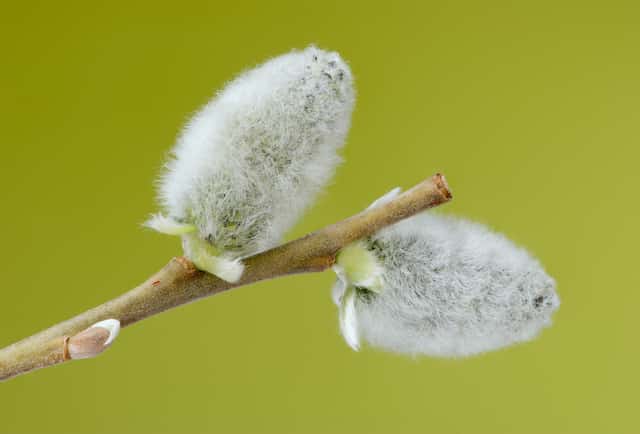
goat willow (Salix caprea) is a easy-care plant from the Salicaceae family. Salix caprea, commonly known as goat willow or pussy willow, is a robust deciduous tree or large shrub native to Europe and Western Asia. It is most famous for its soft, silky-grey catkins that emerge in early spring, which eventually turn yellow with pollen, providing a vital early nectar source fo...
goat willow grows up to 12.0m, spread of 800cm, watering every 7 days, -20°C – 30°C, 30–60% humidity. It is not suitable for indoor environments and safe for pets.
Unlike many tropical plants, goat willow tolerates watering mistakes. Best for beginners. Unlike many popular species, goat willow is safe to keep around pets.
How to Care for goat willow?
TLDR: goat willow needs Bright indirect, watering every 7 days, and temperatures between -20-30°C with 30-60% humidity.
How Often Should You Water goat willow?
Requires consistent moisture. Do not let the soil dry out completely, especially during the first two years after planting.
How Much Light Does goat willow Need?
Thrives in full sun but can tolerate partial shade, though catkin production is best in bright light.
What Is the Best Soil for goat willow?
Highly adaptable to various soils, including heavy clay, provided the site remains moist.
What Pot Should You Use for goat willow?
Not suitable for long-term container growth; best planted in open ground with plenty of space for roots.
Care Schedule
Fertilize
Every 90 days
What Is goat willow and Where Does It Come From?
Salix caprea, commonly known as goat willow or pussy willow, is a robust deciduous tree or large shrub native to Europe and Western Asia. It is most famous for its soft, silky-grey catkins that emerge in early spring, which eventually turn yellow with pollen, providing a vital early nectar source for bees and other pollinators. The leaves are broader than most other willows, with a felt-like underside.
How to Propagate goat willow?
Hardwood Cuttings
- Willows contain natural rooting hormones, so no rooting powder is necessary.
- Ensure the cutting is planted the right way up.
- 1 Select Cuttings
Cut straight, healthy stems from the current year's growth about 20-30cm long.
- 2 Planting
Insert the cuttings directly into moist soil or a deep pot, leaving only about one-third of the stem above the surface.
- 3 Establishment
Keep the soil consistently wet. The cuttings will root and begin to leaf out as spring arrives.
Materials needed:
How Big Does goat willow Grow?
TLDR: goat willow can reach up to 12.0m tall with Fast growth rate.
Max height
12.0m
Spread
8.0m
Growth rate
Fast
Foliage
Deciduous
Plant Uses
Ornamental
Great for decoration
Medicinal
Medicinal properties
Medicinal Uses
- Pain relief
- Anti-inflammatory
- Fever reduction
Is your plant showing symptoms?
Click on the symptom to discover possible causes:
What Diseases Commonly Affect goat willow?
TLDR: goat willow is susceptible to 9 known diseases. Monitor regularly for early detection.
Anthracnose
Anthracnose is a fungal disease caused by fungi in the genus Colletotrichum that affects many plants, including vegetables, fruits, and trees. The disease thrives in cool, wet conditions, causing dark, sunken lesions on leaves, stems, flowers, and fruits.
Powdery Mildew
Powdery mildew is a common fungal disease caused by various fungi species including Erysiphe, Podosphaera, Oïdium, and Leveillula. It affects over 10,000 plant species worldwide. The disease thrives in warm, dry climates with high humidity and appears as a distinctive white powdery coating on plant surfaces.
Canker
Canker is a disease caused by various fungi and bacteria that create necrotic, sunken areas on bark of branches, stems, and trunks. Pathogens enter through wounds and natural openings, especially when plants are stressed. Canker can gradually weaken or kill branches by disrupting water and nutrient flow.
Rust
Rust is a common fungal disease caused by fungi in the order Pucciniales that affects a wide variety of plants. The disease gets its name from the characteristic orange, yellow, or reddish-brown pustules that appear on leaves, resembling metal rust. This obligate fungal parasite requires living plants to survive and can cause significant economic losses in agricultural crops.
Meaning & Symbolism
Symbolizes the arrival of spring, rebirth, and flexibility. In many cultures, the branches are used as a substitute for palm fronds on Palm Sunday.
Compare with similar plants
| Attribute | Difficulty | Light | Watering | Pet Safe |
|---|---|---|---|---|
| Field Maple | Easy | Bright indirect | 14d | ✓ |
| Silver Birch | Easy | Direct sun | 14d | ✓ |
| Cushion Bush | Easy | Direct sun | 14d | ✓ |
| Peruvian peppertree | Easy | Direct sun | 14d | ⚠️ |





