Crassulaceae
Pacific Stonecrop (Sedum spathulifolium)
Sedum spathulifolium
An exceptionally tough, low-maintenance succulent. Thrives with full sun and infrequent watering. Perfect for rock gardens, walls, and ground cover. Tolerates drought, poor soils, and coastal conditions.
Every 14 days
Direct sun
-28.8° - 35°C
20% - 50%
Categories
What is Pacific Stonecrop?
Pacific Stonecrop (Sedum spathulifolium) is a easy-care plant from the Crassulaceae family. Sedum spathulifolium, commonly known as Pacific Stonecrop, is a low-growing evergreen succulent native to the west coast of North America, from British Columbia to California. It forms dense, mat-like colonies of spoon-shaped, fleshy rosettes in silvery blue-green or purple tones. In spring and summ...
Pacific Stonecrop grows up to 15cm, spread of 60cm, watering every 14 days, -28.8°C – 35°C, 20–50% humidity. It is not suitable for indoor environments and not safe for pets.
Unlike many tropical plants, Pacific Stonecrop tolerates watering mistakes. Best for beginners. Without precautions, ingestion can cause irritation in pets. Keep out of reach of cats and dogs.
How to Care for Pacific Stonecrop?
TLDR: Pacific Stonecrop needs Direct sun, watering every 14 days, and temperatures between -28.8-35°C with 20-50% humidity.
How Often Should You Water Pacific Stonecrop?
Water every 14 days, allowing soil to dry out completely between waterings. Reduce frequency further in winter. Overwatering is the primary cause of decline — when in doubt, wait longer.
How Much Light Does Pacific Stonecrop Need?
Requires full, direct sun — 30,000 to 80,000 lux, ideally 6+ hours of direct sunlight daily. In low light, rosettes elongate and lose their compact, attractive form.
What Is the Best Soil for Pacific Stonecrop?
Plant in sandy, well-draining soil with pH 6.0–7.5. Amend with coarse sand or perlite as needed. Avoid clay or compacted soils that retain moisture.
What Pot Should You Use for Pacific Stonecrop?
Terracotta or clay pot with a drainage hole. Avoid plastic pots that retain excess moisture.
What Is Pacific Stonecrop and Where Does It Come From?
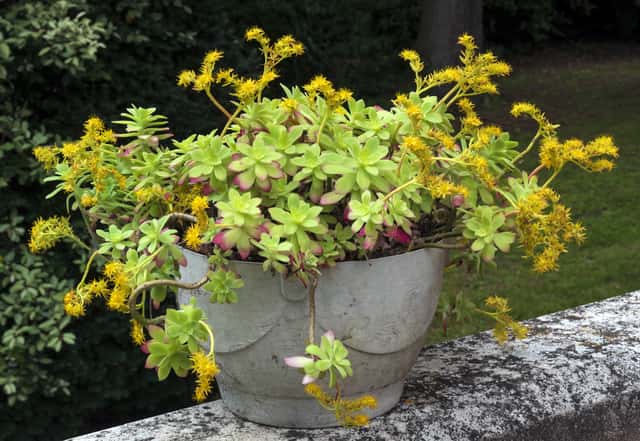
Sedum spathulifolium, commonly known as Pacific Stonecrop, is a low-growing evergreen succulent native to the west coast of North America, from British Columbia to California. It forms dense, mat-like colonies of spoon-shaped, fleshy rosettes in silvery blue-green or purple tones. In spring and summer it produces clusters of bright yellow star-shaped flowers beloved by pollinators.
How Big Does Pacific Stonecrop Grow?
TLDR: Pacific Stonecrop can reach up to 15cm tall with Slow growth rate.
Max height
15cm
Spread
60cm
Growth rate
Slow
Foliage
Evergreen
Warning: Toxic Plant
This plant can be toxic if ingested. Keep out of reach of:
Plant Uses
Ornamental
Great for decoration
Ground Cover
Soil coverage
Is your plant showing symptoms?
Click on the symptom to discover possible causes:
What Diseases Commonly Affect Pacific Stonecrop?
TLDR: Pacific Stonecrop is susceptible to 6 known diseases. Monitor regularly for early detection.
Root Rot
Root rot is a serious fungal disease that affects the root system of plants, causing them to decay and die. It is primarily caused by overwatering, poor drainage, or soil-borne fungi such as Pythium, Phytophthora, Rhizoctonia, and Fusarium. The disease thrives in waterlogged conditions where roots are deprived of oxygen, making them susceptible to fungal infection.
Crown Rot
Crown rot is a serious fungal disease that attacks the crown (base) of the plant where the stem meets the soil. It is caused by various fungal pathogens including Phytophthora, Fusarium, and Rhizoctonia. The disease thrives in waterlogged conditions and can quickly spread to kill the entire plant if not addressed promptly.
Aphids
Aphids are small, soft-bodied, pear-shaped insects (1/16 to 1/8 inch long) that feed by sucking nutrient-rich sap from plants. They reproduce rapidly and can quickly weaken plants, causing distorted growth and transmitting plant viruses. Aphids come in various colors including green, black, red, yellow, brown, and gray. They secrete honeydew, a sticky substance that attracts ants and encourages sooty mold growth.
Mealybugs
Mealybugs are small, soft-bodied insects covered with a white, waxy, cottony material. They are common pests of houseplants and outdoor plants in mild climates. These sap-sucking insects feed on plant tissue, causing damage, stunted growth, and can lead to plant death if left untreated. They produce sticky honeydew which attracts sooty mold.
Fun Facts
Pacific Stonecrop rosettes can turn vivid shades of purple and red when stressed by cold or drought — a natural response called chromatic stress.
It is one of the hardiest succulents available, surviving temperatures as low as -28 °C (-20 °F), making it suitable for USDA zone 5a.
Its dense mat-forming habit naturally suppresses weeds, making it an excellent low-maintenance ground cover for sunny slopes and rock gardens.
Frequently asked questions
Is Pacific Stonecrop toxic to cats?
How often should I water Pacific Stonecrop?
Can Pacific Stonecrop grow in containers?
Compare with similar plants
| Attribute | Difficulty | Light | Watering | Pet Safe |
|---|---|---|---|---|
| Field Maple | Easy | Bright indirect | 14d | ✓ |
| Silver Birch | Easy | Direct sun | 14d | ✓ |
| Cushion Bush | Easy | Direct sun | 14d | ✓ |
| Peruvian peppertree | Easy | Direct sun | 14d | ⚠️ |