Crassulaceae
Showy Stonecrop (Sedum spectabile): The Butterfly-Attracting Hardy Perennial
Sedum spectabile
Sedum spectabile is an easy-care perennial that thrives on neglect. Place it in full sun, water sparingly (only when soil is completely dry), and provide excellent drainage. It tolerates drought, frost, and poor soils with remarkable resilience. Fertilize once or twice a year and divide clumps every few years to maintain vigor.
Every 14 days
Direct sun
-20° - 38°C
30% - 60%
Categories
What is Showy Stonecrop?
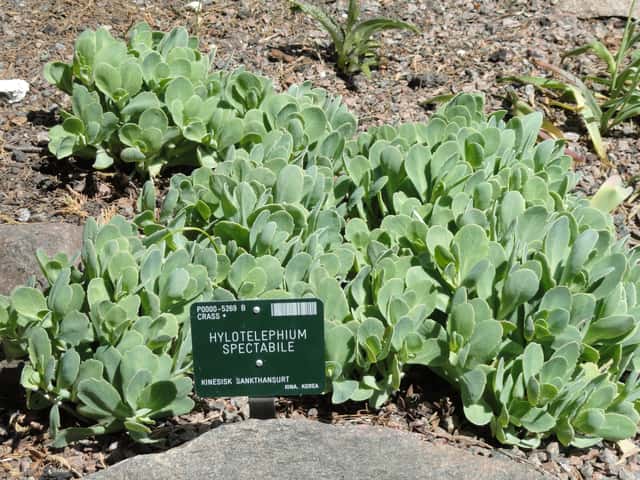
Showy Stonecrop (Sedum spectabile) is a easy-care plant from the Crassulaceae family. Sedum spectabile, commonly known as Showy Stonecrop or Ice Plant, is a hardy succulent perennial native to China and Korea. It produces clusters of star-shaped pink to red flowers from late summer through fall, making it one of the most ornamental sedums available. The fleshy blue-green leaves store...
Showy Stonecrop grows up to 60cm, with spread of 60cm, watering every 14 days, -20°C – 38°C, 30–60% humidity. It is not suitable for indoor environments and safe for pets.
Unlike many tropical plants, Showy Stonecrop tolerates watering mistakes. Best for beginners. Unlike many popular species, Showy Stonecrop is safe to keep around pets.
How to Care for Showy Stonecrop?
TLDR: Showy Stonecrop needs Direct sun, watering every 14 days, and temperatures between -20-38°C with 30-60% humidity.
How Often Should You Water Showy Stonecrop?
Water only when the soil is completely dry — typically every 10-14 days in summer, and barely at all in winter. This plant is highly drought tolerant and will rot if overwatered. Allow the soil to dry out fully between waterings.
How Much Light Does Showy Stonecrop Need?
Provide at least 6 hours of direct sunlight daily. Sedum spectabile thrives in full sun and does not tolerate shade well. In extremely hot climates, afternoon shade may help prevent scorching.
What Is the Best Soil for Showy Stonecrop?
Use a well-draining, sandy or gritty soil mix. Standard cactus/succulent potting mix works well. Avoid heavy clay soils or mixes that retain moisture. Good drainage is critical to prevent root rot.
What Pot Should You Use for Showy Stonecrop?
Terracotta or clay pot with drainage holes is ideal for containers. The porous material wicks away excess moisture, preventing root rot. For garden beds, no pot is needed — plant directly in well-drained soil.
Care Schedule
Fertilize
Every 90 days
Repot
Every 730 days
What Is Showy Stonecrop and Where Does It Come From?
Sedum spectabile, commonly known as Showy Stonecrop or Ice Plant, is a hardy succulent perennial native to China and Korea. It produces clusters of star-shaped pink to red flowers from late summer through fall, making it one of the most ornamental sedums available. The fleshy blue-green leaves store water, enabling the plant to tolerate drought conditions with ease. It is particularly valued as a pollinator magnet, attracting butterflies, bees, and other beneficial insects when little else is in bloom.
How to Propagate Showy Stonecrop?
Clump Division
Divide every 3-4 years to rejuvenate the plant and prevent center die-out. Spring division yields the best results.
- 1 In early spring, dig up the entire clump before new growth begins
- 2 Use a sharp spade or knife to divide the clump into sections, each with roots attached
- 3 Replant divisions at the same soil depth in a sunny, well-drained location
- 4 Water lightly once after planting, then allow soil to dry before watering again
Materials needed:
Stem Cutting
Do not water until the cutting shows signs of new growth. Overwatering at this stage will cause rot.
- 1 Cut a healthy stem 8-10 cm long with at least 2-3 leaf nodes
- 2 Allow the cut end to callous over for 1-2 days
- 3 Insert into barely moist, well-draining soil or coarse sand
- 4 Place in a bright spot out of direct sun until roots establish
Materials needed:
How Big Does Showy Stonecrop Grow?
TLDR: Showy Stonecrop can reach up to 60cm tall with Medium growth rate.
Max height
60cm
Spread
60cm
Growth rate
Medium
Foliage
Deciduous
Plant Uses
Ornamental
Great for decoration
Ground Cover
Soil coverage
Is your plant showing symptoms?
Click on the symptom to discover possible causes:
What Diseases Commonly Affect Showy Stonecrop?
TLDR: Showy Stonecrop is susceptible to 12 known diseases. Monitor regularly for early detection.
Root Rot
Root rot is a serious fungal disease that affects the root system of plants, causing them to decay and die. It is primarily caused by overwatering, poor drainage, or soil-borne fungi such as Pythium, Phytophthora, Rhizoctonia, and Fusarium. The disease thrives in waterlogged conditions where roots are deprived of oxygen, making them susceptible to fungal infection.
Crown Rot
Crown rot is a serious fungal disease that attacks the crown (base) of the plant where the stem meets the soil. It is caused by various fungal pathogens including Phytophthora, Fusarium, and Rhizoctonia. The disease thrives in waterlogged conditions and can quickly spread to kill the entire plant if not addressed promptly.
Overwatering
Overwatering occurs when plants receive too much water, depriving roots of oxygen and causing root rot. This environmental stress is one of the most common causes of houseplant death, as waterlogged soil prevents roots from breathing and functioning properly.
Aphids
Aphids are small, soft-bodied, pear-shaped insects (1/16 to 1/8 inch long) that feed by sucking nutrient-rich sap from plants. They reproduce rapidly and can quickly weaken plants, causing distorted growth and transmitting plant viruses. Aphids come in various colors including green, black, red, yellow, brown, and gray. They secrete honeydew, a sticky substance that attracts ants and encourages sooty mold growth.
Meaning & Symbolism
The Showy Stonecrop symbolizes resilience, patience, and the beauty of endurance. Its late-season blooms are seen as a symbol of hope and perseverance, providing color and life when most other plants have faded.
Fun Facts
Sedum spectabile was reclassified into the genus Hylotelephium in 1977, though it is still widely sold and known as Sedum spectabile.
Its late-season flowers are a critical food source for monarch butterflies and bumblebees preparing for winter.
Sedum spectabile can survive temperatures as low as -20°C, making it one of the hardiest succulents in cultivation.
The flat-topped flower clusters can reach up to 15 cm (6 inches) across and hold their structure even after the flowers fade, providing winter interest in the garden.
Frequently asked questions
How often should I water Sedum spectabile?
Is Sedum spectabile toxic to pets?
Why is my Sedum spectabile flopping over?
When does Sedum spectabile bloom?
How do I divide Sedum spectabile?
Compare with similar plants
| Attribute | Difficulty | Light | Watering | Pet Safe |
|---|---|---|---|---|
| Peace Lily | Easy | Low light | 4d | ⚠️ |
| Swiss Cheese Plant | Easy | Partial shade | 10d | ⚠️ |
| Golden Pothos | Easy | Low light | 8d | ⚠️ |
| ZZ Plant | Easy | Low light | 18d | ⚠️ |