Rosaceae
Swedish Whitebeam (Scandosorbus intermedia)
Scandosorbus intermedia
A tough, low-maintenance deciduous tree suited to temperate climates. Plant in full sun to partial shade in well-drained loamy soil. Water regularly during establishment; once mature it is largely self-sufficient. Prune lightly in late winter to maintain shape.
Every 14 days
Bright indirect
-20° - 30°C
50% - 80%
Categories
What is Swedish Whitebeam?
Swedish Whitebeam (Scandosorbus intermedia) is a easy-care plant from the Rosaceae family. Scandosorbus intermedia, commonly known as Swedish Whitebeam, is a medium-sized deciduous tree native to southern Scandinavia, the Baltic states, and parts of the UK. It is widely prized as an urban street tree for its exceptional tolerance of pollution, wind, and coastal exposure. In spring it bear...
Swedish Whitebeam grows up to 15.0m, spread of 1200cm, watering every 14 days, -20°C – 30°C, 50–80% humidity. It is not suitable for indoor environments and safe for pets.
Unlike many tropical plants, Swedish Whitebeam tolerates watering mistakes. Best for beginners. Unlike many popular species, Swedish Whitebeam is safe to keep around pets.
How to Care for Swedish Whitebeam?
TLDR: Swedish Whitebeam needs Bright indirect, watering every 14 days, and temperatures between -20-30°C with 50-80% humidity.
How Often Should You Water Swedish Whitebeam?
Water deeply once every 1–2 weeks during the first year after planting. Established trees rely on natural rainfall and only need supplemental watering during prolonged drought.
How Much Light Does Swedish Whitebeam Need?
Thrives in full sun (6+ hours daily) but tolerates partial shade. More sunlight produces better flowering and fruiting.
What Is the Best Soil for Swedish Whitebeam?
Adapts to sandy, loamy or clay soils. Prefers well-drained, moderately fertile soil with pH 5.5–7.5. Tolerates atmospheric pollution and maritime conditions.
What Pot Should You Use for Swedish Whitebeam?
Not applicable — outdoor tree
Care Schedule
Fertilize
Every 365 days
What Is Swedish Whitebeam and Where Does It Come From?
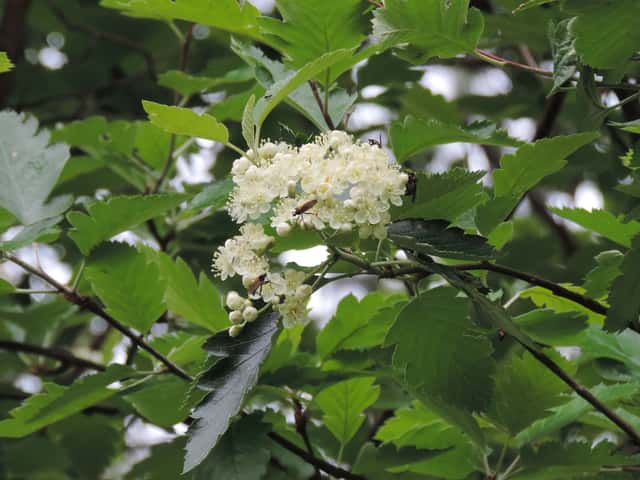
Scandosorbus intermedia, commonly known as Swedish Whitebeam, is a medium-sized deciduous tree native to southern Scandinavia, the Baltic states, and parts of the UK. It is widely prized as an urban street tree for its exceptional tolerance of pollution, wind, and coastal exposure. In spring it bears clusters of white flowers, followed by ornamental orange-red berries in autumn that attract birds.
How to Propagate Swedish Whitebeam?
Seed propagation
Fresh seed germinates more reliably. This species reproduces apomictically, so seedlings are clones of the parent.
- 1 Collect ripe orange-red berries in autumn
- 2 Clean pulp from seeds and sow fresh in a cold frame, or store in cool dry conditions
- 3 Apply 14 weeks cold stratification at 4°C if using stored seed
- 4 Sow in spring in well-drained compost
- 5 Transplant seedlings outdoors after last frost
Materials needed:
How Big Does Swedish Whitebeam Grow?
TLDR: Swedish Whitebeam can reach up to 15.0m tall with Medium growth rate.
Max height
15.0m
Spread
12.0m
Growth rate
Medium
Foliage
Deciduous
Plant Uses
Ornamental
Great for decoration
Edible
Can be consumed
Culinary Uses
- Berries used to make jams and jellies
- Fruits can be eaten raw or cooked
Is your plant showing symptoms?
Click on the symptom to discover possible causes:
What Diseases Commonly Affect Swedish Whitebeam?
TLDR: Swedish Whitebeam is susceptible to 8 known diseases. Monitor regularly for early detection.
Fire Blight
Fire blight is a highly destructive and contagious bacterial disease caused by Erwinia amylovora. It primarily affects plants in the Rosaceae family, including apple, pear, quince trees, and various ornamental plants. The disease can destroy an entire orchard in a single growing season under ideal conditions, with the bacterium moving approximately 11 inches per week in new growth.
Powdery Mildew
Powdery mildew is a common fungal disease caused by various fungi species including Erysiphe, Podosphaera, Oïdium, and Leveillula. It affects over 10,000 plant species worldwide. The disease thrives in warm, dry climates with high humidity and appears as a distinctive white powdery coating on plant surfaces.
Canker
Canker is a disease caused by various fungi and bacteria that create necrotic, sunken areas on bark of branches, stems, and trunks. Pathogens enter through wounds and natural openings, especially when plants are stressed. Canker can gradually weaken or kill branches by disrupting water and nutrient flow.
Aphids
Aphids are small, soft-bodied, pear-shaped insects (1/16 to 1/8 inch long) that feed by sucking nutrient-rich sap from plants. They reproduce rapidly and can quickly weaken plants, causing distorted growth and transmitting plant viruses. Aphids come in various colors including green, black, red, yellow, brown, and gray. They secrete honeydew, a sticky substance that attracts ants and encourages sooty mold growth.
Fun Facts
Its berries are a vital autumn food source for thrushes and waxwings
It reproduces apomictically — seedlings are genetic clones of the mother tree
Named after Sweden, where it is most widespread, though it also grows naturally in the UK and Baltic states
It is one of the most pollution-tolerant ornamental trees used in European cities
Frequently asked questions
How often should I water Swedish Whitebeam?
Does Swedish Whitebeam grow in full shade?
Is Swedish Whitebeam toxic to pets?
How tall does Swedish Whitebeam grow?
When does Swedish Whitebeam flower?
Compare with similar plants
| Attribute | Difficulty | Light | Watering | Pet Safe |
|---|---|---|---|---|
| Field Maple | Easy | Bright indirect | 14d | ✓ |
| Silver Birch | Easy | Direct sun | 14d | ✓ |
| Cushion Bush | Easy | Direct sun | 14d | ✓ |
| Peruvian peppertree | Easy | Direct sun | 14d | ⚠️ |





