Asteraceae
Shore Aster: The Native Wildflower of Northeastern Shores
Symphyotrichum tradescantii
Shore Aster is a low-maintenance native perennial that thrives in full sun with consistently moist to moderately wet soil. Water regularly during the first growing season to establish roots; once established, it tolerates brief dry spells. Fertilize lightly in spring. Deadhead or leave seed heads for wildlife. Divide clumps every 2-3 years to maintain vigor.
Every 7 days
Bright indirect
-30° - 30°C
40% - 70%
Categories
What is Shore Aster?
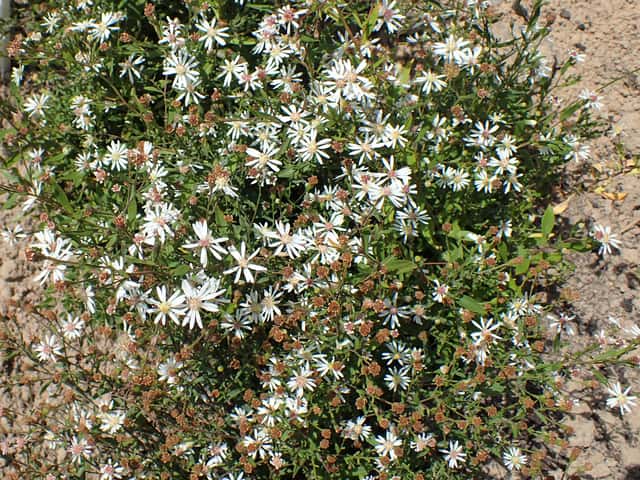
Shore Aster (Symphyotrichum tradescantii) is a easy-care plant from the Asteraceae family. Symphyotrichum tradescantii, commonly known as Shore Aster or Tradescant's Aster, is a native perennial wildflower of northeastern North America. This deciduous herbaceous plant produces an abundance of small, daisy-like flowers with white ray florets and pale yellow to purple disk florets in late s...
Shore Aster grows up to 70cm, with spread of 60cm, watering every 7 days, -30°C – 30°C, 40–70% humidity. It is not suitable for indoor environments and safe for pets.
Unlike many tropical plants, Shore Aster tolerates watering mistakes. Best for beginners. Unlike many popular species, Shore Aster is safe to keep around pets.
How to Care for Shore Aster?
TLDR: Shore Aster needs Bright indirect, watering every 7 days, and temperatures between -30-30°C with 40-70% humidity.
How Often Should You Water Shore Aster?
Water Shore Aster regularly, especially during dry periods in summer. It naturally grows near water and prefers consistently moist soil. Established plants tolerate short drought periods but perform best with about 2.5 cm (1 inch) of water per week.
How Much Light Does Shore Aster Need?
Shore Aster thrives in full sun (6+ hours daily) but tolerates partial shade. In shadier conditions, the plant may become leggy and produce fewer flowers. Full sun promotes the most compact growth and abundant blooming.
What Is the Best Soil for Shore Aster?
Plant in loamy, moderately fertile, moist to wet soil. Shore Aster adapts well to a range of soil textures, from sandy loam to clay, as long as moisture is adequate. A soil pH between 5.5 and 7.0 is ideal.
What Pot Should You Use for Shore Aster?
Outdoor garden bed, rain garden, or native plant border. If growing in a container, choose a large pot (at least 30 cm diameter) with drainage holes and use a moisture-retaining potting mix.
Care Schedule
Fertilize
Every 30 days
What Is Shore Aster and Where Does It Come From?
Symphyotrichum tradescantii, commonly known as Shore Aster or Tradescant's Aster, is a native perennial wildflower of northeastern North America. This deciduous herbaceous plant produces an abundance of small, daisy-like flowers with white ray florets and pale yellow to purple disk florets in late summer and fall. It grows naturally along rocky shores, riverbanks, and freshwater estuaries, thriving in full sun to partial shade and moist soils. An excellent choice for naturalistic gardens, rain gardens, and native plant landscapes.
How to Propagate Shore Aster?
Clump Division
Divide every 2-3 years to maintain plant vigor and prevent overcrowding. Divisions taken in early spring establish most successfully.
- 1 Dig up the entire clump in early spring before new growth emerges
- 2 Use a sharp spade or garden fork to divide the clump into sections, each with healthy roots and shoots
- 3 Replant divisions immediately at the same depth in moist, amended soil
- 4 Water thoroughly and keep consistently moist until established
Materials needed:
Seed Propagation
Seeds require cold stratification to break dormancy. Fall sowing outdoors allows natural stratification over winter.
- 1 Collect seeds after the flower heads dry in late fall
- 2 Cold-stratify seeds by placing them in a moist paper towel in the refrigerator for 4-6 weeks
- 3 Sow seeds indoors 6-8 weeks before last frost or directly outdoors in fall
- 4 Cover lightly with soil and keep moist until germination
Materials needed:
How Big Does Shore Aster Grow?
TLDR: Shore Aster can reach up to 70cm tall with Medium growth rate.
Max height
70cm
Spread
60cm
Growth rate
Medium
Foliage
Deciduous
Plant Uses
Ornamental
Great for decoration
Is your plant showing symptoms?
Click on the symptom to discover possible causes:
What Diseases Commonly Affect Shore Aster?
TLDR: Shore Aster is susceptible to 6 known diseases. Monitor regularly for early detection.
Powdery Mildew
Powdery mildew is a common fungal disease caused by various fungi species including Erysiphe, Podosphaera, Oïdium, and Leveillula. It affects over 10,000 plant species worldwide. The disease thrives in warm, dry climates with high humidity and appears as a distinctive white powdery coating on plant surfaces.
Rust
Rust is a common fungal disease caused by fungi in the order Pucciniales that affects a wide variety of plants. The disease gets its name from the characteristic orange, yellow, or reddish-brown pustules that appear on leaves, resembling metal rust. This obligate fungal parasite requires living plants to survive and can cause significant economic losses in agricultural crops.
Gray Mold (Botrytis Blight)
Gray mold, caused by the fungus Botrytis cinerea, is a widespread necrotrophic pathogen affecting over 1,400 plant species. It thrives in cool, humid conditions and attacks weakened or aging plant tissues, causing soft rot and characteristic gray fuzzy growth.
Verticillium Wilt
Verticillium wilt is a soil-borne fungal disease caused primarily by the fungi Verticillium dahliae and V. albo-atrum. These pathogens infect plant roots and grow within the vascular tissues, blocking water and nutrient transport, resulting in wilting and eventual plant death. The disease affects over 350 plant species including vegetables, fruits, ornamental flowers, and trees. The fungi can survive in soil for more than 10 years as resistant structures called microsclerotia.
Meaning & Symbolism
Shore Aster symbolizes resilience, late-season beauty, and the enduring spirit of nature. In the language of flowers, asters represent love, patience, and elegance. As a native plant, it also embodies ecological harmony and the beauty of wild northeastern landscapes.
Fun Facts
Shore Aster was named in honor of John Tradescant the Elder, a famous 17th-century English botanist and gardener.
This native perennial can grow from just 5 cm to 70 cm tall, making it highly adaptable to different habitats along northeastern shores.
Shore Aster is an important late-season food source for monarch butterflies, native bees, and other pollinators migrating south in autumn.
It is one of the last wildflowers to bloom before winter, earning it a special place in native plant gardens as a symbol of autumn's final flourish.
Frequently asked questions
How often should I water Shore Aster?
Does Shore Aster grow in shade?
Is Shore Aster toxic to pets or children?
When does Shore Aster bloom?
How do I propagate Shore Aster?
Compare with similar plants
| Attribute | Difficulty | Light | Watering | Pet Safe |
|---|---|---|---|---|
| Peace Lily | Easy | Low light | 4d | ⚠️ |
| Swiss Cheese Plant | Easy | Partial shade | 10d | ⚠️ |
| Golden Pothos | Easy | Low light | 8d | ⚠️ |
| ZZ Plant | Easy | Low light | 18d | ⚠️ |





