Betulaceae
Silver Birch: Full Sun Plant
Betula pendula
The Silver Birch requires a full sun to lightly semi-shaded location and well-draining, slightly acidic soil (pH 4.5–7.0). Established trees are very drought-tolerant and require little additional fertilization, as their fine heart roots efficiently absorb nutrients from the soil. Water young plants regularly until they are established. Pruning should only be carried out during winter dormancy (November–January) in frost-free weather.
Every 14 days
Direct sun
-40° - 35°C
40% - 80%
Categories
What is Silver Birch?
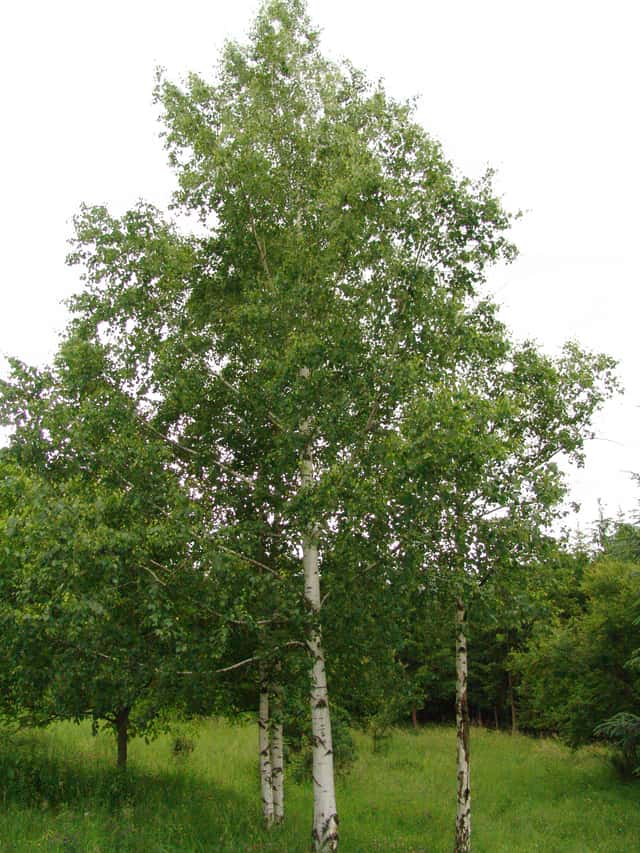
Silver Birch (Betula pendula) is a easy-care plant from the Betulaceae family. The Silver Birch (Betula pendula) is an elegant, fast-growing deciduous tree and one of Europe's most light-demanding forest trees. It reaches heights of up to 25 meters and is known for its characteristic white, peeling bark and its fine, drooping branches. As a pioneer species, it colonizes open s...
Silver Birch grows up to 25.0m, spread of 1000cm, watering every 14 days, -40°C – 35°C, 40–80% humidity. It is not suitable for indoor environments and safe for pets.
Unlike many tropical plants, Silver Birch tolerates watering mistakes. Best for beginners. Unlike many popular species, Silver Birch is safe to keep around pets.
How to Care for Silver Birch?
TLDR: Silver Birch needs Direct sun, watering every 14 days, and temperatures between -40-35°C with 40-80% humidity.
How Often Should You Water Silver Birch?
Established Silver Birches are self-sufficient with natural rainfall and only require supplemental watering during long dry periods (every 14 days). Water young plants regularly in their first year, but avoid waterlogging. It is crucial to prevent waterlogging around the roots – birches are sensitive to consistently wet soils.
How Much Light Does Silver Birch Need?
The Silver Birch is Europe's most light-demanding forest tree and prefers a full sun location with at least 6–8 hours of direct sunlight daily. In deep shade, it grows poorly and loses its characteristic crown shape. As a solitary plant in open areas, it unfolds its full beauty.
What Is the Best Soil for Silver Birch?
Prefers sandy to sandy-loamy, well-draining soils with a pH value of 4.5 to 7.0. Calcareous (lime-rich) soils are poorly tolerated. A minimum topsoil depth of 60 cm is important for the spread of its heart root system. The tree thrives even in lean, nutrient-poor soils, provided drainage is ensured.
What Pot Should You Use for Silver Birch?
The Silver Birch is an outdoor tree and not suitable for permanent container cultivation. Young plants can be temporarily grown in large containers (from 60 liters) until a suitable garden location is prepared. It is possible as a bonsai in special bonsai pots, but requires more intensive care.
What Is Silver Birch and Where Does It Come From?
The Silver Birch (Betula pendula) is an elegant, fast-growing deciduous tree and one of Europe's most light-demanding forest trees. It reaches heights of up to 25 meters and is known for its characteristic white, peeling bark and its fine, drooping branches. As a pioneer species, it colonizes open spaces and disturbed sites as one of the first tree species. In autumn, its diamond-shaped leaves turn a vibrant yellow. The birch thrives in sandy, moderately dry to fresh soils with a slightly acidic pH and tolerates harsh winters down to -40 °C.
How to Propagate Silver Birch?
How Big Does Silver Birch Grow?
TLDR: Silver Birch can reach up to 25.0m tall with Fast growth rate.
Max height
25.0m
Spread
10.0m
Growth rate
Fast
Foliage
Deciduous
Plant Uses
Ornamental
Great for decoration
Medicinal
Medicinal properties
Medicinal Uses
- Birch sap (spring raw sap): rich in minerals, traditionally used as a tonic and for blood purification
- Birch leaves: diuretic, anti-inflammatory; used in folk medicine for urinary tract infections and rheumatism
- Birch bark: contains betulin with antimicrobial properties; applied externally for skin conditions
- Birch tar: traditionally antiseptic and used for skin ailments such as psoriasis
Culinary Uses
- Birch sap: extracted from tapped trunks in spring, slightly sweet; drinkable pure or processed into syrup, wine, and beer
- Young birch leaves: usable in spring as a wild herb ingredient in salads or as tea
- Birch sugar (Xylitol): a sugar substitute derived from birch bark
Is your plant showing symptoms?
Click on the symptom to discover possible causes:
What Diseases Commonly Affect Silver Birch?
TLDR: Silver Birch is susceptible to 8 known diseases. Monitor regularly for early detection.
Aphids
Aphids are small, soft-bodied, pear-shaped insects (1/16 to 1/8 inch long) that feed by sucking nutrient-rich sap from plants. They reproduce rapidly and can quickly weaken plants, causing distorted growth and transmitting plant viruses. Aphids come in various colors including green, black, red, yellow, brown, and gray. They secrete honeydew, a sticky substance that attracts ants and encourages sooty mold growth.
Leaf Spot
Leaf spot is a common fungal disease caused by various pathogens including Alternaria, Ascochyta, Colletotrichum, Septoria, and Venturia. It primarily affects leaves, causing discolored spots that can lead to premature leaf drop if left untreated.
Canker
Canker is a disease caused by various fungi and bacteria that create necrotic, sunken areas on bark of branches, stems, and trunks. Pathogens enter through wounds and natural openings, especially when plants are stressed. Canker can gradually weaken or kill branches by disrupting water and nutrient flow.
Powdery Mildew
Powdery mildew is a common fungal disease caused by various fungi species including Erysiphe, Podosphaera, Oïdium, and Leveillula. It affects over 10,000 plant species worldwide. The disease thrives in warm, dry climates with high humidity and appears as a distinctive white powdery coating on plant surfaces.
Meaning & Symbolism
The Silver Birch is an ancient symbol of spring awakening, renewal, and purity. In Slavic, Scandinavian, and Baltic cultures, it is considered a sacred tree of fertility and new beginnings. In Germanic tradition, the birch stands for youth and hope. Birch twigs (birch rods) are used in many cultures for purification and in spring customs.
Compare with similar plants
| Attribute | Difficulty | Light | Watering | Pet Safe |
|---|---|---|---|---|
| Field Maple | Easy | Bright indirect | 14d | ✓ |
| Common Blanketflower | Easy | Direct sun | 10d | ✓ |
| Cushion Bush | Easy | Direct sun | 14d | ✓ |
| Peruvian peppertree | Easy | Direct sun | 14d | ⚠️ |





