Asteraceae
Silver Ragwort: Ground Cover Plant
Jacobaea maritima
This is a low-maintenance, drought-tolerant plant that thrives in full sun and well-drained soil. Avoid overwatering and ensure it has plenty of light to maintain its silver color.
Every 14 days
Direct sun
5° - 30°C
30% - 60%
Categories
What is Silver Ragwort?
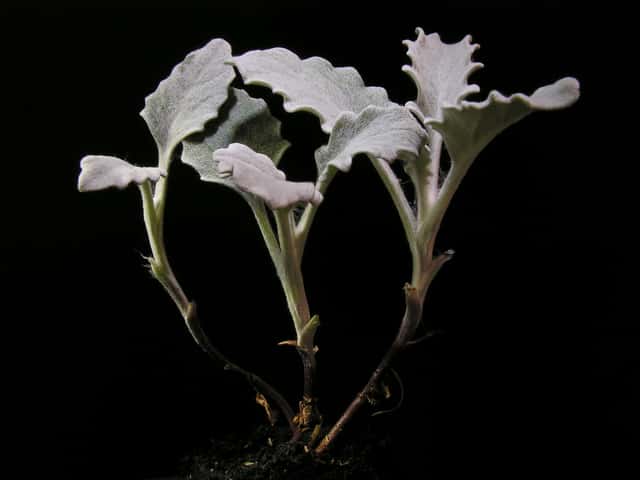
Silver Ragwort (Jacobaea maritima) is a easy-care plant from the Asteraceae family. Jacobaea maritima, commonly known as Silver Ragwort or Dusty Miller, is a perennial subshrub prized for its striking silvery-white, felt-like foliage. The leaves are deeply lobed and covered in fine, matted hairs that give the plant a woolly appearance and help it conserve moisture. While it produce...
Silver Ragwort grows up to 60cm, spread of 45cm, watering every 14 days, 5°C – 30°C, 30–60% humidity. It is not suitable for indoor environments and not safe for pets.
Unlike many tropical plants, Silver Ragwort tolerates watering mistakes. Best for beginners. Without precautions, ingestion can cause irritation in pets. Keep out of reach of cats and dogs.
How to Care for Silver Ragwort?
TLDR: Silver Ragwort needs Direct sun, watering every 14 days, and temperatures between 5-30°C with 30-60% humidity.
How Often Should You Water Silver Ragwort?
Water only when the top few inches of soil are completely dry. It is much more tolerant of underwatering than overwatering.
How Much Light Does Silver Ragwort Need?
Place in the brightest spot possible; full sun is required to develop the intense silver-white color of the foliage.
What Is the Best Soil for Silver Ragwort?
Requires excellent drainage; a sandy or gritty soil mix is ideal to prevent root rot.
What Pot Should You Use for Silver Ragwort?
Use a terracotta pot with large drainage holes to prevent moisture buildup around the roots.
Care Schedule
Fertilize
Every 30 days
What Is Silver Ragwort and Where Does It Come From?
Jacobaea maritima, commonly known as Silver Ragwort or Dusty Miller, is a perennial subshrub prized for its striking silvery-white, felt-like foliage. The leaves are deeply lobed and covered in fine, matted hairs that give the plant a woolly appearance and help it conserve moisture. While it produces small, yellow daisy-like flowers in the summer, it is primarily grown for its decorative foliage which provides a brilliant contrast to green-leaved plants and colorful blooms in garden beds and containers.
How to Propagate Silver Ragwort?
Seed Sowing
- Bottom-water the trays to avoid disturbing the small seeds.
- 1 Prepare Trays
Fill seed trays with a light, well-draining seed-starting mix.
- 2 Sow Seeds
Sow seeds on the surface and press lightly; they require light to germinate, so do not cover them deeply.
- 3 Maintain Warmth
Keep the soil moist and at a temperature of around 21 degrees Celsius until sprouts appear.
Materials needed:
Softwood Cuttings
- Keep the cutting in a humid environment but ensure the leaves stay dry to prevent rot.
- 1 Take Cuttings
Cut a 10cm non-flowering stem just below a leaf node.
- 2 Prepare Stem
Remove the lower leaves and dip the cut end into rooting hormone.
- 3 Plant
Insert the cutting into a pot filled with a mix of perlite and peat.
Materials needed:
How Big Does Silver Ragwort Grow?
TLDR: Silver Ragwort can reach up to 60cm tall with Medium growth rate.
Max height
60cm
Spread
45cm
Growth rate
Medium
Foliage
Evergreen
Warning: Toxic Plant
This plant can be toxic if ingested. Keep out of reach of:
Plant Uses
Ornamental
Great for decoration
Ground Cover
Soil coverage
Is your plant showing symptoms?
Click on the symptom to discover possible causes:
What Diseases Commonly Affect Silver Ragwort?
TLDR: Silver Ragwort is susceptible to 10 known diseases. Monitor regularly for early detection.
Aphids
Aphids are small, soft-bodied, pear-shaped insects (1/16 to 1/8 inch long) that feed by sucking nutrient-rich sap from plants. They reproduce rapidly and can quickly weaken plants, causing distorted growth and transmitting plant viruses. Aphids come in various colors including green, black, red, yellow, brown, and gray. They secrete honeydew, a sticky substance that attracts ants and encourages sooty mold growth.
Whiteflies
Whiteflies are small, soft-bodied, winged insects closely related to aphids and mealybugs. They are moth-like in appearance, about 1/16 inch long, triangular in shape, and gray-white in color. These sap-sucking pests feed on plant tissue, causing yellowing, stunted growth, and wilting. They also excrete honeydew, which attracts ants and promotes sooty mold growth. Whiteflies can transmit serious plant viruses.
Spider Mites
Spider mites are tiny arachnids (less than 1/20 inch long) related to spiders and ticks that feed on plant sap. They thrive in hot, dry conditions and can cause significant damage to ornamental and vegetable plants. During severe infestations, crop losses can reach 14% or higher as these pests disrupt vital plant processes including photosynthesis, carbon dioxide absorption, and transpiration.
Gray Mold (Botrytis Blight)
Gray mold, caused by the fungus Botrytis cinerea, is a widespread necrotrophic pathogen affecting over 1,400 plant species. It thrives in cool, humid conditions and attacks weakened or aging plant tissues, causing soft rot and characteristic gray fuzzy growth.
Meaning & Symbolism
Represents endurance, clarity, and the ability to thrive in harsh conditions.
Compare with similar plants
| Attribute | Difficulty | Light | Watering | Pet Safe |
|---|---|---|---|---|
| Small Scabious | Easy | Direct sun | 7d | ✓ |
| Field Maple | Easy | Bright indirect | 14d | ✓ |
| Silver Birch | Easy | Direct sun | 14d | ✓ |
| Red valerian | Easy | Direct sun | 10d | ✓ |



