Apocynaceae
Rosary Vine / Ceropegia: Care Guide
Ceropegia
An extremely low-maintenance plant, perfect for beginners. Drought-tolerant and prefers to dry out between waterings. Needs bright indirect light and fast-draining soil. Grows quickly indoors and thrives in hanging baskets and planters.
Every 14 days
Bright indirect
15° - 29°C
40% - 60%
Categories
What is Rosary Vine?
Rosary Vine (Ceropegia) is a easy-care plant from the Apocynaceae family. Ceropegia is a genus of succulent trailing and climbing plants in the family Apocynaceae, native primarily to South Africa, Eswatini, and Zimbabwe. The most popular species is Ceropegia woodii, commonly known as String of Hearts or Rosary Vine, celebrated for its heart-shaped leaves in dark green wi...
Rosary Vine grows up to 10cm, spread of 366cm, watering every 14 days, 15°C – 29°C, 40–60% humidity. It is suitable for indoor environments and safe for pets.
Unlike many tropical plants, Rosary Vine tolerates watering mistakes. Best for beginners. Unlike many popular species, Rosary Vine is safe to keep around pets. Without adequate drainage, root rot can develop within 28 days.
How to Care for Rosary Vine?
TLDR: Rosary Vine needs Bright indirect, watering every 14 days, and temperatures between 15-29°C with 40-60% humidity.
How Often Should You Water Rosary Vine?
Wait until the soil is at least 2/3 dry before watering, roughly every 10–14 days in summer and much less in winter. Always ensure excess water drains completely from the pot to prevent root rot.
How Much Light Does Rosary Vine Need?
Position near a bright east- or west-facing window providing 4–6 hours of indirect light per day. Avoid intense midday direct sun, which can scorch the delicate leaves.
What Is the Best Soil for Rosary Vine?
Use a succulent and cactus potting mix, or add perlite to standard potting soil to improve drainage. Ideal pH 6.0–7.5. Never use dense or moisture-retaining soil mixes.
What Pot Should You Use for Rosary Vine?
Terra cotta or ceramic hanging pots with drainage holes are ideal. Terra cotta helps wick away excess moisture and prevents waterlogging. Avoid pots without drainage.
Care Schedule
Fertilize
Every 30 days
Rotate
Every 30 days
Repot
Every 365 days
What Is Rosary Vine and Where Does It Come From?
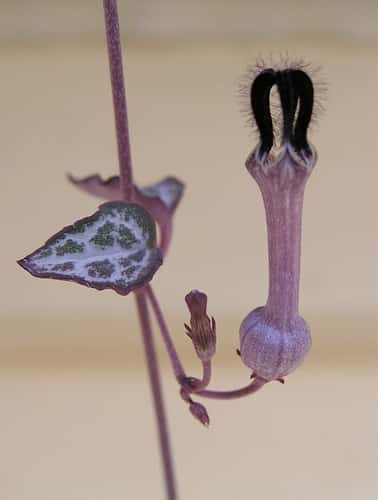
Ceropegia is a genus of succulent trailing and climbing plants in the family Apocynaceae, native primarily to South Africa, Eswatini, and Zimbabwe. The most popular species is Ceropegia woodii, commonly known as String of Hearts or Rosary Vine, celebrated for its heart-shaped leaves in dark green with silver variegations and purple undersides, cascading along long trailing stems. It produces tubular lantern-shaped flowers in pale pink to deep purple during summer and fall, and forms aerial tubers along its stems that can be used for propagation.
How to Propagate Rosary Vine?
Stem Cuttings
Change the water every 3-4 days when rooting in water. Soil should be barely moist, not wet. Roots typically appear within 2-4 weeks.
- 1 Cut a healthy stem with 2-3 nodes using clean scissors
- 2 Remove the lower leaves and place the cut end in water or directly into moist succulent mix
- 3 Keep in bright indirect light and wait for roots to develop
Materials needed:
Aerial Tuber Propagation
Do not bury the tuber completely. This method produces a plant genetically identical to the parent. The tuber stores energy and helps the cutting establish quickly.
- 1 Locate the small bead-like aerial tubers that form along the stems
- 2 Press the tuber gently onto moist succulent soil, leaving it partially exposed
- 3 Keep slightly moist in bright indirect light until new growth appears, then cut from the mother plant
Materials needed:
How Big Does Rosary Vine Grow?
TLDR: Rosary Vine can reach up to 10cm tall with Fast growth rate.
Max height
10cm
Spread
3.7m
Growth rate
Fast
Foliage
Evergreen
Plant Uses
Ornamental
Great for decoration
Is your plant showing symptoms?
Click on the symptom to discover possible causes:
What Diseases Commonly Affect Rosary Vine?
TLDR: Rosary Vine is susceptible to 8 known diseases. Monitor regularly for early detection.
Mealybugs
Mealybugs are small, soft-bodied insects covered with a white, waxy, cottony material. They are common pests of houseplants and outdoor plants in mild climates. These sap-sucking insects feed on plant tissue, causing damage, stunted growth, and can lead to plant death if left untreated. They produce sticky honeydew which attracts sooty mold.
Scale Insects
Scale insects are small sap-sucking pests that appear as brown, shell-like bumps on plant stems and leaves. There are over 25 species, divided into armored (hard) and unarmored (soft) scales. They feed by piercing plant tissue and extracting sap, which weakens the plant and can lead to yellowing, stunted growth, and even death if left untreated. They also excrete honeydew, which attracts ants and promotes sooty mold growth.
Aphids
Aphids are small, soft-bodied, pear-shaped insects (1/16 to 1/8 inch long) that feed by sucking nutrient-rich sap from plants. They reproduce rapidly and can quickly weaken plants, causing distorted growth and transmitting plant viruses. Aphids come in various colors including green, black, red, yellow, brown, and gray. They secrete honeydew, a sticky substance that attracts ants and encourages sooty mold growth.
Root Rot
Root rot is a serious fungal disease that affects the root system of plants, causing them to decay and die. It is primarily caused by overwatering, poor drainage, or soil-borne fungi such as Pythium, Phytophthora, Rhizoctonia, and Fusarium. The disease thrives in waterlogged conditions where roots are deprived of oxygen, making them susceptible to fungal infection.
Meaning & Symbolism
In Victorian floriography, Rosary Vine symbolises love, romance, and deep affection. The heart-shaped leaves represent enduring bonds and emotional connections between loved ones.
Fun Facts
Native to the rocky slopes and open woodlands of South Africa, Eswatini, and Zimbabwe
Its tubular flowers temporarily trap pollinating insects inside, releasing them dusted with pollen — a remarkable evolutionary adaptation
Stems can trail up to 3.6 metres (12 feet) long under ideal conditions
It received the Royal Horticultural Society Award of Garden Merit for its outstanding ornamental value
Frequently asked questions
How often should I water my Rosary Vine?
Is Ceropegia woodii toxic to cats and dogs?
Why are my Rosary Vine leaves shrivelling?
How do I propagate Rosary Vine?
Compare with similar plants
| Attribute | Difficulty | Light | Watering | Pet Safe |
|---|---|---|---|---|
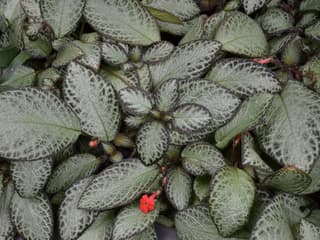
| Flame Violet | Easy | Partial shade | 7d | ✓ |
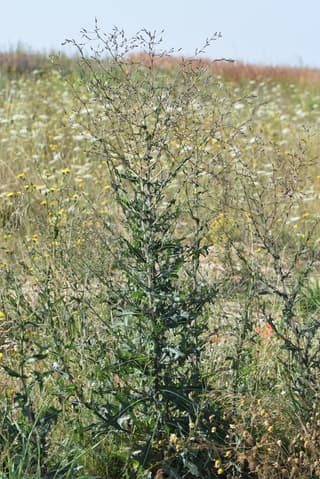
| Prickly Lettuce | Easy | Direct sun | 7d | ✓ |
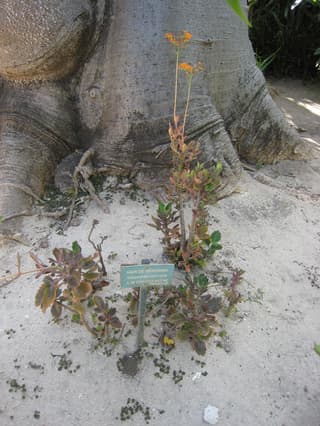
| Christmas Tree Plant | Easy | Bright indirect | 10d | ⚠️ |
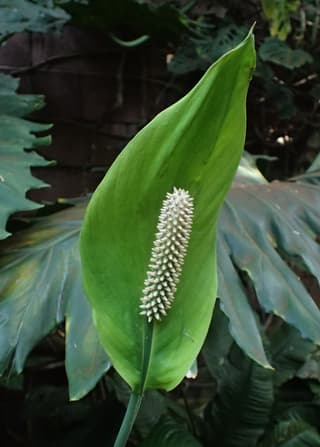
| Peace Lily | Easy | Low light | 7d | ⚠️ |