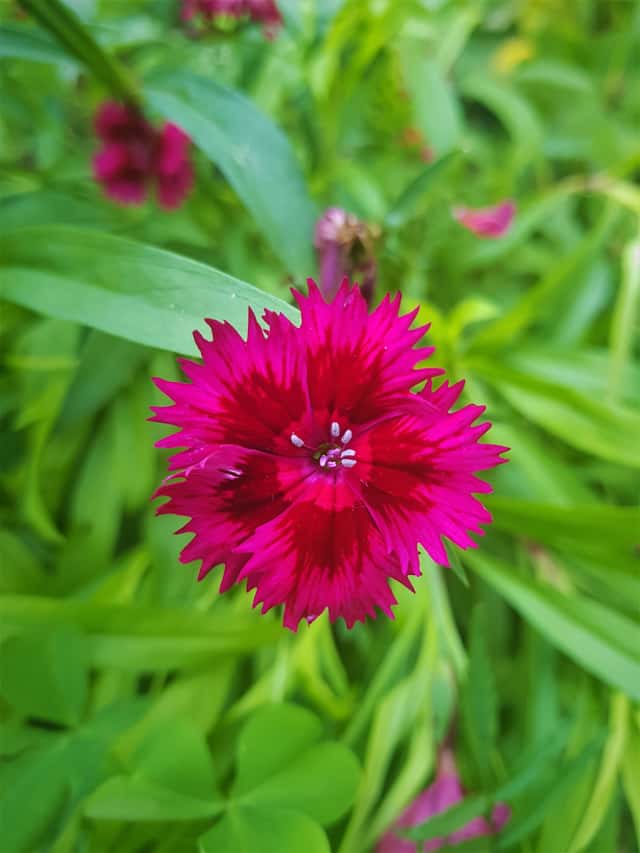
Caryophyllaceae
How to Grow and Care for Sweet William
Dianthus barbatus
Easy to grow in full sun with well-draining soil. Water regularly but avoid waterlogging. Deadhead spent flowers to prolong blooming. Best treated as a biennial — sow seeds in summer for blooms next spring.
Every 7 days
Direct sun
-15° - 30°C
40% - 60%
Categories
What is Sweet William?
Sweet William (Dianthus barbatus) is a easy-care plant from the Caryophyllaceae family. Sweet William (Dianthus barbatus) is a charming biennial or short-lived perennial native to southern Europe. It produces dense, flat-topped clusters of small fragrant flowers in vivid shades of pink, red, white, and bicolor patterns. The blooms have a delightful clove-like scent and appear in late s...
Sweet William grows up to 60cm, spread of 30cm, watering every 7 days, -15°C – 30°C, 40–60% humidity. It is not suitable for indoor environments and not safe for pets.
Unlike many tropical plants, Sweet William tolerates watering mistakes. Best for beginners. Without precautions, ingestion can cause irritation in pets. Keep out of reach of cats and dogs.
How to Care for Sweet William?
TLDR: Sweet William needs Direct sun, watering every 7 days, and temperatures between -15-30°C with 40-60% humidity.
How Often Should You Water Sweet William?
Water at the base of the plant every 5-7 days, keeping soil moist but not soggy. Avoid wetting foliage to prevent fungal disease. Reduce watering in winter.
How Much Light Does Sweet William Need?
Requires full sun — at least 6 hours of direct sunlight per day. In hot climates, light afternoon shade can extend the blooming period.
What Is the Best Soil for Sweet William?
Plant in well-draining, fertile soil enriched with compost. Prefers neutral to slightly alkaline pH (6.0–7.5). Avoid heavy clay soils that retain moisture.
What Pot Should You Use for Sweet William?
Terracotta or ceramic pots with drainage holes. Minimum 20 cm depth. Ensure good drainage to prevent root rot.
Care Schedule
Fertilize
Every 30 days
Repot
Every 365 days
What Is Sweet William and Where Does It Come From?
Sweet William (Dianthus barbatus) is a charming biennial or short-lived perennial native to southern Europe. It produces dense, flat-topped clusters of small fragrant flowers in vivid shades of pink, red, white, and bicolor patterns. The blooms have a delightful clove-like scent and appear in late spring to early summer, making it a cottage garden favorite.
How to Propagate Sweet William?
Seed Sowing
Sow fresh seeds for best germination rates. Seeds can also be sown in early spring under glass for same-year flowering. Self-seeding is common once established.
- 1 Sow seeds in trays or directly in the garden in summer (June-July) for blooms the following spring
- 2 Cover seeds lightly with compost and keep moist
- 3 Thin seedlings to 30 cm apart once they are large enough to handle
- 4 Transplant to final positions in autumn
Materials needed:
How Big Does Sweet William Grow?
TLDR: Sweet William can reach up to 60cm tall with Medium growth rate.
Max height
60cm
Spread
30cm
Growth rate
Medium
Foliage
Semi-evergreen
Warning: Toxic Plant
This plant can be toxic if ingested. Keep out of reach of:
Plant Uses
Ornamental
Great for decoration
Aromatic
Pleasant fragrance
Is your plant showing symptoms?
Click on the symptom to discover possible causes:
What Diseases Commonly Affect Sweet William?
TLDR: Sweet William is susceptible to 12 known diseases. Monitor regularly for early detection.
Crown Rot
Crown rot is a serious fungal disease that attacks the crown (base) of the plant where the stem meets the soil. It is caused by various fungal pathogens including Phytophthora, Fusarium, and Rhizoctonia. The disease thrives in waterlogged conditions and can quickly spread to kill the entire plant if not addressed promptly.
Rust
Rust is a common fungal disease caused by fungi in the order Pucciniales that affects a wide variety of plants. The disease gets its name from the characteristic orange, yellow, or reddish-brown pustules that appear on leaves, resembling metal rust. This obligate fungal parasite requires living plants to survive and can cause significant economic losses in agricultural crops.
Alternaria Leaf Spot
Alternaria leaf spot is a common fungal disease caused by Alternaria solani and Alternaria alternata that affects a wide range of plants including tomatoes, potatoes, brassicas, and ornamentals. The disease thrives in warm, humid conditions and can cause significant crop damage if left untreated. Spores overwinter on plant debris and can attach to seeds, making complete elimination difficult.
Leaf Spot
Leaf spot is a common fungal disease caused by various pathogens including Alternaria, Ascochyta, Colletotrichum, Septoria, and Venturia. It primarily affects leaves, causing discolored spots that can lead to premature leaf drop if left untreated.
Meaning & Symbolism
Sweet William symbolizes gallantry and admiration. In the Victorian language of flowers, giving Sweet William means "grant me one smile." It also represents finesse and a desire to please.
Fun Facts
Sweet William has been cultivated in European gardens since the 16th century and was a favorite of Tudor-era gardeners
The species name "barbatus" means "bearded" in Latin, referring to the fringed petals and bearded calyx of the flowers
Sweet William readily self-seeds, meaning a single planting can naturalize and return year after year in favorable conditions
The flowers produce a distinct clove-like fragrance that attracts butterflies and bees, making it an excellent pollinator plant
Frequently asked questions
Is Sweet William a perennial or annual?
How often should I water Sweet William?
Why are my Sweet William flowers wilting?
Is Sweet William toxic to pets?
When does Sweet William bloom?
Compare with similar plants
| Attribute | Difficulty | Light | Watering | Pet Safe |
|---|---|---|---|---|
| Field Maple | Easy | Bright indirect | 14d | ✓ |
| Silver Birch | Easy | Direct sun | 14d | ✓ |
| Cushion Bush | Easy | Direct sun | 14d | ✓ |
| Peruvian peppertree | Easy | Direct sun | 14d | ⚠️ |





