Cactaceae
Thelocactus: Full Sun Plant
Thelocactus
Thelocactus thrives best with maximum direct sunlight, a very well-drained mineral soil, and sparse watering that follows a distinct rest and growth season. During the summer, water deeply but infrequently, while in winter, the soil must be kept completely dry at low temperatures to prevent rot.
Every 14 days
Direct sun
5° - 35°C
10% - 30%
Categories
What is Thelocactus?
Thelocactus (Thelocactus) is a easy-care plant from the Cactaceae family. Thelocactus is a genus of about 13 species of globose to short cylindrical cacti that grow wild in the arid regions of central and northern Mexico as well as in the Big Bend region of Texas. The plants are characterized by prominent, often spiraling ribs set with distinct tubercles and star-shaped s...
Thelocactus grows up to 15cm, spread of 25cm, watering every 14 days, 5°C – 35°C, 10–30% humidity. It is suitable for indoor environments and safe for pets.
Unlike many tropical plants, Thelocactus tolerates watering mistakes. Best for beginners. Unlike many popular species, Thelocactus is safe to keep around pets. Without adequate drainage, root rot can develop within 28 days.
How to Care for Thelocactus?
TLDR: Thelocactus needs Direct sun, watering every 14 days, and temperatures between 5-35°C with 10-30% humidity.
How Often Should You Water Thelocactus?
Water only when the soil is completely dry throughout, typically every 10-14 days during the growing season (spring-summer). From autumn, reduce watering gradually, and in winter, keep the plant almost entirely dry.
How Much Light Does Thelocactus Need?
Provide as much direct sun as possible – a south-facing windowsill or an outdoor spot during the summer is ideal. Gradually acclimate the plant to strong sunlight to avoid sunburn on the epidermis.
What Is the Best Soil for Thelocactus?
Use a very well-drained, mineral cactus mix, such as a blend of coarse sand, pumice or lava, and a little cactus compost, with a pH around 6.5-7.5.
What Pot Should You Use for Thelocactus?
Choose an unglazed clay or terracotta pot with ample drainage holes so that excess water can drain away quickly and the soil can breathe between waterings.
Care Schedule
Fertilize
Every 30 days
Rotate
Every 30 days
Repot
Every 1095 days
What Is Thelocactus and Where Does It Come From?
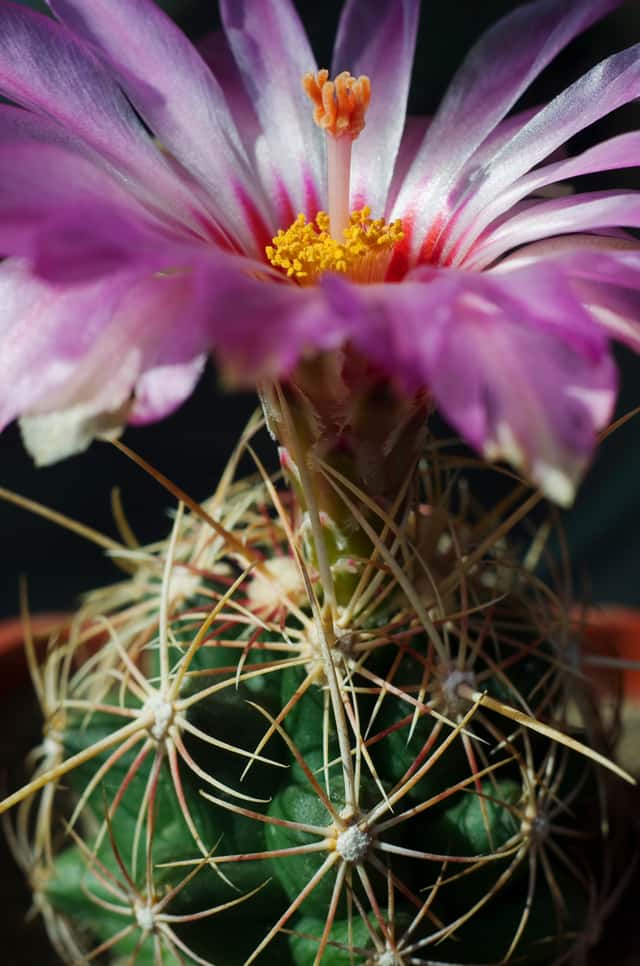
Thelocactus is a genus of about 13 species of globose to short cylindrical cacti that grow wild in the arid regions of central and northern Mexico as well as in the Big Bend region of Texas. The plants are characterized by prominent, often spiraling ribs set with distinct tubercles and star-shaped spine clusters in colors ranging from white and golden to reddish-brown. In spring and summer, large, funnel-shaped flowers bloom from the plant's apex in shades of white, yellow, pink, and purple – often nearly as wide as the plant itself.
How to Propagate Thelocactus?
Seed Propagation
- Avoid direct sunlight for small seedlings during the first year.
- Use lukewarm water for misting.
- 1 Substrate Preparation
Use a sterile, mineral cactus mix with extra sand or perlite.
- 2 Sowing
Spread the seeds on the surface and press them down lightly without covering them completely.
- 3 Humidity
Cover with plastic film and maintain approximately 25 degrees Celsius and consistent moisture until the seeds germinate.
Materials needed:
Offsets/Side Shoots
- Ensure tools are completely clean to avoid rot and infection.
- 1 Removal
Carefully cut a side shoot from the mother plant using a sterile knife.
- 2 Drying
Let the cut surface dry and form a callus for 3-7 days in a shaded, dry place.
- 3 Planting
Place the shoot in dry, well-drained cactus soil and wait about a week before watering lightly.
Materials needed:
How Big Does Thelocactus Grow?
TLDR: Thelocactus can reach up to 15cm tall with Slow growth rate.
Max height
15cm
Spread
25cm
Growth rate
Slow
Foliage
Evergreen
Plant Uses
Ornamental
Great for decoration
Is your plant showing symptoms?
Click on the symptom to discover possible causes:
Meaning & Symbolism
Thelocactus, like many desert cacti, symbolizes endurance, strength, and the ability to bloom even under harsh and barren conditions.