Asteraceae
Mexican Sunflower (Tithonia rotundifolia)
Tithonia rotundifolia
Full-sun annual, drought-tolerant once established. Thrives in poor, well-drained soil with no fertilizer needed. Fast grower that blooms prolifically from midsummer to frost.
Every 7 days
Direct sun
16° - 35°C
30% - 60%
Categories
What is Mexican Sunflower?
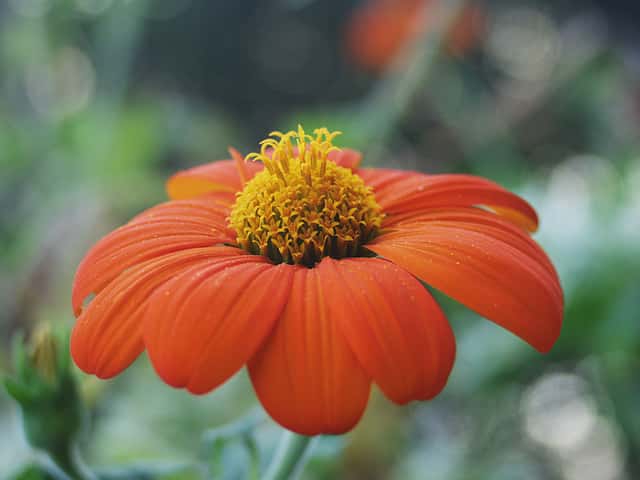
Mexican Sunflower (Tithonia rotundifolia) is a easy-care plant from the Asteraceae family. Mexican Sunflower (Tithonia rotundifolia) is a fast-growing annual native to Mexico and Central America, celebrated for its bold orange, red, and yellow daisy-like blooms. Growing up to 8 feet tall, it is a magnet for butterflies, hummingbirds, and bees throughout summer and fall.
Mexican Sunflower grows up to 2.4m, spread of 120cm, watering every 7 days, 16°C – 35°C, 30–60% humidity. It is not suitable for indoor environments and safe for pets.
Unlike many tropical plants, Mexican Sunflower tolerates watering mistakes. Best for beginners. Unlike many popular species, Mexican Sunflower is safe to keep around pets.
How to Care for Mexican Sunflower?
TLDR: Mexican Sunflower needs Direct sun, watering every 7 days, and temperatures between 16-35°C with 30-60% humidity.
How Often Should You Water Mexican Sunflower?
Water young plants deeply twice a week. Once established, water only during dry spells — about once a week. Avoid wetting foliage to prevent fungal issues.
How Much Light Does Mexican Sunflower Need?
Requires full sun — at least 6 to 8 hours of direct sunlight daily. Plants grown in partial shade become leggy and fail to flower well.
What Is the Best Soil for Mexican Sunflower?
Prefers poor to average, well-drained sandy or rocky soil. Avoid rich, nitrogen-heavy soil, which promotes foliage over flowers and causes weak stems.
What Pot Should You Use for Mexican Sunflower?
Large terracotta pot or garden bed with excellent drainage
What Is Mexican Sunflower and Where Does It Come From?
Mexican Sunflower (Tithonia rotundifolia) is a fast-growing annual native to Mexico and Central America, celebrated for its bold orange, red, and yellow daisy-like blooms. Growing up to 8 feet tall, it is a magnet for butterflies, hummingbirds, and bees throughout summer and fall.
How to Propagate Mexican Sunflower?
Seed Sowing
Start seeds indoors 6-8 weeks before last frost for earlier blooms. Soil temperature of 70-80°F speeds germination.
- 1 Direct sow seeds outdoors after last frost
- 2 Press seeds lightly into soil and cover thinly
- 3 Keep soil moist until germination
- 4 Thin seedlings to 24-36 inches apart
Materials needed:
Stem Cutting
Use clean, sharp tools. Change water every 2 days if rooting in water.
- 1 Take a healthy stem cutting 10-12 inches long
- 2 Remove lower leaves
- 3 Plant in moist, well-draining medium
- 4 Place in a warm, sunny location
Materials needed:
How Big Does Mexican Sunflower Grow?
TLDR: Mexican Sunflower can reach up to 2.4m tall with Fast growth rate.
Max height
2.4m
Spread
1.2m
Growth rate
Fast
Foliage
Deciduous
Plant Uses
Ornamental
Great for decoration
Is your plant showing symptoms?
Click on the symptom to discover possible causes:
What Diseases Commonly Affect Mexican Sunflower?
TLDR: Mexican Sunflower is susceptible to 4 known diseases. Monitor regularly for early detection.
Powdery Mildew
Powdery mildew is a common fungal disease caused by various fungi species including Erysiphe, Podosphaera, Oïdium, and Leveillula. It affects over 10,000 plant species worldwide. The disease thrives in warm, dry climates with high humidity and appears as a distinctive white powdery coating on plant surfaces.
Root Rot
Root rot is a serious fungal disease that affects the root system of plants, causing them to decay and die. It is primarily caused by overwatering, poor drainage, or soil-borne fungi such as Pythium, Phytophthora, Rhizoctonia, and Fusarium. The disease thrives in waterlogged conditions where roots are deprived of oxygen, making them susceptible to fungal infection.
Aphids
Aphids are small, soft-bodied, pear-shaped insects (1/16 to 1/8 inch long) that feed by sucking nutrient-rich sap from plants. They reproduce rapidly and can quickly weaken plants, causing distorted growth and transmitting plant viruses. Aphids come in various colors including green, black, red, yellow, brown, and gray. They secrete honeydew, a sticky substance that attracts ants and encourages sooty mold growth.
Slugs and Snails
Slugs and snails are mollusks that feed on plant tissue, causing irregular holes in leaves and damage to young seedlings. They are most active at night and in moist conditions, leaving characteristic silvery slime trails. These pests can quickly devastate gardens, especially during wet seasons.
Meaning & Symbolism
Symbolizes energy, warmth, and solar vitality.
Fun Facts
Can grow up to 8 feet tall in a single growing season
Its flowers are a top nectar source for monarch butterflies and hummingbirds
Native to Mexico and Central America, it has naturalized across tropical regions worldwide
No fertilizer needed — it actually flowers better in poor soil
Frequently asked questions
How often should I water Mexican Sunflower?
Does Mexican Sunflower need fertilizer?
How much sun does Mexican Sunflower need?
Is Mexican Sunflower toxic to pets?
When does Mexican Sunflower bloom?
Compare with similar plants
| Attribute | Difficulty | Light | Watering | Pet Safe |
|---|---|---|---|---|
| Field Maple | Easy | Bright indirect | 14d | ✓ |
| Silver Birch | Easy | Direct sun | 14d | ✓ |
| Cushion Bush | Easy | Direct sun | 14d | ✓ |
| Wild Lettuce | Medium | Direct sun | 7d | ⚠️ |





