Lamiaceae
Common Thyme (Thymus vulgaris): The Ultimate Care Guide
Thymus vulgaris
Thyme is an easy-going, drought-tolerant herb that thrives in full sun. Water sparingly, ensure excellent drainage, avoid rich soils, and cut back in spring to keep it bushy. Minimal fertilizing is needed — too much leads to leggy growth and reduced aroma.
Every 10 days
Direct sun
-6° - 35°C
30% - 50%
Categories
What is Common Thyme?
Common Thyme (Thymus vulgaris) is a easy-care plant from the Lamiaceae family. Thymus vulgaris, commonly known as common thyme or garden thyme, is a fragrant evergreen herb native to the Mediterranean region. A member of the Lamiaceae (mint) family, this small woody-stemmed perennial has been cultivated for thousands of years for its culinary, medicinal, and ornamental virtues...
Common Thyme grows up to 30cm, spread of 40cm, watering every 10 days, -6°C – 35°C, 30–50% humidity. It is suitable for indoor environments and safe for pets.
Unlike many tropical plants, Common Thyme tolerates watering mistakes. Best for beginners. Unlike many popular species, Common Thyme is safe to keep around pets. Without adequate drainage, root rot can develop within 20 days.
How to Care for Common Thyme?
TLDR: Common Thyme needs Direct sun, watering every 10 days, and temperatures between -6-35°C with 30-50% humidity.
How Often Should You Water Common Thyme?
Allow the soil to dry out completely between waterings. Water deeply every 7-14 days in summer, far less in winter. Overwatering is the main enemy — always check that the top 2-3 cm of soil is dry before watering again.
How Much Light Does Common Thyme Need?
Thyme demands full direct sun for at least 6 hours per day. A south-facing windowsill works indoors. Insufficient light reduces the essential oil content and leads to leggy, less aromatic growth.
What Is the Best Soil for Common Thyme?
Use very well-draining, sandy or gritty soil with a slightly alkaline pH (6.0–8.0). Mix in 30% perlite or coarse sand to replicate Mediterranean conditions. Avoid heavy, moisture-retaining mixes.
What Pot Should You Use for Common Thyme?
Terracotta pot with drainage holes — essential for replicating Mediterranean conditions and preventing root rot.
Care Schedule
Fertilize
Every 90 days
Repot
Every 545 days
What Is Common Thyme and Where Does It Come From?
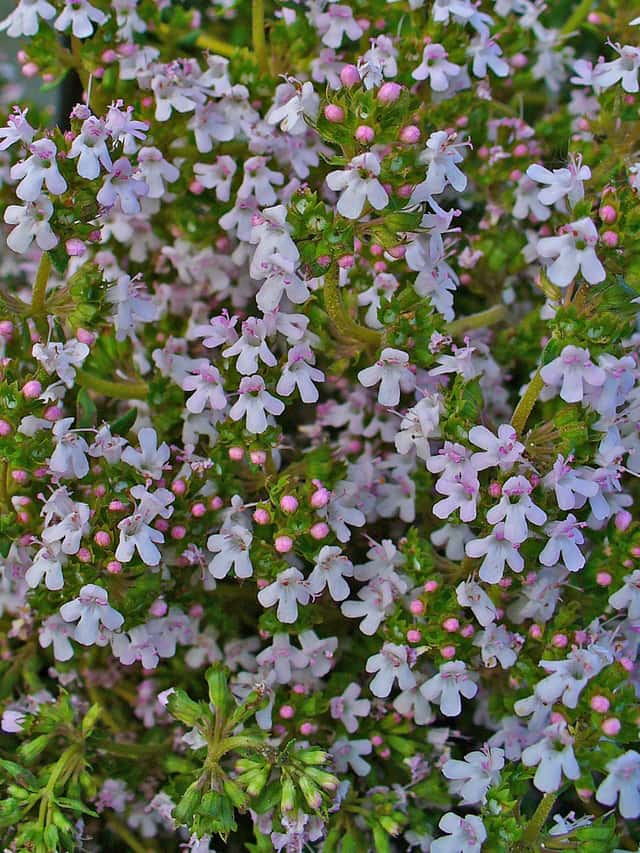
Thymus vulgaris, commonly known as common thyme or garden thyme, is a fragrant evergreen herb native to the Mediterranean region. A member of the Lamiaceae (mint) family, this small woody-stemmed perennial has been cultivated for thousands of years for its culinary, medicinal, and ornamental virtues. It produces tiny aromatic leaves and delicate pink to purple flowers that attract pollinators.
How to Propagate Common Thyme?
Stem Cutting
Take cuttings in spring or early summer before flowering. Use clean, sharp scissors to avoid crushing the stem.
- 1 Cut a 8-10 cm tip from a healthy non-flowering stem
- 2 Strip leaves from the bottom 3 cm
- 3 Dip the cut end in rooting hormone (optional)
- 4 Plant in moist, well-draining mix or place in water
- 5 Keep in bright indirect light until roots form
Materials needed:
Division
Division is best done in early spring before active growth begins. It rejuvenates old, woody plants.
- 1 Remove the plant from its pot or dig it up
- 2 Gently tease apart the root ball into 2-3 sections
- 3 Replant each section in fresh, well-draining soil
- 4 Water lightly and place in full sun
Materials needed:
How Big Does Common Thyme Grow?
TLDR: Common Thyme can reach up to 30cm tall with Slow growth rate.
Max height
30cm
Spread
40cm
Growth rate
Slow
Foliage
Evergreen
Plant Uses
Ornamental
Great for decoration
Medicinal
Medicinal properties
Aromatic
Pleasant fragrance
Ground Cover
Soil coverage
Medicinal Uses
- Antimicrobial and antiseptic properties (thymol)
- Used as expectorant for coughs and respiratory issues
- Traditionally used for digestive complaints and sore throats
Culinary Uses
- Essential culinary herb in Mediterranean cuisine
- Used fresh or dried in soups, stews, roasts, and sauces
- Key ingredient in bouquet garni and herbes de Provence
- Pairs well with chicken, lamb, fish, and vegetables
Is your plant showing symptoms?
Click on the symptom to discover possible causes:
What Diseases Commonly Affect Common Thyme?
TLDR: Common Thyme is susceptible to 12 known diseases. Monitor regularly for early detection.
Root Rot
Root rot is a serious fungal disease that affects the root system of plants, causing them to decay and die. It is primarily caused by overwatering, poor drainage, or soil-borne fungi such as Pythium, Phytophthora, Rhizoctonia, and Fusarium. The disease thrives in waterlogged conditions where roots are deprived of oxygen, making them susceptible to fungal infection.
Powdery Mildew
Powdery mildew is a common fungal disease caused by various fungi species including Erysiphe, Podosphaera, Oïdium, and Leveillula. It affects over 10,000 plant species worldwide. The disease thrives in warm, dry climates with high humidity and appears as a distinctive white powdery coating on plant surfaces.
Alternaria Leaf Spot
Alternaria leaf spot is a common fungal disease caused by Alternaria solani and Alternaria alternata that affects a wide range of plants including tomatoes, potatoes, brassicas, and ornamentals. The disease thrives in warm, humid conditions and can cause significant crop damage if left untreated. Spores overwinter on plant debris and can attach to seeds, making complete elimination difficult.
Gray Mold (Botrytis Blight)
Gray mold, caused by the fungus Botrytis cinerea, is one of the most common fungal diseases in plants. It affects over 200 plant species, including ornamentals, vegetables, fruits, and houseplants. The disease thrives in cool, humid conditions with poor air circulation, causing grayish spots and soft rot on infected tissues.
Meaning & Symbolism
Since antiquity, thyme has symbolized courage, bravery, and strength. Ancient Greeks burned it as temple incense; Romans used it to purify their homes. Medieval knights carried thyme into battle for protection.
Fun Facts
Thyme contains thymol, a natural antiseptic used in mouthwashes and household cleaners.
Ancient Egyptians used thyme in embalming preparations.
A single thyme plant can live 3-5 years as a perennial, becoming increasingly woody over time.
Thyme is one of the few herbs that becomes more potent when dried — the drying process concentrates its essential oils.
Frequently asked questions
How often should I water thyme?
Can I grow thyme indoors?
Is common thyme toxic to pets?
When does thyme flower?
How do I keep my thyme plant bushy?
Compare with similar plants
| Attribute | Difficulty | Light | Watering | Pet Safe |
|---|---|---|---|---|
| Field Maple | Easy | Bright indirect | 14d | ✓ |
| Silver Birch | Easy | Direct sun | 14d | ✓ |
| Common Blanketflower | Easy | Direct sun | 10d | ✓ |
| Cushion Bush | Easy | Direct sun | 14d | ✓ |





