Lamiaceae
Lemon thyme: Aromatic Plant
Thymus x citriodorus
Thrives in full sun and well-drained, gritty soil. It is highly drought-tolerant and prefers to dry out between waterings.
Every 12 days
Direct sun
-18° - 35°C
30% - 50%
Categories
What is Lemon thyme?
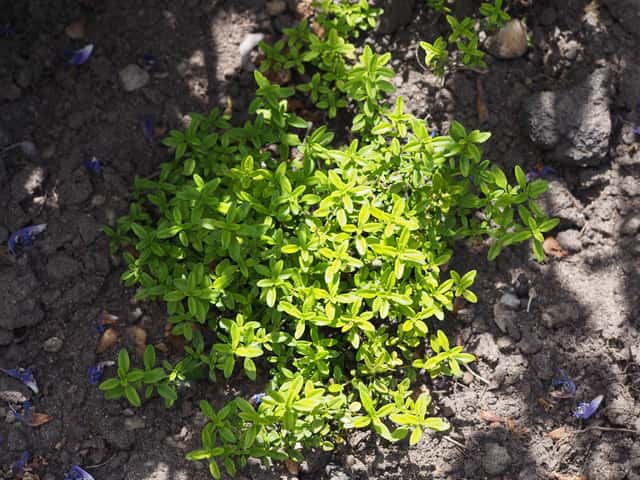
Lemon thyme (Thymus x citriodorus) is a easy-care plant from the Lamiaceae family. Lemon thyme is a woody-based perennial subshrub that is primarily grown as a culinary herb for its intense lemon-scented foliage. It forms a low, spreading mat of tiny, oval, dark green leaves that may be variegated with gold or silver depending on the cultivar. During the summer, it produces small,...
Lemon thyme grows up to 30cm, spread of 45cm, watering every 12 days, -18°C – 35°C, 30–50% humidity. It is suitable for indoor environments and safe for pets.
Unlike many tropical plants, Lemon thyme tolerates watering mistakes. Best for beginners. Unlike many popular species, Lemon thyme is safe to keep around pets. Without adequate drainage, root rot can develop within 24 days.
How to Care for Lemon thyme?
TLDR: Lemon thyme needs Direct sun, watering every 12 days, and temperatures between -18-35°C with 30-50% humidity.
How Often Should You Water Lemon thyme?
Water deeply only when the soil is dry to the touch. Established plants are very drought-resistant.
How Much Light Does Lemon thyme Need?
Requires at least 6 to 8 hours of direct sunlight daily to maintain its aromatic oils and compact growth habit.
What Is the Best Soil for Lemon thyme?
Prefers poor, rocky, or sandy soil with excellent drainage. Avoid heavy clay or highly organic soils that retain too much water.
What Pot Should You Use for Lemon thyme?
Terracotta pots are ideal as they allow the soil to breathe and prevent moisture buildup.
Care Schedule
Fertilize
Every 90 days
Repot
Every 730 days
What Is Lemon thyme and Where Does It Come From?
Lemon thyme is a woody-based perennial subshrub that is primarily grown as a culinary herb for its intense lemon-scented foliage. It forms a low, spreading mat of tiny, oval, dark green leaves that may be variegated with gold or silver depending on the cultivar. During the summer, it produces small, nectar-rich lavender to pink flowers that are highly attractive to pollinators like bees and butterflies.
How to Propagate Lemon thyme?
Softwood Cuttings
- Keep the soil moist but not soggy during the rooting phase.
- Using a rooting hormone can speed up the process but is not strictly necessary.
- 1 Take Cuttings
Cut a 3-4 inch tip from a healthy, non-flowering stem.
- 2 Prepare Stem
Remove the leaves from the bottom half of the cutting.
- 3 Plant
Insert the bare stem into a moist, sandy potting mix.
Materials needed:
Root Division
- Division is best done every 3-4 years to rejuvenate old, woody plants.
- 1 Dig Up Plant
Carefully lift an established lemon thyme clump from the ground or pot.
- 2 Separate
Gently pull the root ball apart into smaller sections, ensuring each has stems and roots.
- 3 Replant
Plant the sections immediately into their new locations and water well.
Materials needed:
How Big Does Lemon thyme Grow?
TLDR: Lemon thyme can reach up to 30cm tall with Slow growth rate.
Max height
30cm
Spread
45cm
Growth rate
Slow
Foliage
Evergreen
Plant Uses
Edible
Can be consumed
Aromatic
Pleasant fragrance
Medicinal
Medicinal properties
Ornamental
Great for decoration
Medicinal Uses
- Antiseptic gargle for sore throats
- Digestive aid in tea form
- Topical treatment for minor skin irritations
Culinary Uses
- Seasoning for poultry and seafood
- Flavoring for herbal teas
- Fresh addition to salads and marinades
- Infusing vinegars and oils
Is your plant showing symptoms?
Click on the symptom to discover possible causes:
What Diseases Commonly Affect Lemon thyme?
TLDR: Lemon thyme is susceptible to 10 known diseases. Monitor regularly for early detection.
Root Rot
Root rot is a serious fungal disease that affects the root system of plants, causing them to decay and die. It is primarily caused by overwatering, poor drainage, or soil-borne fungi such as Pythium, Phytophthora, Rhizoctonia, and Fusarium. The disease thrives in waterlogged conditions where roots are deprived of oxygen, making them susceptible to fungal infection.
Overwatering
Overwatering occurs when plants receive too much water, depriving roots of oxygen and causing root rot. This environmental stress is one of the most common causes of houseplant death, as waterlogged soil prevents roots from breathing and functioning properly.
Powdery Mildew
Powdery mildew is a common fungal disease caused by various fungi species including Erysiphe, Podosphaera, Oïdium, and Leveillula. It affects over 10,000 plant species worldwide. The disease thrives in warm, dry climates with high humidity and appears as a distinctive white powdery coating on plant surfaces.
Aphids
Aphids are small, soft-bodied, pear-shaped insects (1/16 to 1/8 inch long) that feed by sucking nutrient-rich sap from plants. They reproduce rapidly and can quickly weaken plants, causing distorted growth and transmitting plant viruses. Aphids come in various colors including green, black, red, yellow, brown, and gray. They secrete honeydew, a sticky substance that attracts ants and encourages sooty mold growth.
Meaning & Symbolism
Historically associated with courage, activity, and the cleansing of the spirit.
Compare with similar plants
| Attribute | Difficulty | Light | Watering | Pet Safe |
|---|---|---|---|---|
| Small Scabious | Easy | Direct sun | 7d | ✓ |
| Field Maple | Easy | Bright indirect | 14d | ✓ |
| Silver Birch | Easy | Direct sun | 14d | ✓ |
| Red valerian | Easy | Direct sun | 10d | ✓ |
Choose & Compare
Sources & References
- Lemon Thyme (Thymus citriodorus): Benefits, Challenges, Uses - Gardenia.net
- Thymus x citriodorus - NC State Extension Gardener Plant Toolbox
- Lemon thyme: how to grow, propagate & use - Plantura
- How to Plant and Grow Lemon Thyme - Gardener's Path
- Thymus x citriodorus - Missouri Botanical Garden Plant Finder



