Solanaceae
Tree Tobacco - Nicotiana glauca: Complete Care Guide
Nicotiana glauca
Very low-maintenance plant requiring full sun and infrequent watering. Highly drought-tolerant once established. Avoid waterlogging. No misting needed. Occasional pruning to control vigorous growth.
Every 14 days
Direct sun
-5° - 40°C
30% - 60%
Categories
What is Tree Tobacco?
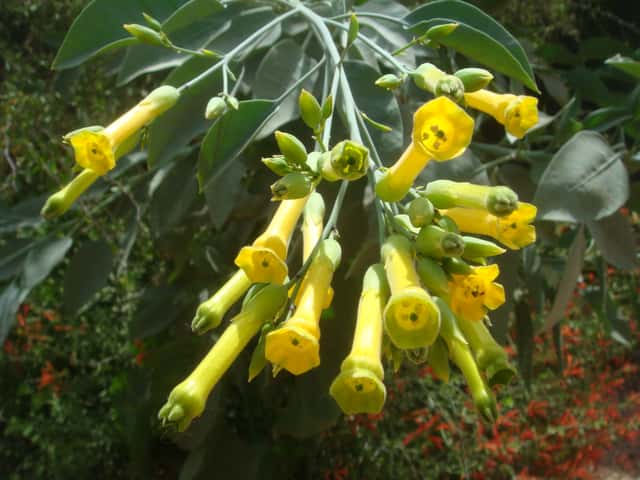
Tree Tobacco (Nicotiana glauca) is a easy-care plant from the Solanaceae family. Nicotiana glauca, commonly known as tree tobacco, is a shrub or small tree in the nightshade family Solanaceae, native to Argentina and Bolivia. It grows 3–7 meters tall, with thick bluish-green leaves and striking tubular yellow flowers that attract hummingbirds and butterflies. Extremely drought-t...
Tree Tobacco grows up to 7.0m, with spread of 300cm, watering every 14 days, -5°C – 40°C, 30–60% humidity. It is not suitable for indoor environments and not safe for pets.
Unlike many tropical plants, Tree Tobacco tolerates watering mistakes. Best for beginners. Without precautions, ingestion can cause irritation in pets. Keep out of reach of cats and dogs.
How to Care for Tree Tobacco?
TLDR: Tree Tobacco needs Direct sun, watering every 14 days, and temperatures between -5-40°C with 30-60% humidity.
How Often Should You Water Tree Tobacco?
Water every 10–14 days in summer, allowing the soil to dry out completely between waterings. In winter, reduce to once a month or less. Extremely drought-tolerant; overwatering causes root rot.
How Much Light Does Tree Tobacco Need?
Requires full direct sun, at least 6 hours daily. Does not tolerate shade. Perfect for Mediterranean gardens, xeriscape plantings, and arid landscapes.
What Is the Best Soil for Tree Tobacco?
Prefers well-draining, sandy or rocky soils. Adapts to poor soils and does not require frequent fertilization. Avoid compact or clay-heavy soils that retain moisture.
What Pot Should You Use for Tree Tobacco?
Terracotta or clay pot with drainage hole. For garden planting, plant directly in ground. Avoid pots without drainage.
What Is Tree Tobacco and Where Does It Come From?
Nicotiana glauca, commonly known as tree tobacco, is a shrub or small tree in the nightshade family Solanaceae, native to Argentina and Bolivia. It grows 3–7 meters tall, with thick bluish-green leaves and striking tubular yellow flowers that attract hummingbirds and butterflies. Extremely drought-tolerant and adaptable to poor soils, it is widely naturalized across the world, though all parts are highly toxic.
How to Propagate Tree Tobacco?
Seed propagation
Seeds are very fine; press lightly onto moist substrate without covering. Keep substrate barely moist until germination.
- 1 Surface-sow seeds on moist, well-draining substrate — do not cover with soil
- 2 Keep at 20–25°C with bright indirect light
- 3 Once germinated, transplant seedlings when they have 2–3 true leaves
- 4 Gradually acclimate to outdoor full sun exposure
Materials needed:
Stem cutting
Use clean, disinfected tools. Wear gloves when handling — all plant parts are toxic.
- 1 Cut a semi-woody stem 10–15 cm long with at least 2 nodes
- 2 Remove lower leaves, keeping 2–3 at the tip
- 3 Insert into sandy, moist substrate
- 4 Keep in a warm, bright spot out of direct sun until rooted
Materials needed:
How Big Does Tree Tobacco Grow?
TLDR: Tree Tobacco can reach up to 7.0m tall with Fast growth rate.
Max height
7.0m
Spread
3.0m
Growth rate
Fast
Foliage
Evergreen
Warning: Toxic Plant
This plant can be toxic if ingested. Keep out of reach of:
Plant Uses
Ornamental
Great for decoration
Medicinal
Medicinal properties
Medicinal Uses
- Used in traditional Andean folk medicine as an antiparasitic and for skin conditions. WARNING: use only under professional supervision due to high toxicity.
Is your plant showing symptoms?
Click on the symptom to discover possible causes:
What Diseases Commonly Affect Tree Tobacco?
TLDR: Tree Tobacco is susceptible to 6 known diseases. Monitor regularly for early detection.
Aphids
Aphids are small, soft-bodied, pear-shaped insects (1/16 to 1/8 inch long) that feed by sucking nutrient-rich sap from plants. They reproduce rapidly and can quickly weaken plants, causing distorted growth and transmitting plant viruses. Aphids come in various colors including green, black, red, yellow, brown, and gray. They secrete honeydew, a sticky substance that attracts ants and encourages sooty mold growth.
Spider Mites
Spider mites are tiny arachnids (less than 1/20 inch long) related to spiders and ticks that feed on plant sap. They thrive in hot, dry conditions and can cause significant damage to ornamental and vegetable plants. During severe infestations, crop losses can reach 14% or higher as these pests disrupt vital plant processes including photosynthesis, carbon dioxide absorption, and transpiration.
Powdery Mildew
Powdery mildew is a common fungal disease caused by various fungi species including Erysiphe, Podosphaera, Oïdium, and Leveillula. It affects over 10,000 plant species worldwide. The disease thrives in warm, dry climates with high humidity and appears as a distinctive white powdery coating on plant surfaces.
Bacterial Leaf Spot
Bacterial leaf spot is a plant disease caused by bacteria in the Xanthomonas and Pseudomonas genera that affects various ornamental and edible plants. The bacteria infect leaves through wounds or natural openings, causing characteristic lesions that can lead to premature leaf drop and plant weakening.
Meaning & Symbolism
Tobacco has historically symbolized communication with the divine in Andean cultures and hospitality in many indigenous traditions. Tree tobacco, with its majestic form and golden flowers, represents resilience and perseverance in harsh environments.
Fun Facts
Native to Argentina and Bolivia, tree tobacco has naturalized as an invasive plant in over 40 countries, including Australia, the United States, and southern Europe.
Its tubular yellow flowers are especially attractive to hummingbirds, which are its primary pollinators in its native range.
It contains anabasine, an alkaloid so potent that ingestion of just a few leaves can be fatal to humans and animals.
Tree tobacco has been studied for its potential in biomass production and as a model organism in plant biotechnology research.
Frequently asked questions
How often should I water tree tobacco?
Is Nicotiana glauca toxic?
How tall does tree tobacco grow?
Can tree tobacco grow in a pot?
What pests affect tree tobacco?
Compare with similar plants
| Attribute | Difficulty | Light | Watering | Pet Safe |
|---|---|---|---|---|
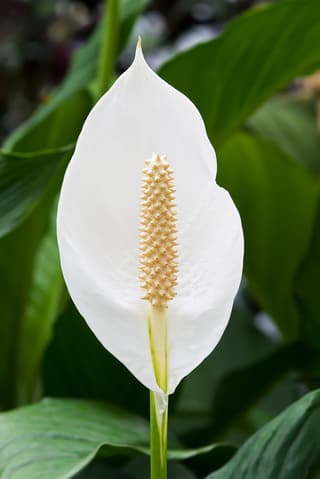
| Peace Lily | Easy | Low light | 4d | ⚠️ |
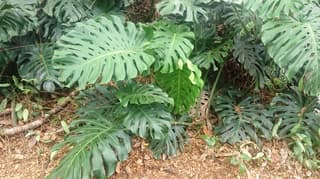
| Swiss Cheese Plant | Easy | Partial shade | 10d | ⚠️ |
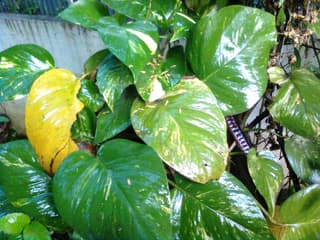
| Golden Pothos | Easy | Low light | 8d | ⚠️ |
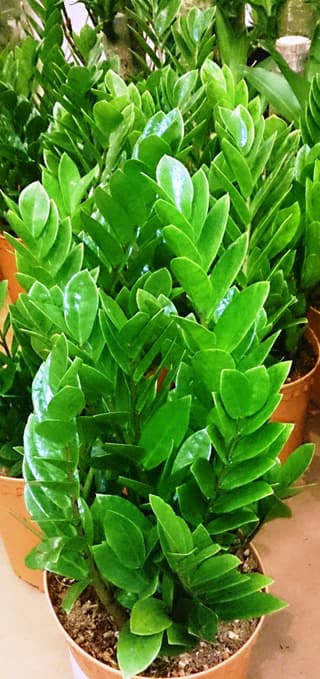
| ZZ Plant | Easy | Low light | 18d | ⚠️ |