Liliaceae
Tulip: Perfect Plant for Beginners
Tulipa gesneriana
The tulip is an easy-to-grow bulbous plant that blooms in spring. It prefers full sun, well-drained soil, and requires a cold period to stimulate flowering. Water moderately during active growth and reduce after flowering. Bulbs should be dug up after the foliage withers for summer storage.
Every 7 days
Bright indirect
-10° - 20°C
40% - 70%
Categories
What is Tulip?
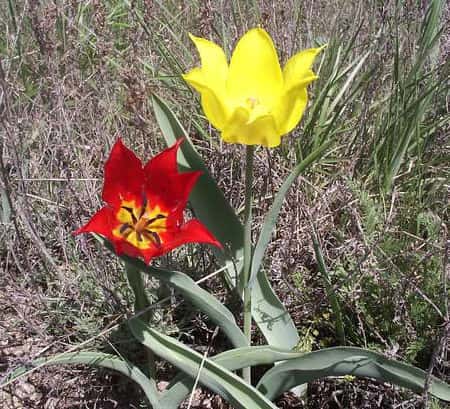
Tulip (Tulipa gesneriana) is a easy-care plant from the Liliaceae family. The garden tulip (Tulipa gesneriana) is one of the most iconic and beloved flowers in the world, originating from Central Asia and widely cultivated in Europe since the 16th century. Its cup-shaped flowers, with vibrant petals in shades of red, yellow, white, pink, and purple, emerge in spring and t...
Tulip grows up to 65cm, spread of 20cm, watering every 7 days, -10°C – 20°C, 40–70% humidity. It is not suitable for indoor environments and not safe for pets.
Unlike many tropical plants, Tulip tolerates watering mistakes. Best for beginners. Without precautions, ingestion can cause irritation in pets. Keep out of reach of cats and dogs.
How to Care for Tulip?
TLDR: Tulip needs Bright indirect, watering every 7 days, and temperatures between -10-20°C with 40-70% humidity.
How Often Should You Water Tulip?
Water approximately once a week during active growth in spring, allowing the soil to dry slightly between waterings. After flowering, gradually reduce watering until ceasing when the foliage dries. Never leave the soil waterlogged — excess moisture causes bulb rot.
How Much Light Does Tulip Need?
Plant in a location with full sun, receiving at least 6 hours of direct sunlight per day. Full exposure ensures firm stems and vibrant flowers. Partial shade results in weak plants with reduced flowering.
What Is the Best Soil for Tulip?
Prefers sandy or loamy soils, well-drained and enriched with organic matter. The ideal pH ranges between 6.0 and 7.5. In clay soils, incorporate coarse sand or perlite to improve drainage and prevent bulb rot.
What Pot Should You Use for Tulip?
Terracotta or ceramic pot with drainage holes; also excellent in outdoor garden beds. For pot cultivation, use containers at least 20 cm deep to accommodate the bulbs properly.
Care Schedule
Fertilize
Every 30 days
What Is Tulip and Where Does It Come From?
The garden tulip (Tulipa gesneriana) is one of the most iconic and beloved flowers in the world, originating from Central Asia and widely cultivated in Europe since the 16th century. Its cup-shaped flowers, with vibrant petals in shades of red, yellow, white, pink, and purple, emerge in spring and transform gardens into spectacles of color. It is a bulbous plant that requires a cold dormancy period to bloom exuberantly.
How to Propagate Tulip?
Offset division
Offset division is the most effective method for multiplying tulips. Smaller offsets may take an additional 1-2 years to reach flowering size.
- 1 After the foliage dries completely in summer, carefully dig up the bulbs
- 2 Separate the smaller offsets from the main bulb
- 3 Store in a dry, cool, and airy place (15-18°C) until fall
- 4 Replant in the fall at a depth of 10-15 cm with 10-15 cm spacing
Materials needed:
Sowing
Propagation by seeds is mainly used for developing new cultivars. The process is slow, and the resulting plants may differ from the parent plant.
- 1 Collect seeds after the capsules dehisce in summer
- 2 Sow in trays with sandy substrate in the fall
- 3 Keep in a cold place (2-8°C) for 12-16 weeks for stratification
- 4 Transfer to a warmer location and wait for germination in spring
Materials needed:
How Big Does Tulip Grow?
TLDR: Tulip can reach up to 65cm tall with Medium growth rate.
Max height
65cm
Spread
20cm
Growth rate
Medium
Foliage
Deciduous
Warning: Toxic Plant
This plant can be toxic if ingested. Keep out of reach of:
Plant Uses
Ornamental
Great for decoration
Medicinal Uses
- Tulip extracts have anti-inflammatory and antioxidant properties used in alternative medicine. A decoction of red petals is used in some traditions to relieve coughs and bronchitis.
Culinary Uses
- Historically, tulip bulbs were consumed as food during shortages in World War II. Regular consumption is not recommended due to tuliposide A, which can cause allergic reactions.
Is your plant showing symptoms?
Click on the symptom to discover possible causes:
What Diseases Commonly Affect Tulip?
TLDR: Tulip is susceptible to 16 known diseases. Monitor regularly for early detection.
Gray Mold (Botrytis Blight)
Gray mold, caused by the fungus Botrytis cinerea, is one of the most common fungal diseases in plants. It affects over 200 plant species, including ornamentals, vegetables, fruits, and houseplants. The disease thrives in cool, humid conditions with poor air circulation, causing grayish spots and soft rot on infected tissues.
Gray Mold (Botrytis Blight)
Gray mold, caused by the fungus Botrytis cinerea, is a widespread necrotrophic pathogen affecting over 1,400 plant species. It thrives in cool, humid conditions and attacks weakened or aging plant tissues, causing soft rot and characteristic gray fuzzy growth.
Fusarium Wilt
Fusarium wilt is a serious fungal disease caused by the soil-borne fungus Fusarium oxysporum. The fungus invades roots and blocks the water-conducting vessels (xylem) of the plant, causing progressive wilting and eventual death. Host-specific forms of the pathogen exist that attack different plant species.
Root Rot
Root rot is a serious fungal disease that affects the root system of plants, causing them to decay and die. It is primarily caused by overwatering, poor drainage, or soil-borne fungi such as Pythium, Phytophthora, Rhizoctonia, and Fusarium. The disease thrives in waterlogged conditions where roots are deprived of oxygen, making them susceptible to fungal infection.
Meaning & Symbolism
The tulip symbolizes true love and the declaration of feelings. Red represents passionate love, yellow brings prosperity and joy, white symbolizes forgiveness and purity, while purple evokes nobility and sophistication. In Holambra, São Paulo, the tulip is an icon of Dutch heritage in Brazil.
Compare with similar plants
| Attribute | Difficulty | Light | Watering | Pet Safe |
|---|---|---|---|---|
| Field Maple | Easy | Bright indirect | 14d | ✓ |
| Silver Birch | Easy | Direct sun | 14d | ✓ |
| Cushion Bush | Easy | Direct sun | 14d | ✓ |
| Peruvian peppertree | Easy | Direct sun | 14d | ⚠️ |