Asteraceae
English Daisy: Ground Cover Plant
Bellis perennis
English Daisy is an easy-care plant that thrives in cool weather. Water regularly to keep the soil evenly moist, fertilize monthly during the growing season, and deadhead spent blooms to prolong flowering. It dislikes summer heat and may go dormant; divide clumps every 2–3 years after flowering to maintain vigour.
Every 4 days
Bright indirect
-15° - 25°C
40% - 70%
Categories
What is English Daisy?
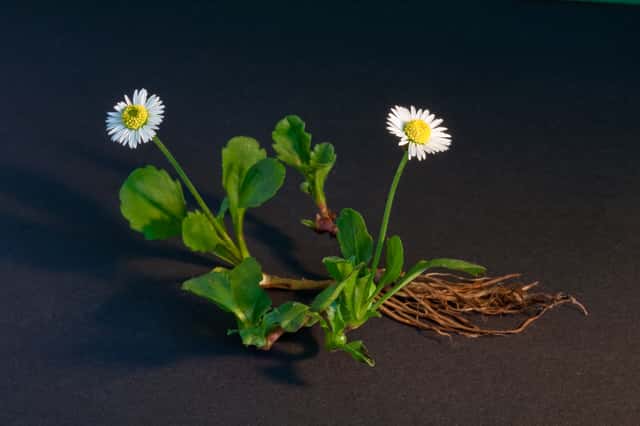
English Daisy (Bellis perennis) is a easy-care plant from the Asteraceae family. Bellis perennis, commonly known as the English Daisy or Common Daisy, is a cheerful perennial wildflower native to western and central Europe. It forms low rosettes of spoon-shaped leaves from which leafless stems rise bearing classic composite flowers — white ray petals often tipped with pink or re...
English Daisy grows up to 20cm, spread of 23cm, watering every 4 days, -15°C – 25°C, 40–70% humidity. It is not suitable for indoor environments and not safe for pets.
Unlike many tropical plants, English Daisy tolerates watering mistakes. Best for beginners. Without precautions, ingestion can cause irritation in pets. Keep out of reach of cats and dogs.
How to Care for English Daisy?
TLDR: English Daisy needs Bright indirect, watering every 4 days, and temperatures between -15-25°C with 40-70% humidity.
How Often Should You Water English Daisy?
Water every 3–5 days, keeping the soil consistently moist but never waterlogged. Reduce watering during hot summer dormancy. Avoid overhead watering to minimise fungal disease.
How Much Light Does English Daisy Need?
English Daisy prefers full sun to partial shade — at least 4–6 hours of direct sunlight per day. In hotter climates, afternoon shade helps extend the blooming season and prevents heat stress.
What Is the Best Soil for English Daisy?
Plant in loamy, humus-rich, well-drained soil. Enrich lean soils with compost before planting. Good drainage is essential to prevent root rot, especially during wet winters.
What Pot Should You Use for English Daisy?
Wide, shallow terracotta or ceramic pot with drainage holes for container growing; ideal for window boxes and mixed seasonal planters.
Care Schedule
Fertilize
Every 30 days
Rotate
Every 14 days
What Is English Daisy and Where Does It Come From?
Bellis perennis, commonly known as the English Daisy or Common Daisy, is a cheerful perennial wildflower native to western and central Europe. It forms low rosettes of spoon-shaped leaves from which leafless stems rise bearing classic composite flowers — white ray petals often tipped with pink or red, surrounding a bright yellow disc. Blooming from early spring through summer, it thrives in lawns, meadows, borders, and rock gardens. It is the national flower of the Netherlands and has been beloved in folk tradition for centuries.
How Big Does English Daisy Grow?
TLDR: English Daisy can reach up to 20cm tall with Fast growth rate.
Max height
20cm
Spread
23cm
Growth rate
Fast
Foliage
Semi-evergreen
Warning: Toxic Plant
This plant can be toxic if ingested. Keep out of reach of:
Plant Uses
Ornamental
Great for decoration
Edible
Can be consumed
Medicinal
Medicinal properties
Ground Cover
Soil coverage
Medicinal Uses
- Used in herbal medicine for its astringent properties to treat bruises, wounds, and minor skin irritations
- Traditionally brewed as a tea to relieve coughs, inflammation, and digestive complaints
- Applied externally as a poultice for muscle soreness
Culinary Uses
- Young leaves eaten raw in salads or lightly cooked as a spring green
- Flower buds and petals used in sandwiches, soups, and salads
- Flowers steeped as a herbal tea
Is your plant showing symptoms?
Click on the symptom to discover possible causes:
What Diseases Commonly Affect English Daisy?
TLDR: English Daisy is susceptible to 9 known diseases. Monitor regularly for early detection.
Powdery Mildew
Powdery mildew is a common fungal disease caused by various fungi species including Erysiphe, Podosphaera, Oïdium, and Leveillula. It affects over 10,000 plant species worldwide. The disease thrives in warm, dry climates with high humidity and appears as a distinctive white powdery coating on plant surfaces.
Gray Mold (Botrytis Blight)
Gray mold, caused by the fungus Botrytis cinerea, is a widespread necrotrophic pathogen affecting over 1,400 plant species. It thrives in cool, humid conditions and attacks weakened or aging plant tissues, causing soft rot and characteristic gray fuzzy growth.
Gray Mold (Botrytis Blight)
Gray mold, caused by the fungus Botrytis cinerea, is one of the most common fungal diseases in plants. It affects over 200 plant species, including ornamentals, vegetables, fruits, and houseplants. The disease thrives in cool, humid conditions with poor air circulation, causing grayish spots and soft rot on infected tissues.
Root Rot
Root rot is a serious fungal disease that affects the root system of plants, causing them to decay and die. It is primarily caused by overwatering, poor drainage, or soil-borne fungi such as Pythium, Phytophthora, Rhizoctonia, and Fusarium. The disease thrives in waterlogged conditions where roots are deprived of oxygen, making them susceptible to fungal infection.
Meaning & Symbolism
Symbolises innocence, purity, new beginnings, and loyal love. In Celtic tradition, daisies represented the souls of children. The name "daisy" comes from "day's eye," as the flowers close at night and open with the morning sun.
Compare with similar plants
| Attribute | Difficulty | Light | Watering | Pet Safe |
|---|---|---|---|---|
| Field Maple | Easy | Bright indirect | 14d | ✓ |
| Wild Lettuce | Medium | Direct sun | 7d | ⚠️ |
| Cushion Bush | Easy | Direct sun | 14d | ✓ |
| Chilean Cacti | Easy | Direct sun | 14d | ✓ |