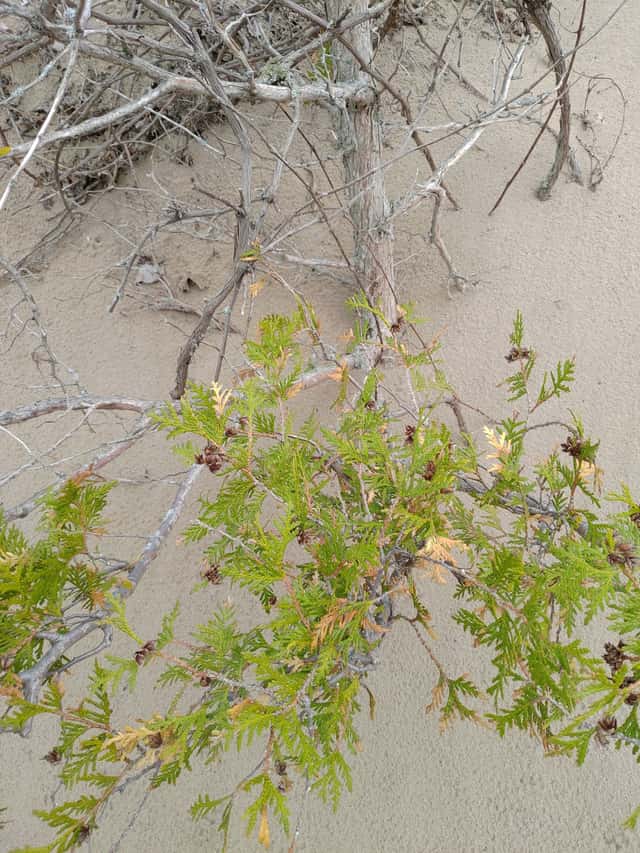
Cupressaceae
Eastern Arborvitae (Thuja occidentalis): Complete Care Guide
Thuja occidentalis
Hardy outdoor tree tolerating extreme cold (down to -45°C). Thrives in full sun, well-drained soil with pH 6–8, and moderate watering every 10 days. Slow growing. Light annual pruning in winter. Not suitable for indoor cultivation.
Every 10 days
Bright indirect
-45° - 35°C
40% - 70%
Categories
What is Eastern Arborvitae?
Eastern Arborvitae (Thuja occidentalis) is a easy-care plant from the Cupressaceae family. Thuja occidentalis, commonly known as Eastern Arborvitae or Northern White Cedar, is an evergreen conifer native to eastern North America. It grows in a dense pyramidal form, reaching up to 18 meters in the wild. Scale-like foliage releases a characteristic aromatic scent when crushed. WARNING: foli...
Eastern Arborvitae grows up to 18.0m, spread of 450cm, watering every 10 days, -45°C – 35°C, 40–70% humidity. It is not suitable for indoor environments and not safe for pets.
Unlike many tropical plants, Eastern Arborvitae tolerates watering mistakes. Best for beginners. Without precautions, ingestion can cause irritation in pets. Keep out of reach of cats and dogs.
How to Care for Eastern Arborvitae?
TLDR: Eastern Arborvitae needs Bright indirect, watering every 10 days, and temperatures between -45-35°C with 40-70% humidity.
How Often Should You Water Eastern Arborvitae?
Water every 10 days, keeping the soil slightly moist but never waterlogged. Newly planted specimens require more frequent watering during the first summer. Avoid overwatering to prevent root rot.
How Much Light Does Eastern Arborvitae Need?
Prefers full sun (minimum 6 hours of direct sunlight daily). Tolerates partial shade but growth becomes more open and foliage less dense. Avoid fully shaded locations.
What Is the Best Soil for Eastern Arborvitae?
Prefers well-drained soils, ideally loamy or clay-loam. Tolerates heavy soils and occasional wet conditions. Ideal pH 6.0–8.0. Add organic compost at planting to improve soil structure.
What Pot Should You Use for Eastern Arborvitae?
Not recommended for containers. Outdoor garden or landscaping plant. If grown in a pot, use large containers (minimum 80 liters) with excellent drainage.
Care Schedule
Fertilize
Every 365 days
Repot
Every 730 days
What Is Eastern Arborvitae and Where Does It Come From?
Thuja occidentalis, commonly known as Eastern Arborvitae or Northern White Cedar, is an evergreen conifer native to eastern North America. It grows in a dense pyramidal form, reaching up to 18 meters in the wild. Scale-like foliage releases a characteristic aromatic scent when crushed. WARNING: foliage and essential oil contain thujone, a toxic compound if ingested by humans, cats, or dogs.
How to Propagate Eastern Arborvitae?
Semi-hardwood cutting
Use intermittent misting if available to improve success rate. Avoid direct sun during rooting.
- 1 Cut semi-hardwood stems of 10–15 cm in summer
- 2 Remove scale-like leaves from the lower half of the cutting
- 3 Apply rooting hormone powder to the base
- 4 Plant in a 1:1 mix of moist peat and perlite
- 5 Keep in indirect light with consistent humidity until rooted
Materials needed:
Seed propagation
Cold stratification is essential for dormancy breaking. Irregular germination is common.
- 1 Collect mature seeds in autumn
- 2 Cold-stratify for 60 days at 4°C in moist substrate
- 3 Sow in spring in trays with light growing mix
- 4 Maintain 18–22°C and keep soil slightly moist
- 5 Transplant seedlings when they reach 10 cm tall
Materials needed:
How Big Does Eastern Arborvitae Grow?
TLDR: Eastern Arborvitae can reach up to 18.0m tall with Slow growth rate.
Max height
18.0m
Spread
4.5m
Growth rate
Slow
Foliage
Evergreen
Warning: Toxic Plant
This plant can be toxic if ingested. Keep out of reach of:
Plant Uses
Ornamental
Great for decoration
Is your plant showing symptoms?
Click on the symptom to discover possible causes:
What Diseases Commonly Affect Eastern Arborvitae?
TLDR: Eastern Arborvitae is susceptible to 10 known diseases. Monitor regularly for early detection.
Phytophthora Root Rot
Disease caused by fungus-like organisms (oomycetes) that live in soil and can survive for years. It affects roots, stem, and crown of plants, being especially severe in waterlogged or poorly drained soils. It is the second most common cause of root rot in trees and shrubs.
Root Rot
Root rot is a serious fungal disease that affects the root system of plants, causing them to decay and die. It is primarily caused by overwatering, poor drainage, or soil-borne fungi such as Pythium, Phytophthora, Rhizoctonia, and Fusarium. The disease thrives in waterlogged conditions where roots are deprived of oxygen, making them susceptible to fungal infection.
Aphids
Aphids are small, soft-bodied, pear-shaped insects (1/16 to 1/8 inch long) that feed by sucking nutrient-rich sap from plants. They reproduce rapidly and can quickly weaken plants, causing distorted growth and transmitting plant viruses. Aphids come in various colors including green, black, red, yellow, brown, and gray. They secrete honeydew, a sticky substance that attracts ants and encourages sooty mold growth.
Overwatering
Overwatering occurs when plants receive too much water, depriving roots of oxygen and causing root rot. This environmental stress is one of the most common causes of houseplant death, as waterlogged soil prevents roots from breathing and functioning properly.
Meaning & Symbolism
Symbol of eternal friendship and immortality. Widely used in formal gardens and cemeteries as a representation of everlasting life.
Fun Facts
Eastern Arborvitae is one of the world's most cold-hardy trees, surviving temperatures down to -45°C.
Its common name "Tree of Life" comes from its historical use by Native Americans, who used its bark and foliage to treat scurvy.
The essential oil extracted from the leaves contains thujone, a psychoactive and toxic compound historically used in absinthe production.
Over 300 cultivars of Thuja occidentalis exist, ranging from towering trees to dwarf forms of just 30 cm in height.
Frequently asked questions
Is Eastern Arborvitae toxic?
How often should I water Eastern Arborvitae?
Can Eastern Arborvitae be grown in a pot?
When and how should I prune Eastern Arborvitae?
How cold-hardy is Eastern Arborvitae?
Compare with similar plants
| Attribute | Difficulty | Light | Watering | Pet Safe |
|---|---|---|---|---|
| Field Maple | Easy | Bright indirect | 14d | ✓ |
| Silver Birch | Easy | Direct sun | 14d | ✓ |
| Cushion Bush | Easy | Direct sun | 14d | ✓ |
| Peruvian peppertree | Easy | Direct sun | 14d | ⚠️ |





