Droseraceae
Venus Flytrap (Dionaea muscipula)
Dionaea muscipula
Demanding but rewarding. Requires full sun, consistently moist acidic soil with distilled or rain water only, high humidity, and a winter dormancy period of 3-4 months at cool temperatures. Never fertilize. Avoid tap water at all costs.
Every 3 days
Bright indirect
2° - 35°C
50% - 80%
Categories
What is Venus Flytrap?
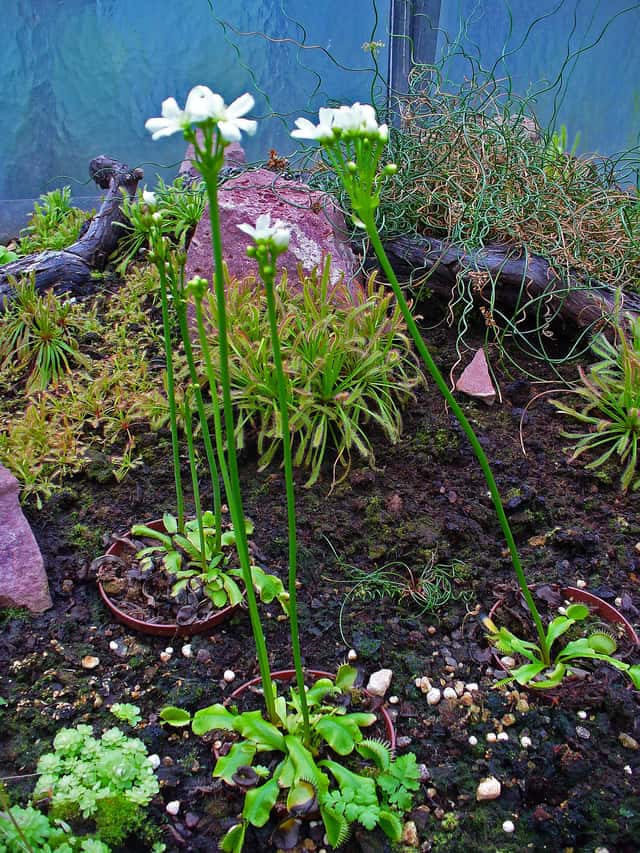
Venus Flytrap (Dionaea muscipula) is a hard-care plant from the Droseraceae family. The Venus Flytrap is one of the most fascinating carnivorous plants in the world, native to the subtropical wetlands of North and South Carolina, USA. Its iconic hinged traps snap shut when trigger hairs are stimulated by unsuspecting insects, digesting prey over 4-10 days. Despite its exotic appear...
Venus Flytrap grows up to 30cm, spread of 20cm, watering every 3 days, 2°C – 35°C, 50–80% humidity. It is suitable for indoor environments and safe for pets.
Unlike easy-care plants, Venus Flytrap demands constant attention to humidity and light. Not recommended for beginners. Unlike many popular species, Venus Flytrap is safe to keep around pets. Without adequate drainage, root rot can develop within 7 days.
How to Care for Venus Flytrap?
TLDR: Venus Flytrap needs Bright indirect, watering every 3 days, and temperatures between 2-35°C with 50-80% humidity.
How Often Should You Water Venus Flytrap?
Use only distilled water, rainwater, or reverse osmosis water. Keep the soil consistently moist by placing the pot in a tray with 1-2 cm of water. Never let the tray dry out completely. Tap water minerals will kill the plant.
How Much Light Does Venus Flytrap Need?
Provide at least 4-6 hours of direct sunlight daily. A south-facing window is ideal indoors. Supplement with grow lights if natural light is insufficient. More sun produces redder trap interiors.
What Is the Best Soil for Venus Flytrap?
Use a nutrient-poor mix of sphagnum peat moss and perlite or sand (1:1 ratio). Never use regular potting soil, compost, or fertilizer. The soil must be acidic (pH 3.5-5.5) to replicate its native bog habitat.
What Pot Should You Use for Venus Flytrap?
Plastic or glazed ceramic pot with drainage holes and a water tray. Avoid terracotta as it leaches minerals into the soil.
Care Schedule
Misting
Every 7 days
Repot
Every 365 days
What Is Venus Flytrap and Where Does It Come From?
The Venus Flytrap is one of the most fascinating carnivorous plants in the world, native to the subtropical wetlands of North and South Carolina, USA. Its iconic hinged traps snap shut when trigger hairs are stimulated by unsuspecting insects, digesting prey over 4-10 days. Despite its exotic appearance, it is a surprisingly compact rosette plant that rarely exceeds 30 cm in height.
How to Propagate Venus Flytrap?
Division
Division is the easiest and most reliable method. Best done during repotting in spring.
- 1 Carefully remove the plant from its pot in early spring
- 2 Gently separate the rhizome clusters, ensuring each division has roots
- 3 Plant each division in fresh sphagnum peat moss and perlite mix
- 4 Water with distilled water and place in bright light
Materials needed:
Leaf Cutting
Ensure the white base of the leaf is intact for best results. Patience is key as this method takes several months.
- 1 Select a healthy leaf and carefully pull it from the rhizome with the white base intact
- 2 Place the leaf on moist sphagnum peat moss
- 3 Cover with a humidity dome or plastic wrap
- 4 Keep moist with distilled water and provide bright indirect light
Materials needed:
Seed Propagation
Use fresh seeds for best germination rates. Cold stratification for 4-6 weeks can improve germination.
- 1 Collect seeds from mature flower stalks or purchase fresh seeds
- 2 Sow seeds on the surface of moist sphagnum peat moss without covering
- 3 Place in bright light with high humidity
- 4 Keep moist with distilled water; seeds germinate in 4-6 weeks
Materials needed:
How Big Does Venus Flytrap Grow?
TLDR: Venus Flytrap can reach up to 30cm tall with Slow growth rate.
Max height
30cm
Spread
20cm
Growth rate
Slow
Foliage
Deciduous
Plant Uses
Ornamental
Great for decoration
Is your plant showing symptoms?
Click on the symptom to discover possible causes:
What Diseases Commonly Affect Venus Flytrap?
TLDR: Venus Flytrap is susceptible to 6 known diseases. Monitor regularly for early detection.
Aphids
Aphids are small, soft-bodied, pear-shaped insects (1/16 to 1/8 inch long) that feed by sucking nutrient-rich sap from plants. They reproduce rapidly and can quickly weaken plants, causing distorted growth and transmitting plant viruses. Aphids come in various colors including green, black, red, yellow, brown, and gray. They secrete honeydew, a sticky substance that attracts ants and encourages sooty mold growth.
Spider Mites
Spider mites are tiny arachnids (less than 1/20 inch long) related to spiders and ticks that feed on plant sap. They thrive in hot, dry conditions and can cause significant damage to ornamental and vegetable plants. During severe infestations, crop losses can reach 14% or higher as these pests disrupt vital plant processes including photosynthesis, carbon dioxide absorption, and transpiration.
Crown Rot
Crown rot is a serious fungal disease that attacks the crown (base) of the plant where the stem meets the soil. It is caused by various fungal pathogens including Phytophthora, Fusarium, and Rhizoctonia. The disease thrives in waterlogged conditions and can quickly spread to kill the entire plant if not addressed promptly.
Gray Mold (Botrytis Blight)
Gray mold, caused by the fungus Botrytis cinerea, is a widespread necrotrophic pathogen affecting over 1,400 plant species. It thrives in cool, humid conditions and attacks weakened or aging plant tissues, causing soft rot and characteristic gray fuzzy growth.
Meaning & Symbolism
Persistence and resilience; the Venus Flytrap symbolizes tenacity and the ability to thrive in harsh, nutrient-poor environments
Fun Facts
The Venus Flytrap is native only to a 120-km radius around Wilmington, North Carolina — the smallest native range of any plant in the US
Each trap can only close and reopen about 5-7 times before it turns black and dies
Charles Darwin called it the most wonderful plant in the world
The snap-shut mechanism is one of the fastest movements in the plant kingdom, closing in about 100 milliseconds
Frequently asked questions
How often should I water my Venus Flytrap?
Does the Venus Flytrap need winter dormancy?
Can I feed my Venus Flytrap?
Why are my Venus Flytrap traps turning black?
Compare with similar plants
| Attribute | Difficulty | Light | Watering | Pet Safe |
|---|---|---|---|---|
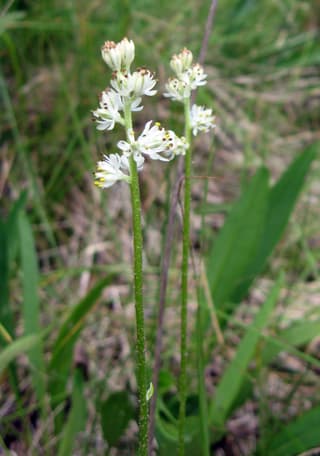
| Sticky false asphodel | Hard | Bright indirect | 1d | ✓ |
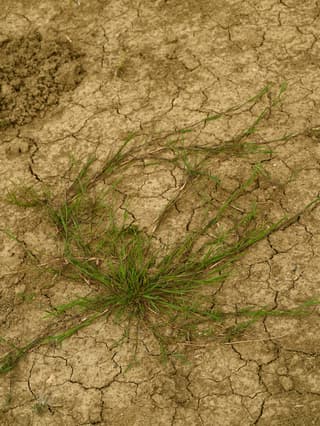
| Creeping bentgrass | Hard | Direct sun | 3d | ✓ |
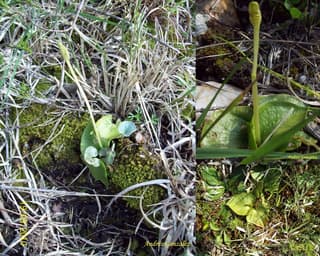
| Bulbous Adder's-tongue | Hard | Partial shade | 4d | ✓ |
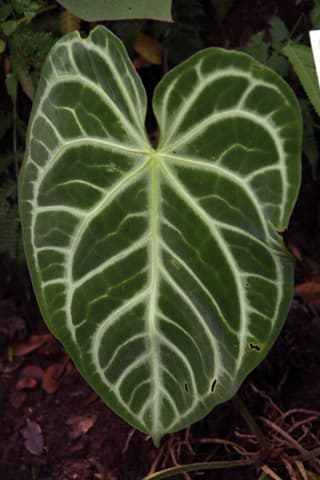
| Crystal Anthurium | Hard | Partial shade | 7d | ⚠️ |