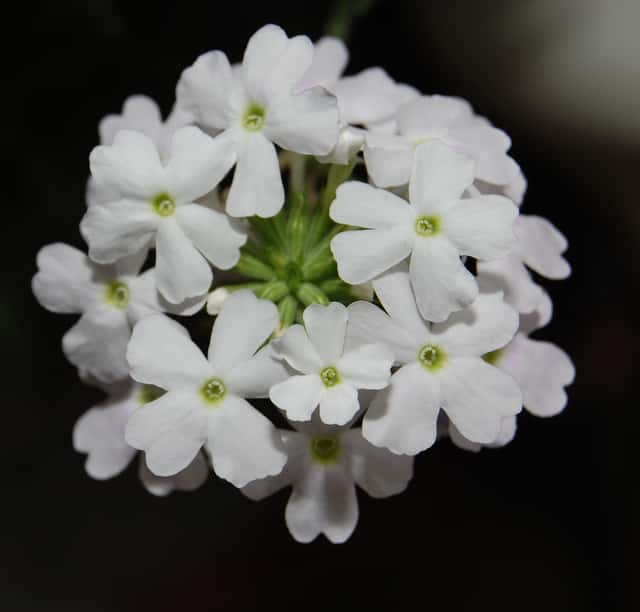
Verbenaceae
Garden Verbena (Verbena hybrida): Complete Care Guide
Verbena hybrida
Garden Verbena thrives in full sun with well-draining soil. Water regularly but allow the soil surface to dry between waterings. Fertilize monthly during the growing season and deadhead spent blooms to encourage continuous flowering.
Every 7 days
Direct sun
7° - 35°C
40% - 70%
Categories
What is Garden Verbena?
Garden Verbena (Verbena hybrida) is a easy-care plant from the Verbenaceae family. Verbena hybrida, commonly known as Garden Verbena, is a semi-evergreen flowering plant originating from South America. It produces clusters of small, vividly colored flowers in shades of purple, red, pink, white, lavender, and coral. Widely grown as an annual in temperate climates, it thrives in ful...
Garden Verbena grows up to 45cm, spread of 75cm, watering every 7 days, 7°C – 35°C, 40–70% humidity. It is not suitable for indoor environments and safe for pets.
Unlike many tropical plants, Garden Verbena tolerates watering mistakes. Best for beginners. Unlike many popular species, Garden Verbena is safe to keep around pets.
How to Care for Garden Verbena?
TLDR: Garden Verbena needs Direct sun, watering every 7 days, and temperatures between 7-35°C with 40-70% humidity.
How Often Should You Water Garden Verbena?
Water every 5-7 days, allowing the top inch of soil to dry between waterings. During hot summer months, increase frequency to every 3-4 days. Avoid waterlogging, as verbena is highly susceptible to root rot in wet soils.
How Much Light Does Garden Verbena Need?
Verbena requires at least 6-8 hours of direct sunlight daily for best flowering. Insufficient light results in leggy growth and poor blooming. Place in the sunniest spot available.
What Is the Best Soil for Garden Verbena?
Plant in well-draining, loamy or sandy soil with a slightly acidic to neutral pH (5.8-7.2). Amend heavy clay soils with perlite or coarse sand to improve drainage.
What Pot Should You Use for Garden Verbena?
Terracotta or plastic pot with multiple drainage holes. For trailing varieties, use hanging wire baskets lined with moss. Minimum 8-inch (20 cm) diameter pot.
Care Schedule
Fertilize
Every 30 days
Repot
Every 365 days
What Is Garden Verbena and Where Does It Come From?
Verbena hybrida, commonly known as Garden Verbena, is a semi-evergreen flowering plant originating from South America. It produces clusters of small, vividly colored flowers in shades of purple, red, pink, white, lavender, and coral. Widely grown as an annual in temperate climates, it thrives in full sun and is popular for hanging baskets, window boxes, and garden borders.
How to Propagate Garden Verbena?
Seed Sowing
Seeds need light to germinate, so do not bury them. Use a plastic dome or bag to maintain humidity. Germination can be slow — be patient.
- 1 Start seeds indoors 8-12 weeks before the last frost date
- 2 Press seeds gently onto the surface of moist seed-starting mix — do not cover them
- 3 Maintain temperature at 21-24°C with consistent moisture
- 4 Transplant outdoors after all frost risk has passed
Materials needed:
Stem Cuttings
Use clean, sharp pruners. Applying rooting hormone significantly improves success rates.
- 1 Take 4-6 inch (10-15 cm) healthy stem cuttings in late spring or early summer
- 2 Remove lower leaves, keeping only 2-3 at the tip
- 3 Insert cutting into moist potting mix or water
- 4 Keep in a warm, bright location until roots develop
Materials needed:
How Big Does Garden Verbena Grow?
TLDR: Garden Verbena can reach up to 45cm tall with Fast growth rate.
Max height
45cm
Spread
75cm
Growth rate
Fast
Foliage
Semi-evergreen
Plant Uses
Ornamental
Great for decoration
Is your plant showing symptoms?
Click on the symptom to discover possible causes:
What Diseases Commonly Affect Garden Verbena?
TLDR: Garden Verbena is susceptible to 13 known diseases. Monitor regularly for early detection.
Powdery Mildew
Powdery mildew is a common fungal disease caused by various fungi species including Erysiphe, Podosphaera, Oïdium, and Leveillula. It affects over 10,000 plant species worldwide. The disease thrives in warm, dry climates with high humidity and appears as a distinctive white powdery coating on plant surfaces.
Gray Mold (Botrytis Blight)
Gray mold, caused by the fungus Botrytis cinerea, is one of the most common fungal diseases in plants. It affects over 200 plant species, including ornamentals, vegetables, fruits, and houseplants. The disease thrives in cool, humid conditions with poor air circulation, causing grayish spots and soft rot on infected tissues.
Gray Mold (Botrytis Blight)
Gray mold, caused by the fungus Botrytis cinerea, is a widespread necrotrophic pathogen affecting over 1,400 plant species. It thrives in cool, humid conditions and attacks weakened or aging plant tissues, causing soft rot and characteristic gray fuzzy growth.
Root Rot
Root rot is a serious fungal disease that affects the root system of plants, causing them to decay and die. It is primarily caused by overwatering, poor drainage, or soil-borne fungi such as Pythium, Phytophthora, Rhizoctonia, and Fusarium. The disease thrives in waterlogged conditions where roots are deprived of oxygen, making them susceptible to fungal infection.
Meaning & Symbolism
Verbena symbolizes enchantment, healing, and creativity. In Victorian flower language, it represented sensibility and graceful charm.
Fun Facts
Garden Verbena is a complex hybrid developed in 19th-century Europe from several South American wild species.
Its flowers are a magnet for butterflies and other pollinators, making it a valuable plant for biodiversity gardens.
In ancient times, verbena was called "sacred herb" and used in purification rituals across many cultures.
With regular deadheading, Verbena hybrida can bloom continuously from spring until the first frost.
Frequently asked questions
How often should I water Verbena hybrida?
How much sun does Garden Verbena need?
Is Verbena hybrida toxic to pets?
Why is my Verbena not blooming?
How do I prevent powdery mildew on Verbena?
Compare with similar plants
| Attribute | Difficulty | Light | Watering | Pet Safe |
|---|---|---|---|---|
| Field Maple | Easy | Bright indirect | 14d | ✓ |
| Silver Birch | Easy | Direct sun | 14d | ✓ |
| Common Blanketflower | Easy | Direct sun | 10d | ✓ |
| Cushion Bush | Easy | Direct sun | 14d | ✓ |





