Apocynaceae
Black Swallow-wort (Vincetoxicum nigrum)
Vincetoxicum nigrum
A vigorous, fast-growing vine that thrives in full sun with well-drained soil. Water weekly during active growth. Requires regular pruning to control its aggressive spread. Not suitable for indoor cultivation or areas near sensitive native ecosystems.
Every 7 days
Bright indirect
5° - 35°C
50% - 70%
Categories
What is Black Swallow-wort?
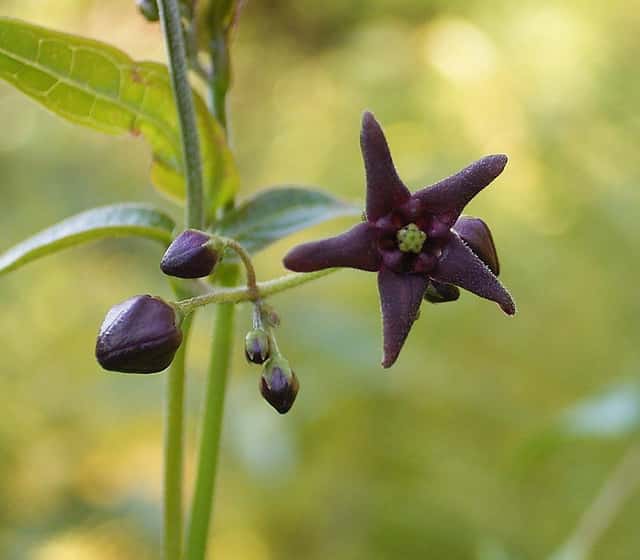
Black Swallow-wort (Vincetoxicum nigrum) is a easy-care plant from the Apocynaceae family. Black Swallow-wort (Vincetoxicum nigrum) is a perennial herbaceous twining vine native to Mediterranean Europe. It produces small star-shaped flowers in deep black to dark purple hues during late spring and summer. Highly invasive in North America, it forms dense colonies that crowd out native veget...
Black Swallow-wort grows up to 1.8m, spread of 90cm, watering every 7 days, 5°C – 35°C, 50–70% humidity. It is not suitable for indoor environments and not safe for pets.
Unlike many tropical plants, Black Swallow-wort tolerates watering mistakes. Best for beginners. Without precautions, ingestion can cause irritation in pets. Keep out of reach of cats and dogs.
How to Care for Black Swallow-wort?
TLDR: Black Swallow-wort needs Bright indirect, watering every 7 days, and temperatures between 5-35°C with 50-70% humidity.
How Often Should You Water Black Swallow-wort?
Water once a week during the growing season, keeping the soil moderately moist but never waterlogged. Reduce watering in winter. Good drainage is essential to prevent root rot.
How Much Light Does Black Swallow-wort Need?
Prefers full sun with at least 6 hours of direct sunlight daily. Can tolerate partial shade but will produce fewer flowers and grow less vigorously.
What Is the Best Soil for Black Swallow-wort?
Plant in well-draining loamy soil with a pH of 6.0–7.0. Avoid compacted or waterlogged soils. A sandy-loam mix with added perlite works well.
What Pot Should You Use for Black Swallow-wort?
Large terracotta pot or garden container with drainage holes. In garden settings, provide a trellis or fence for the vine to climb.
Care Schedule
Fertilize
Every 30 days
What Is Black Swallow-wort and Where Does It Come From?
Black Swallow-wort (Vincetoxicum nigrum) is a perennial herbaceous twining vine native to Mediterranean Europe. It produces small star-shaped flowers in deep black to dark purple hues during late spring and summer. Highly invasive in North America, it forms dense colonies that crowd out native vegetation. All plant parts are severely toxic.
How to Propagate Black Swallow-wort?
Stem Cutting
Use sterilized tools and wear gloves — sap is toxic and can irritate skin.
- 1 Cut a healthy stem 10-15 cm long
- 2 Remove lower leaves
- 3 Dip base in rooting hormone
- 4 Insert into moist, well-draining substrate
- 5 Keep in indirect light until rooted
Materials needed:
Seeds
Seeds spread easily via wind — collect carefully to prevent unintentional propagation.
- 1 Collect mature seeds before they disperse
- 2 Sow on the surface of moist substrate
- 3 Cover lightly with soil
- 4 Keep moist in a warm, well-lit location
Materials needed:
How Big Does Black Swallow-wort Grow?
TLDR: Black Swallow-wort can reach up to 1.8m tall with Fast growth rate.
Max height
1.8m
Spread
90cm
Growth rate
Fast
Foliage
Deciduous
Warning: Toxic Plant
This plant can be toxic if ingested. Keep out of reach of:
Plant Uses
Ornamental
Great for decoration
Is your plant showing symptoms?
Click on the symptom to discover possible causes:
What Diseases Commonly Affect Black Swallow-wort?
TLDR: Black Swallow-wort is susceptible to 3 known diseases. Monitor regularly for early detection.
Root Rot
Root rot is a serious fungal disease that affects the root system of plants, causing them to decay and die. It is primarily caused by overwatering, poor drainage, or soil-borne fungi such as Pythium, Phytophthora, Rhizoctonia, and Fusarium. The disease thrives in waterlogged conditions where roots are deprived of oxygen, making them susceptible to fungal infection.
Leaf Spot
Leaf spot is a common fungal disease caused by various pathogens including Alternaria, Ascochyta, Colletotrichum, Septoria, and Venturia. It primarily affects leaves, causing discolored spots that can lead to premature leaf drop if left untreated.
Rust
Rust is a common fungal disease caused by fungi in the order Pucciniales that affects a wide variety of plants. The disease gets its name from the characteristic orange, yellow, or reddish-brown pustules that appear on leaves, resembling metal rust. This obligate fungal parasite requires living plants to survive and can cause significant economic losses in agricultural crops.
Fun Facts
Black Swallow-wort seeds are equipped with silky plumes that allow them to travel long distances on the wind.
The plant contains vincetoxin, an alkaloid historically studied as a potential antidote to poisons — hence the name Vincetoxicum.
It is one of the few European plants to have become a recognized invasive species in North America.
In its native range it serves as an alternate host for Cronartium flaccidum, a rust fungus that attacks pine trees.
Frequently asked questions
Is Black Swallow-wort toxic?
How often should I water Black Swallow-wort?
Can Black Swallow-wort be grown indoors?
Why is Black Swallow-wort invasive?
When does Black Swallow-wort flower?
Compare with similar plants
| Attribute | Difficulty | Light | Watering | Pet Safe |
|---|---|---|---|---|
| Field Maple | Easy | Bright indirect | 14d | ✓ |
| Silver Birch | Easy | Direct sun | 14d | ✓ |
| Cushion Bush | Easy | Direct sun | 14d | ✓ |
| Peruvian peppertree | Easy | Direct sun | 14d | ⚠️ |





