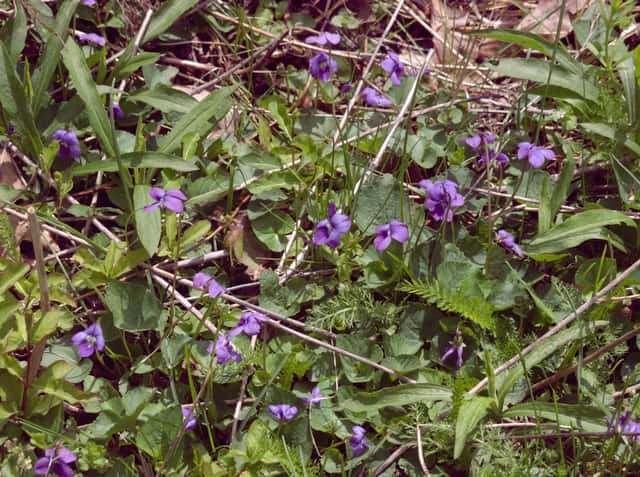
Violaceae
Common Blue Violet (Viola sororia): Complete Care Guide
Viola sororia
Easy-care native perennial perfect for naturalistic and woodland gardens. Prefers moist, rich soil with regular watering. Extremely cold-hardy and spreads by self-seeding. Excellent ground cover for shaded spots.
Every 4 days
Partial shade
-30° - 30°C
40% - 70%
Categories
What is Common Blue Violet?
Common Blue Violet (Viola sororia) is a easy-care plant from the Violaceae family. Viola sororia, commonly known as the Common Blue Violet or Wood Violet, is a native North American herbaceous perennial celebrated for its charming blue-purple spring flowers. It thrives in moist, shaded woodland edges, meadows, and naturalistic gardens. Hardy from zones 3a to 7b, it self-seeds free...
Common Blue Violet grows up to 25cm, spread of 25cm, watering every 4 days, -30°C – 30°C, 40–70% humidity. It is not suitable for indoor environments and safe for pets.
Unlike many tropical plants, Common Blue Violet tolerates watering mistakes. Best for beginners. Unlike many popular species, Common Blue Violet is safe to keep around pets.
How to Care for Common Blue Violet?
TLDR: Common Blue Violet needs Partial shade, watering every 4 days, and temperatures between -30-30°C with 40-70% humidity.
How Often Should You Water Common Blue Violet?
Water twice a week, keeping the soil consistently moist but not waterlogged. Water at soil level — never on flowers or leaves — to prevent fungal issues.
How Much Light Does Common Blue Violet Need?
Prefers partial shade to dappled sunlight, such as under trees or shrubs. Tolerates full shade but produces fewer flowers. Avoid intense midday sun which can scorch the blooms.
What Is the Best Soil for Common Blue Violet?
Plant in rich, organically amended soil with good moisture retention. Tolerates clay soils provided they are not waterlogged. Ideal pH range: 5.5–7.0.
What Pot Should You Use for Common Blue Violet?
Terracotta or ceramic pot with drainage holes. Best grown in outdoor beds; if container-grown, use rich moisture-retentive potting mix.
What Is Common Blue Violet and Where Does It Come From?
Viola sororia, commonly known as the Common Blue Violet or Wood Violet, is a native North American herbaceous perennial celebrated for its charming blue-purple spring flowers. It thrives in moist, shaded woodland edges, meadows, and naturalistic gardens. Hardy from zones 3a to 7b, it self-seeds freely and spreads via rhizomes, making it an excellent low-maintenance ground cover for shaded areas.
How to Propagate Common Blue Violet?
Seed Sowing
Viola sororia self-seeds prolifically — simply allow spent flowers to set seed. Cold stratification improves germination of stored seeds.
- 1 Collect mature seeds in summer after flowering
- 2 Sow directly in a shaded garden bed or seed tray
- 3 Cover lightly with soil and keep moist
- 4 Seeds germinate in 2-3 weeks under mild temperatures
- 5 Transplant seedlings when they have 2-3 true leaves
Materials needed:
Clump Division
Divide every 2-3 years to maintain vigor and control spreading.
- 1 Divide clumps in spring or fall
- 2 Use a garden fork or trowel to separate rhizomes
- 3 Replant divisions in prepared, enriched soil
- 4 Water well after transplanting and keep moist
Materials needed:
How Big Does Common Blue Violet Grow?
TLDR: Common Blue Violet can reach up to 25cm tall with Fast growth rate.
Max height
25cm
Spread
25cm
Growth rate
Fast
Foliage
Deciduous
Plant Uses
Ornamental
Great for decoration
Edible
Can be consumed
Medicinal
Medicinal properties
Ground Cover
Soil coverage
Medicinal Uses
- Historically used in teas for coughs, colds, headaches, and constipation
- May have anti-inflammatory properties
- Used in Native American folk medicine
Culinary Uses
- Flowers and young leaves are edible, rich in vitamins A and C
- Flowers used to garnish salads and desserts
- Leaves can be eaten raw or cooked in soups
Is your plant showing symptoms?
Click on the symptom to discover possible causes:
What Diseases Commonly Affect Common Blue Violet?
TLDR: Common Blue Violet is susceptible to 13 known diseases. Monitor regularly for early detection.
Downy Mildew
Downy mildew is a fungal-like disease caused by oomycetes (water molds) that thrives in cool, wet conditions. It affects a wide range of plants, causing yellowing leaves with fuzzy white-gray growth underneath, leading to defoliation and reduced yields if left untreated.
Powdery Mildew
Powdery mildew is a common fungal disease caused by various fungi species including Erysiphe, Podosphaera, Oïdium, and Leveillula. It affects over 10,000 plant species worldwide. The disease thrives in warm, dry climates with high humidity and appears as a distinctive white powdery coating on plant surfaces.
Crown Rot
Crown rot is a serious fungal disease that attacks the crown (base) of the plant where the stem meets the soil. It is caused by various fungal pathogens including Phytophthora, Fusarium, and Rhizoctonia. The disease thrives in waterlogged conditions and can quickly spread to kill the entire plant if not addressed promptly.
Leaf Spot
Leaf spot is a common fungal disease caused by various pathogens including Alternaria, Ascochyta, Colletotrichum, Septoria, and Venturia. It primarily affects leaves, causing discolored spots that can lead to premature leaf drop if left untreated.
Meaning & Symbolism
Symbolizes love and modesty in the language of flowers. Associated with humility and faithfulness. It is the official state flower of Illinois, Rhode Island, New Jersey, and Wisconsin.
Fun Facts
It is the official state flower of four US states: Illinois, Rhode Island, New Jersey, and Wisconsin.
Its inconspicuous cleistogamous flowers actually produce more seeds than the showy spring blooms.
Flowers and leaves are edible and packed with vitamins A and C.
It is the sole larval host plant for several fritillary butterfly species.
Frequently asked questions
How often should I water Common Blue Violet?
Is Common Blue Violet toxic to pets?
Where is the best place to plant Common Blue Violet?
Does Common Blue Violet spread aggressively?
When does Common Blue Violet bloom?
Compare with similar plants
| Attribute | Difficulty | Light | Watering | Pet Safe |
|---|---|---|---|---|
| Field Maple | Easy | Bright indirect | 14d | ✓ |
| Silver Birch | Easy | Direct sun | 14d | ✓ |
| Cushion Bush | Easy | Direct sun | 14d | ✓ |
| Peruvian peppertree | Easy | Direct sun | 14d | ⚠️ |





