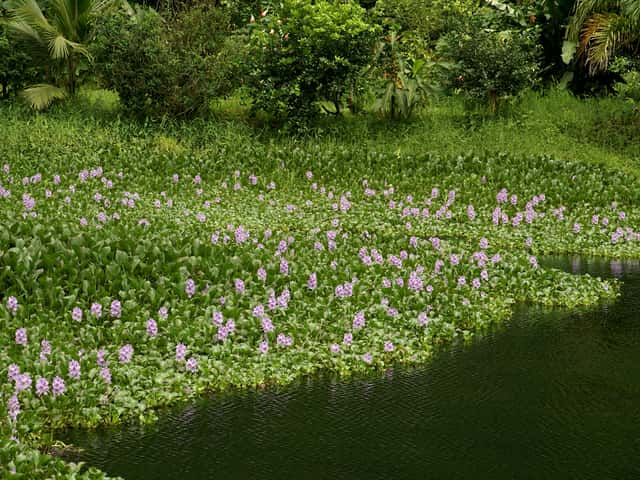
Pontederiaceae
Water Hyacinth: The Stunning Floating Plant from the Amazon
Eichhornia crassipes
Water hyacinth is exceptionally easy to grow. It requires full sun and clean or lightly nutrient-rich water. No substrate is needed — it floats naturally on the water surface. Remove dead or excess plants regularly to prevent overcrowding.
Every 7 days
Direct sun
10° - 34°C
60% - 90%
Categories
What is Water Hyacinth?
Water Hyacinth (Eichhornia crassipes) is a easy-care plant from the Pontederiaceae family. Water hyacinth (Eichhornia crassipes) is a free-floating aquatic plant native to the Amazon basin in South America. Celebrated for its glossy, heart-shaped leaves and delicate lavender-purple orchid-like flowers, it is one of the fastest-growing plants on Earth. While visually stunning as an ornamen...
Water Hyacinth grows up to 1.0m, spread of 150cm, watering every 7 days, 10°C – 34°C, 60–90% humidity. It is not suitable for indoor environments and safe for pets.
Unlike many tropical plants, Water Hyacinth tolerates watering mistakes. Best for beginners. Unlike many popular species, Water Hyacinth is safe to keep around pets.
How to Care for Water Hyacinth?
TLDR: Water Hyacinth needs Direct sun, watering every 7 days, and temperatures between 10-34°C with 60-90% humidity.
How Often Should You Water Water Hyacinth?
As a fully aquatic plant, water hyacinth does not require conventional watering — it lives directly in water. Maintain clean, fresh water with regular renewal to prevent excessive nutrient buildup.
How Much Light Does Water Hyacinth Need?
Water hyacinth needs at least 6 hours of direct sunlight daily for optimal growth and flowering. Indoors, supplement with full-spectrum grow lights. Insufficient light causes yellowing leaves and prevents blooming.
What Is the Best Soil for Water Hyacinth?
No conventional soil substrate required. Grows directly in water with a pH of 5.0–7.5. Prefers still or slow-moving water rich in nutrients. Avoid artificial fertilizers which promote uncontrolled invasive growth.
What Pot Should You Use for Water Hyacinth?
Still or slow-moving water container; ceramic or fiberglass tanks are ideal for controlled ornamental cultivation.
What Is Water Hyacinth and Where Does It Come From?
Water hyacinth (Eichhornia crassipes) is a free-floating aquatic plant native to the Amazon basin in South America. Celebrated for its glossy, heart-shaped leaves and delicate lavender-purple orchid-like flowers, it is one of the fastest-growing plants on Earth. While visually stunning as an ornamental pond plant, it can become highly invasive in natural waterways.
How to Propagate Water Hyacinth?
Stolon Division
Divide in spring or summer for best success rates. Ensure daughter plants have developed roots before separating from the mother.
- 1 Identify healthy daughter plants connected to the mother plant via stolons
- 2 Cut the stolon with clean scissors, ensuring the daughter plant has established roots
- 3 Place the daughter plant directly on the water surface of the new container
Materials needed:
How Big Does Water Hyacinth Grow?
TLDR: Water Hyacinth can reach up to 1.0m tall with Fast growth rate.
Max height
1.0m
Spread
1.5m
Growth rate
Fast
Foliage
Evergreen
Warning: Toxic Plant
This plant can be toxic if ingested. Keep out of reach of:
Plant Uses
Ornamental
Great for decoration
Air Purifying
Improves air quality
Edible
Can be consumed
Medicinal
Medicinal properties
Medicinal Uses
- Used in folk medicine for skin conditions and inflammatory disorders
- Plant extracts show anti-inflammatory and antimicrobial properties in preliminary research studies
Culinary Uses
- Young leaves and petioles can be eaten when cooked
- Flower spikes are also edible when cooked, though mild in flavor
Is your plant showing symptoms?
Click on the symptom to discover possible causes:
What Diseases Commonly Affect Water Hyacinth?
TLDR: Water Hyacinth is susceptible to 5 known diseases. Monitor regularly for early detection.
Cercospora Leaf Spot
Cercospora leaf spot is a common fungal disease caused by Cercospora species that affects many plant types, particularly beets, roses, and leafy vegetables. The disease thrives in warm, humid conditions and can cause significant defoliation, reducing plant vigor and yield. It spreads rapidly through water splash, wind, and contaminated tools.
Leaf Spot
Leaf spot is a common fungal disease caused by various pathogens including Alternaria, Ascochyta, Colletotrichum, Septoria, and Venturia. It primarily affects leaves, causing discolored spots that can lead to premature leaf drop if left untreated.
Root Rot
Root rot is a serious fungal disease that affects the root system of plants, causing them to decay and die. It is primarily caused by overwatering, poor drainage, or soil-borne fungi such as Pythium, Phytophthora, Rhizoctonia, and Fusarium. The disease thrives in waterlogged conditions where roots are deprived of oxygen, making them susceptible to fungal infection.
Soil pH Imbalance
Soil pH imbalance occurs when soil becomes too acidic (low pH < 6.0) or too alkaline (high pH > 7.5), preventing plants from absorbing essential nutrients. The ideal pH range for most plants is 6.5-7.5. When pH is outside this range, nutrients become chemically locked in the soil, leading to deficiency symptoms even when nutrients are present.
Meaning & Symbolism
In South American cultures, water hyacinth symbolizes purity, renewal, and resilience — its ability to bloom even in polluted waters makes it a symbol of transformation and natural adaptability.
Fun Facts
Water hyacinth can double its population in just two weeks under ideal conditions, making it one of the fastest-growing plants on Earth.
Its dense, fibrous roots form underwater habitats that shelter fish, frogs, and aquatic invertebrates.
Water hyacinth seeds can remain viable for over 28 years when submerged or desiccated.
It is widely used in phytoremediation projects to clean industrial effluents and treated wastewater.
Frequently asked questions
Can water hyacinth be grown indoors?
Is water hyacinth toxic to fish?
How often does water hyacinth bloom?
How do I control water hyacinth growth?
Does water hyacinth purify water?
Compare with similar plants
| Attribute | Difficulty | Light | Watering | Pet Safe |
|---|---|---|---|---|
| Field Maple | Easy | Bright indirect | 14d | ✓ |
| Silver Birch | Easy | Direct sun | 14d | ✓ |
| Common Blanketflower | Easy | Direct sun | 10d | ✓ |
| Cushion Bush | Easy | Direct sun | 14d | ✓ |





