Begoniaceae
Wax Begonia (Begonia semperflorens) Complete Care Guide
Begonia semperflorens
Wax Begonia is an easy-care plant ideal for beginners. Water when the top inch of soil dries out, provide bright indirect light or partial shade, and feed monthly during the growing season. Avoid overhead watering and ensure good drainage to prevent fungal diseases.
Every 9 days
Partial shade
10° - 32°C
40% - 70%
Categories
What is Wax Begonia?
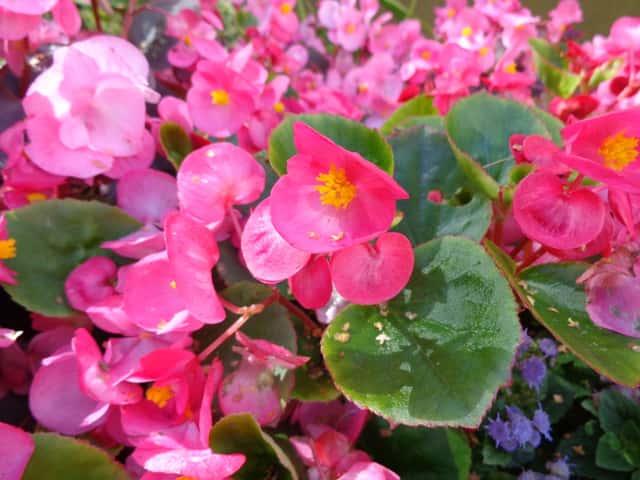
Wax Begonia (Begonia semperflorens) is a easy-care plant from the Begoniaceae family. Begonia semperflorens, commonly known as Wax Begonia, is a compact, mound-forming annual or tender perennial native to South America. It is prized for its continuous bloom throughout spring, summer, and fall, producing cheerful flowers in shades of pink, red, and white. Its glossy, waxy leaves come...
Wax Begonia grows up to 30cm, spread of 30cm, watering every 9 days, 10°C – 32°C, 40–70% humidity. It is suitable for indoor environments and not safe for pets.
Unlike many tropical plants, Wax Begonia tolerates watering mistakes. Best for beginners. Without precautions, ingestion can cause irritation in pets. Keep out of reach of cats and dogs. Without adequate drainage, root rot can develop within 18 days.
How to Care for Wax Begonia?
TLDR: Wax Begonia needs Partial shade, watering every 9 days, and temperatures between 10-32°C with 40-70% humidity.
How Often Should You Water Wax Begonia?
Water every 7-10 days, allowing the top inch of soil to dry between waterings. Avoid overwatering and waterlogged soil, which leads to root rot. Water at the base of the plant to keep foliage dry and reduce risk of fungal diseases.
How Much Light Does Wax Begonia Need?
Wax Begonias prefer bright indirect light or partial shade. They tolerate full sun in cooler climates but appreciate afternoon shade in hot summers. Indoors, place within 3 feet of a well-lit window. Insufficient light reduces flowering.
What Is the Best Soil for Wax Begonia?
Use a well-draining, fertile potting mix with pH between 5.5 and 6.5. Amend with compost or perlite for improved drainage and aeration. Avoid heavy clay soils that retain moisture and promote root rot.
What Pot Should You Use for Wax Begonia?
Terracotta or ceramic pots with drainage holes are ideal. For outdoor bedding, use well-amended garden soil. Avoid large pots that retain excess moisture.
Care Schedule
Fertilize
Every 30 days
Misting
Every 3 days
Repot
Every 365 days
What Is Wax Begonia and Where Does It Come From?
Begonia semperflorens, commonly known as Wax Begonia, is a compact, mound-forming annual or tender perennial native to South America. It is prized for its continuous bloom throughout spring, summer, and fall, producing cheerful flowers in shades of pink, red, and white. Its glossy, waxy leaves come in green or bronze tones, adding ornamental appeal even when not in flower. A popular choice for garden beds, containers, and window boxes, it thrives in a wide range of light conditions.
How to Propagate Wax Begonia?
Stem Cutting
Use clean, sharp scissors. Change water weekly if rooting in water. Maintain warmth above 18°C for best results.
- 1 Take a 7-10 cm cutting just below a leaf node from a healthy stem
- 2 Remove lower leaves and dip the cut end in rooting hormone powder
- 3 Plant in moist, well-draining potting mix or place in a glass of water
- 4 Keep in bright indirect light and maintain moisture until roots develop
- 5 Transplant to a pot once roots are 2-3 cm long
Materials needed:
Seed Propagation
Begonia seeds are very fine. Mix them with sand for even distribution. Keep soil consistently moist but not soggy.
- 1 Sow tiny seeds on the surface of moist seed-starting mix (do not cover)
- 2 Mist gently and cover tray with plastic wrap to retain humidity
- 3 Place in bright indirect light at 21-24°C
- 4 Germination occurs in 2-3 weeks; remove cover once seedlings appear
- 5 Transplant seedlings when they have 2-3 true leaves
Materials needed:
How Big Does Wax Begonia Grow?
TLDR: Wax Begonia can reach up to 30cm tall with Medium growth rate.
Max height
30cm
Spread
30cm
Growth rate
Medium
Foliage
Evergreen
Warning: Toxic Plant
This plant can be toxic if ingested. Keep out of reach of:
Plant Uses
Ornamental
Great for decoration
Is your plant showing symptoms?
Click on the symptom to discover possible causes:
What Diseases Commonly Affect Wax Begonia?
TLDR: Wax Begonia is susceptible to 10 known diseases. Monitor regularly for early detection.
Powdery Mildew
Powdery mildew is a common fungal disease caused by various fungi species including Erysiphe, Podosphaera, Oïdium, and Leveillula. It affects over 10,000 plant species worldwide. The disease thrives in warm, dry climates with high humidity and appears as a distinctive white powdery coating on plant surfaces.
Gray Mold (Botrytis Blight)
Gray mold, caused by the fungus Botrytis cinerea, is one of the most common fungal diseases in plants. It affects over 200 plant species, including ornamentals, vegetables, fruits, and houseplants. The disease thrives in cool, humid conditions with poor air circulation, causing grayish spots and soft rot on infected tissues.
Root Rot
Root rot is a serious fungal disease that affects the root system of plants, causing them to decay and die. It is primarily caused by overwatering, poor drainage, or soil-borne fungi such as Pythium, Phytophthora, Rhizoctonia, and Fusarium. The disease thrives in waterlogged conditions where roots are deprived of oxygen, making them susceptible to fungal infection.
Bacterial Leaf Spot
Bacterial leaf spot is a plant disease caused by bacteria in the Xanthomonas and Pseudomonas genera that affects various ornamental and edible plants. The bacteria infect leaves through wounds or natural openings, causing characteristic lesions that can lead to premature leaf drop and plant weakening.
Meaning & Symbolism
In the language of flowers, Wax Begonia symbolizes gratitude, caution, and warm-hearted generosity. It conveys a sense of resilience and kindness.
Fun Facts
Begonia semperflorens means "always flowering" in Latin — it truly lives up to its name by blooming continuously for months.
Wax Begonias were first described scientifically in 1821 and have been popular garden plants ever since.
The glossy, waxy texture of the leaves is what gives this begonia its common name — and it also helps the plant shed water efficiently.
Bronze-leaved varieties of Wax Begonia are more sun-tolerant than their green-leaved counterparts.
Frequently asked questions
How often should I water my Wax Begonia?
Can Wax Begonia grow indoors?
Is Wax Begonia toxic to cats and dogs?
Why is my Wax Begonia not blooming?
How do I prevent powdery mildew on my Wax Begonia?
Compare with similar plants
| Attribute | Difficulty | Light | Watering | Pet Safe |
|---|---|---|---|---|
| Field Maple | Easy | Bright indirect | 14d | ✓ |
| Silver Birch | Easy | Direct sun | 14d | ✓ |
| Common Blanketflower | Easy | Direct sun | 10d | ✓ |
| Cushion Bush | Easy | Direct sun | 14d | ✓ |





