Onagraceae
White Gaura (Gaura lindheimeri): Complete Care Guide
Gaura lindheimeri
Easy to grow in full sun and well-drained sandy soil. Drought-tolerant once established. Requires minimal care — occasional fertilizing and two annual prunings. Excellent for native gardens, borders, and xeriscaping.
Every 10 days
Direct sun
-18° - 38°C
30% - 60%
Categories
What is White Gaura?
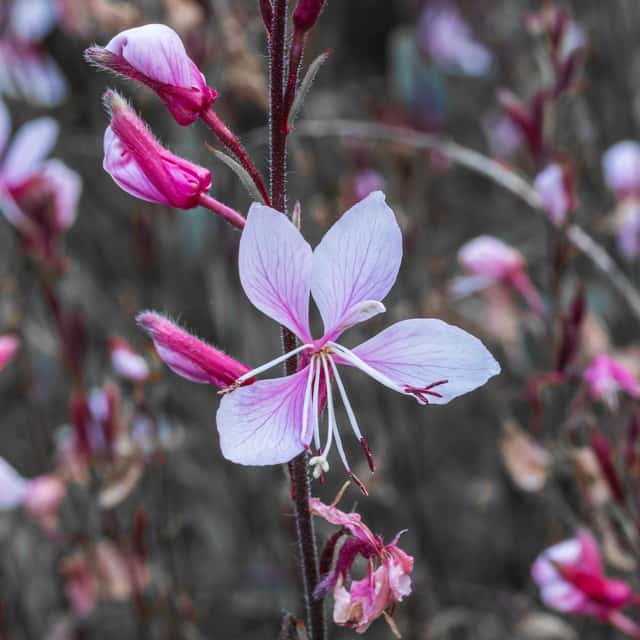
White Gaura (Gaura lindheimeri) is a easy-care plant from the Onagraceae family. Gaura lindheimeri is a graceful perennial native to south-central United States and Mexico, celebrated for its airy white-to-pink flowers that flutter on wiry stems like dancing butterflies. It forms loose, arching clumps 50–150 cm tall, blooming abundantly from spring through first fall frosts.
White Gaura grows up to 1.5m, spread of 100cm, watering every 10 days, -18°C – 38°C, 30–60% humidity. It is not suitable for indoor environments and safe for pets.
Unlike many tropical plants, White Gaura tolerates watering mistakes. Best for beginners. Unlike many popular species, White Gaura is safe to keep around pets.
How to Care for White Gaura?
TLDR: White Gaura needs Direct sun, watering every 10 days, and temperatures between -18-38°C with 30-60% humidity.
How Often Should You Water White Gaura?
Water every 10 days on average, allowing the soil to dry between waterings. Once established, tolerates drought well. Avoid overwatering as this plant is prone to root rot in soggy conditions.
How Much Light Does White Gaura Need?
Prefers full sun with at least 6 hours of direct sunlight daily. Tolerates partial afternoon shade in the hottest climates, but flowers best in full sun.
What Is the Best Soil for White Gaura?
Plant in light, sandy or loamy, well-draining soil with a pH of 6.5–8.5. Avoid rich, fertile soils as they promote leafy growth at the expense of flowers. Heavy clay soils are not suitable.
What Pot Should You Use for White Gaura?
Best in open ground. If container-grown, use large terracotta or porous pots for excellent drainage.
Care Schedule
Fertilize
Every 30 days
What Is White Gaura and Where Does It Come From?
Gaura lindheimeri is a graceful perennial native to south-central United States and Mexico, celebrated for its airy white-to-pink flowers that flutter on wiry stems like dancing butterflies. It forms loose, arching clumps 50–150 cm tall, blooming abundantly from spring through first fall frosts.
How to Propagate White Gaura?
Seed sowing
The straight species can be grown from seed; cultivars must be propagated vegetatively to preserve their characteristics.
- 1 Sow seeds in spring in light, moist seed-starting mix
- 2 Maintain temperature between 18–22°C
- 3 Transplant seedlings when they have 4–6 true leaves
Materials needed:
Stem cutting
Use clean, sharp tools. Avoid excessive misting as it can trigger fungal disease.
- 1 Take semi-woody basal cuttings 8–10 cm long in early spring
- 2 Remove lower leaves and apply rooting hormone
- 3 Plant in moist, well-draining medium and maintain high humidity
Materials needed:
Division
Division rejuvenates the plant and encourages fresh blooming.
- 1 Divide clumps in spring or fall
- 2 Carefully separate roots with a sharp knife
- 3 Replant divisions immediately in prepared soil
Materials needed:
How Big Does White Gaura Grow?
TLDR: White Gaura can reach up to 1.5m tall with Medium growth rate.
Max height
1.5m
Spread
1.0m
Growth rate
Medium
Foliage
Deciduous
Plant Uses
Ornamental
Great for decoration
Ground Cover
Soil coverage
Is your plant showing symptoms?
Click on the symptom to discover possible causes:
What Diseases Commonly Affect White Gaura?
TLDR: White Gaura is susceptible to 11 known diseases. Monitor regularly for early detection.
Root Rot
Root rot is a serious fungal disease that affects the root system of plants, causing them to decay and die. It is primarily caused by overwatering, poor drainage, or soil-borne fungi such as Pythium, Phytophthora, Rhizoctonia, and Fusarium. The disease thrives in waterlogged conditions where roots are deprived of oxygen, making them susceptible to fungal infection.
Powdery Mildew
Powdery mildew is a common fungal disease caused by various fungi species including Erysiphe, Podosphaera, Oïdium, and Leveillula. It affects over 10,000 plant species worldwide. The disease thrives in warm, dry climates with high humidity and appears as a distinctive white powdery coating on plant surfaces.
Rust
Rust is a common fungal disease caused by fungi in the order Pucciniales that affects a wide variety of plants. The disease gets its name from the characteristic orange, yellow, or reddish-brown pustules that appear on leaves, resembling metal rust. This obligate fungal parasite requires living plants to survive and can cause significant economic losses in agricultural crops.
Leaf Spot
Leaf spot is a common fungal disease caused by various pathogens including Alternaria, Ascochyta, Colletotrichum, Septoria, and Venturia. It primarily affects leaves, causing discolored spots that can lead to premature leaf drop if left untreated.
Meaning & Symbolism
Symbolizes lightness, freedom, and graceful movement — like butterflies dancing in the breeze.
Fun Facts
The flowers open white and gradually age to soft pink, creating a lovely bicolor effect on the same plant.
White Gaura can bloom continuously for 5–6 months, from late spring through the first fall frost.
Its deep taproot makes it remarkably drought-tolerant and frost-hardy, surviving temperatures down to -18°C.
The common name "Whirling Butterflies" captures the enchanting way its flowers flutter in the slightest breeze.
Frequently asked questions
How often should I water White Gaura?
Does White Gaura need full sun?
Is White Gaura toxic to pets?
When should I prune White Gaura?
Can White Gaura grow in containers?
Compare with similar plants
| Attribute | Difficulty | Light | Watering | Pet Safe |
|---|---|---|---|---|
| Small Scabious | Easy | Direct sun | 7d | ✓ |
| Field Maple | Easy | Bright indirect | 14d | ✓ |
| Silver Birch | Easy | Direct sun | 14d | ✓ |
| Red valerian | Easy | Direct sun | 10d | ✓ |



