Asparagaceae
Spineless Yucca: Edible Plant
Yucca gigantea
Spineless Yucca is one of the easiest large houseplants to maintain. It thrives in bright light, needs infrequent watering, and tolerates neglect better than most plants. Water only when the soil is dry, place it near a bright window, and use a free-draining sandy or perlite-heavy mix. Fertilise lightly in spring and summer. Repot every 2–3 years or when roots become crowded. Keep away from pets and children as all plant parts are mildly toxic if ingested.
Every 14 days
Bright indirect
7° - 38°C
20% - 50%
Categories
What is Spineless Yucca?
Spineless Yucca (Yucca gigantea) is a easy-care plant from the Asparagaceae family. Yucca gigantea, commonly known as Spineless Yucca or Giant Yucca, is a striking large-stemmed tree native to Central America (Mexico, Guatemala, Belize, Honduras). Unlike most yuccas, its leaves have soft, flexible tips making it safer to handle. Grown indoors it forms a dramatic architectural focal...
Spineless Yucca grows up to 9.0m, spread of 760cm, watering every 14 days, 7°C – 38°C, 20–50% humidity. It is suitable for indoor environments and not safe for pets.
Unlike many tropical plants, Spineless Yucca tolerates watering mistakes. Best for beginners. Without precautions, ingestion can cause irritation in pets. Keep out of reach of cats and dogs. Without adequate drainage, root rot can develop within 28 days.
How to Care for Spineless Yucca?
TLDR: Spineless Yucca needs Bright indirect, watering every 14 days, and temperatures between 7-38°C with 20-50% humidity.
How Often Should You Water Spineless Yucca?
Water thoroughly and then allow the soil to dry out completely before watering again — typically every 10–21 days depending on season and light levels. In winter, reduce watering to once a month or less. Never let the plant sit in standing water as root rot is the main killer of yuccas. Always check the top 5 cm of soil; if still moist, wait.
How Much Light Does Spineless Yucca Need?
Provide the brightest light possible. A south- or west-facing window with direct sun for several hours a day is ideal. Spineless Yucca can adapt to medium indirect light but growth slows and the trunk may lean toward the light source. Avoid very dark corners. Outdoors, full sun (6+ hours) produces the fastest growth and best form.
What Is the Best Soil for Spineless Yucca?
Use a very well-draining mix — a blend of 1 part general potting soil and 3 parts coarse perlite or horticultural sand works perfectly. Heavy, moisture-retaining soils lead to root rot. The pH should be slightly acidic to neutral (6.0–7.5). A terra cotta pot with drainage holes is recommended to help wick away excess moisture.
Care Schedule
Fertilize
Every 60 days
Rotate
Every 14 days
Repot
Every 730 days
What Is Spineless Yucca and Where Does It Come From?
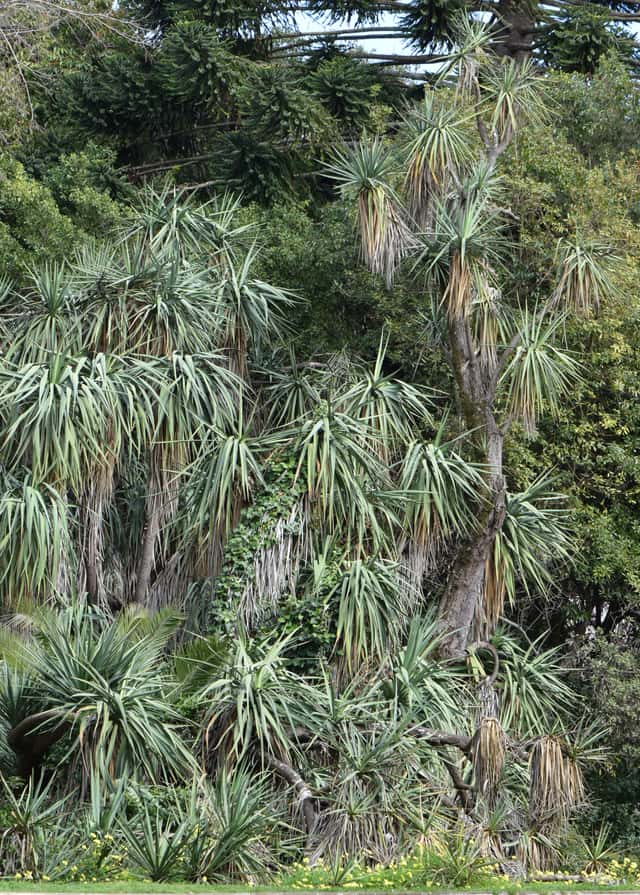
Yucca gigantea, commonly known as Spineless Yucca or Giant Yucca, is a striking large-stemmed tree native to Central America (Mexico, Guatemala, Belize, Honduras). Unlike most yuccas, its leaves have soft, flexible tips making it safer to handle. Grown indoors it forms a dramatic architectural focal point with rosettes of long, arching green leaves atop thick, sculptural trunks. Outdoors in warm climates it can reach 9 m or more and produces tall panicles of creamy-white bell-shaped flowers in summer. It is prized for its drought tolerance, low maintenance needs, and bold tropical aesthetic.
How Big Does Spineless Yucca Grow?
TLDR: Spineless Yucca can reach up to 9.0m tall with Slow growth rate.
Max height
9.0m
Spread
7.6m
Growth rate
Slow
Foliage
Evergreen
Warning: Toxic Plant
This plant can be toxic if ingested. Keep out of reach of:
Plant Uses
Ornamental
Great for decoration
Air Purifying
Improves air quality
Edible
Can be consumed
Is your plant showing symptoms?
Click on the symptom to discover possible causes:
What Diseases Commonly Affect Spineless Yucca?
TLDR: Spineless Yucca is susceptible to 12 known diseases. Monitor regularly for early detection.
Root Rot
Root rot is a serious fungal disease that affects the root system of plants, causing them to decay and die. It is primarily caused by overwatering, poor drainage, or soil-borne fungi such as Pythium, Phytophthora, Rhizoctonia, and Fusarium. The disease thrives in waterlogged conditions where roots are deprived of oxygen, making them susceptible to fungal infection.
Leaf Spot
Leaf spot is a common fungal disease caused by various pathogens including Alternaria, Ascochyta, Colletotrichum, Septoria, and Venturia. It primarily affects leaves, causing discolored spots that can lead to premature leaf drop if left untreated.
Mealybugs
Mealybugs are small, soft-bodied insects covered with a white, waxy, cottony material. They are common pests of houseplants and outdoor plants in mild climates. These sap-sucking insects feed on plant tissue, causing damage, stunted growth, and can lead to plant death if left untreated. They produce sticky honeydew which attracts sooty mold.
Scale Insects
Scale insects are small sap-sucking pests that appear as brown, shell-like bumps on plant stems and leaves. There are over 25 species, divided into armored (hard) and unarmored (soft) scales. They feed by piercing plant tissue and extracting sap, which weakens the plant and can lead to yellowing, stunted growth, and even death if left untreated. They also excrete honeydew, which attracts ants and promotes sooty mold growth.
Compare with similar plants
| Attribute | Difficulty | Light | Watering | Pet Safe |
|---|---|---|---|---|
| Field Maple | Easy | Bright indirect | 14d | ✓ |
| Silver Birch | Easy | Direct sun | 14d | ✓ |
| Cushion Bush | Easy | Direct sun | 14d | ✓ |
| Peruvian peppertree | Easy | Direct sun | 14d | ⚠️ |





