Ericaceae
Azalea: Complete Care Guide
Rhododendron simsii
Azaleas require regular watering to keep the soil moist but not waterlogged, and they prefer bright indirect light. It is a moderate-care plant that benefits from high humidity and mild temperatures.
Every 3 days
Partial shade
10° - 22°C
50% - 70%
Categories
What is Azalea?
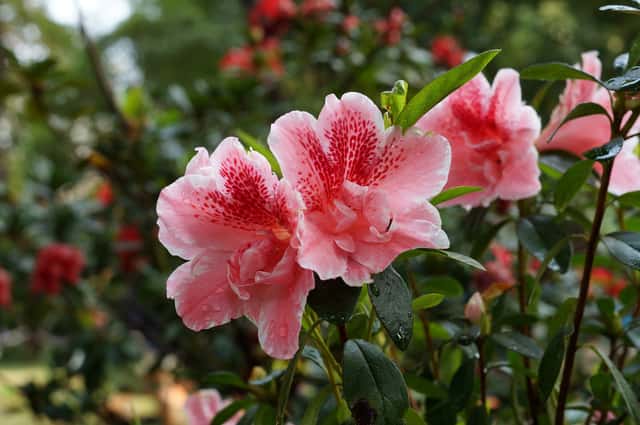
Azalea (Rhododendron simsii) is a medium-care plant from the Ericaceae family. Rhododendron simsii, commonly known as Azalea, is a perennial flowering shrub highly valued for its vibrant blooms and dense foliage. Native to Asia, it is widely cultivated as an ornamental plant, both in gardens and pots, especially in temperate to subtropical climates. Its flowers, which appear i...
Azalea grows up to 1.5m, spread of 150cm, watering every 3 days, 10°C – 22°C, 50–70% humidity. It is suitable for indoor environments and not safe for pets.
Without precautions, ingestion can cause irritation in pets. Keep out of reach of cats and dogs. Without adequate drainage, root rot can develop within 7 days.
How to Care for Azalea?
TLDR: Azalea needs Partial shade, watering every 3 days, and temperatures between 10-22°C with 50-70% humidity.
How Often Should You Water Azalea?
Keep the soil consistently moist, but avoid waterlogging. Check the soil moisture with your finger before watering again. Use chlorine-free water if possible.
How Much Light Does Azalea Need?
Prefers bright indirect light. Avoid strong direct sun, especially during the hottest hours of the day, as it can burn the leaves and flowers. Indoors, place near a curtained window or in a spot with filtered light.
What Is the Best Soil for Azalea?
Use a well-draining, acidic substrate rich in organic matter. A mix for azaleas or rhododendrons is ideal, or a combination of peat moss, pine bark, and coarse sand.
What Pot Should You Use for Azalea?
Ceramic or terracotta pots are ideal as they allow for good aeration and drainage. Ensure the pot has adequate drainage holes.
Care Schedule
Fertilize
Every 14 days
Rotate
Every 30 days
Repot
Every 730 days
What Is Azalea and Where Does It Come From?
Rhododendron simsii, commonly known as Azalea, is a perennial flowering shrub highly valued for its vibrant blooms and dense foliage. Native to Asia, it is widely cultivated as an ornamental plant, both in gardens and pots, especially in temperate to subtropical climates. Its flowers, which appear in profusion, can vary in colors and shapes, adding a spectacular touch to any environment.
How to Propagate Azalea?
Stem Cutting Propagation
- Maintain high humidity around the cuttings.
- Avoid direct sun to prevent the cuttings from dehydrating.
- Use a sterile substrate to prevent diseases.
- 1 Prepare the Cutting
Cut a 4-6 inch (10-15 cm) cutting from a healthy, non-flowering branch, just below a node. Remove the lower leaves.
- 2 Apply Rooting Hormone
Dip the cut end of the cutting into rooting hormone powder or gel.
- 3 Plant the Cutting
Plant the cutting in a moist, well-drained substrate (a mix of peat moss and perlite is ideal). Cover with a plastic bag or dome to maintain humidity.
- 4 Care and Rooting
Keep the substrate moist and in a location with indirect light. Rooting usually occurs in 6 to 12 weeks.
Materials needed:
How Big Does Azalea Grow?
TLDR: Azalea can reach up to 1.5m tall with Slow growth rate.
Max height
1.5m
Spread
1.5m
Growth rate
Slow
Foliage
Evergreen
Warning: Toxic Plant
This plant can be toxic if ingested. Keep out of reach of:
Plant Uses
Ornamental
Great for decoration
Is your plant showing symptoms?
Click on the symptom to discover possible causes:
What Diseases Commonly Affect Azalea?
TLDR: Azalea is susceptible to 10 known diseases. Monitor regularly for early detection.
Leaf Spot
Leaf spot is a common fungal disease caused by various pathogens including Alternaria, Ascochyta, Colletotrichum, Septoria, and Venturia. It primarily affects leaves, causing discolored spots that can lead to premature leaf drop if left untreated.
Phytophthora Root Rot
Disease caused by fungus-like organisms (oomycetes) that live in soil and can survive for years. It affects roots, stem, and crown of plants, being especially severe in waterlogged or poorly drained soils. It is the second most common cause of root rot in trees and shrubs.
Iron Deficiency
Iron deficiency, commonly known as iron chlorosis, is a nutrient deficiency disorder where plants cannot access sufficient iron from the soil. While iron is typically abundant in soil, various soil conditions can limit plant uptake, resulting in characteristic yellowing of leaves while veins remain green.
Powdery Mildew
Powdery mildew is a common fungal disease caused by various fungi species including Erysiphe, Podosphaera, Oïdium, and Leveillula. It affects over 10,000 plant species worldwide. The disease thrives in warm, dry climates with high humidity and appears as a distinctive white powdery coating on plant surfaces.
Meaning & Symbolism
The Azalea symbolizes love, passion, elegance, and abundance. In some cultures, it also represents homesickness and family care.
Compare with similar plants
| Attribute | Difficulty | Light | Watering | Pet Safe |
|---|---|---|---|---|
| Dark Fieldcap | Medium | Low light | 2d | ⚠️ |
| Muriel's Bamboo | Medium | Partial shade | 3d | ✓ |
| Bougainvillea | Medium | Direct sun | 7d | ⚠️ |
| Wild Lettuce | Medium | Direct sun | 7d | ⚠️ |



