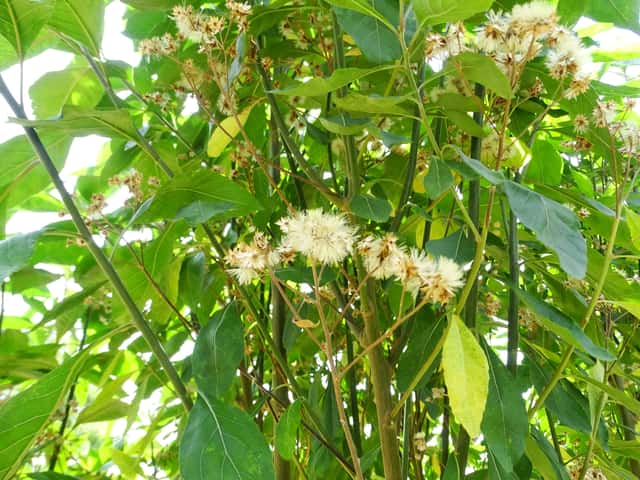
Asteraceae
Bitter Leaf (Gymnanthemum amygdalinum): Complete Growing Guide
Gymnanthemum amygdalinum
Hardy and easy to grow. Prefers full sun and well-drained soil. Drought-tolerant once established. Prune occasionally to encourage new growth and tender leaves. Best suited for outdoor cultivation in tropical and subtropical climates.
Every 18 days
Direct sun
16° - 35°C
50% - 80%
Categories
What is Bitter Leaf?
Bitter Leaf (Gymnanthemum amygdalinum) is a easy-care plant from the Asteraceae family. Bitter Leaf (Gymnanthemum amygdalinum) is a perennial shrub native to tropical Africa, widely cultivated for its edible and medicinal leaves. Known for its characteristic bitter flavor, it is a traditional vegetable in many African cuisines and holds well-documented therapeutic properties. It can re...
Bitter Leaf grows up to 8.0m, spread of 700cm, watering every 18 days, 16°C – 35°C, 50–80% humidity. It is not suitable for indoor environments and safe for pets.
Unlike many tropical plants, Bitter Leaf tolerates watering mistakes. Best for beginners. Unlike many popular species, Bitter Leaf is safe to keep around pets.
How to Care for Bitter Leaf?
TLDR: Bitter Leaf needs Direct sun, watering every 18 days, and temperatures between 16-35°C with 50-80% humidity.
How Often Should You Water Bitter Leaf?
Water every 15-20 days, allowing soil to dry between waterings. Once established, it tolerates drought well. Avoid waterlogging to prevent root rot.
How Much Light Does Bitter Leaf Need?
Requires full sun to thrive. Plant in a location with direct sunlight for at least 6-8 hours per day. Does not tolerate shade.
What Is the Best Soil for Bitter Leaf?
Prefers well-drained, humus-rich soil. Adapts to sandy, clay, and loamy soils. Ideal pH between 5.5 and 7.5.
What Pot Should You Use for Bitter Leaf?
Large terracotta or polyethylene pot for container growing; ideally plant directly in the garden or vegetable plot.
What Is Bitter Leaf and Where Does It Come From?
Bitter Leaf (Gymnanthemum amygdalinum) is a perennial shrub native to tropical Africa, widely cultivated for its edible and medicinal leaves. Known for its characteristic bitter flavor, it is a traditional vegetable in many African cuisines and holds well-documented therapeutic properties. It can reach up to 8 meters tall under ideal conditions.
How to Propagate Bitter Leaf?
Hardwood Stem Cutting
Use mature wood cuttings for best success rates. Keep substrate slightly moist but not waterlogged.
- 1 Cut a semi-hardwood stem 15-20 cm long with 3-4 nodes
- 2 Remove lower leaves, leaving only 2-3 at the top
- 3 Dip the base in rooting hormone powder
- 4 Plant in moist, well-drained substrate
- 5 Keep in partial shade until roots establish
Materials needed:
Seed Sowing
Fresh seeds germinate best. Keep substrate evenly moist during germination.
- 1 Sow fresh seeds in moist substrate
- 2 Cover lightly with a thin layer of substrate
- 3 Keep in a warm, humid location (20-26°C)
- 4 Transplant seedlings when they have 4-6 true leaves
Materials needed:
How Big Does Bitter Leaf Grow?
TLDR: Bitter Leaf can reach up to 8.0m tall with Medium growth rate.
Max height
8.0m
Spread
7.0m
Growth rate
Medium
Foliage
Evergreen
Plant Uses
Edible
Can be consumed
Medicinal
Medicinal properties
Medicinal Uses
- Fever and malaria treatment
- Digestive aid
- Anti-inflammatory
- Treatment of hepatitis and intestinal parasites
- Natural antioxidant
Culinary Uses
- Young leaves sautéed as a vegetable
- Ingredient in African soups and stews
- Juice from pounded leaves
- Dried leaves as a seasoning
Is your plant showing symptoms?
Click on the symptom to discover possible causes:
What Diseases Commonly Affect Bitter Leaf?
TLDR: Bitter Leaf is susceptible to 5 known diseases. Monitor regularly for early detection.
Root Rot
Root rot is a serious fungal disease that affects the root system of plants, causing them to decay and die. It is primarily caused by overwatering, poor drainage, or soil-borne fungi such as Pythium, Phytophthora, Rhizoctonia, and Fusarium. The disease thrives in waterlogged conditions where roots are deprived of oxygen, making them susceptible to fungal infection.
Leaf Spot
Leaf spot is a common fungal disease caused by various pathogens including Alternaria, Ascochyta, Colletotrichum, Septoria, and Venturia. It primarily affects leaves, causing discolored spots that can lead to premature leaf drop if left untreated.
Powdery Mildew
Powdery mildew is a common fungal disease caused by various fungi species including Erysiphe, Podosphaera, Oïdium, and Leveillula. It affects over 10,000 plant species worldwide. The disease thrives in warm, dry climates with high humidity and appears as a distinctive white powdery coating on plant surfaces.
Overwatering
Overwatering occurs when plants receive too much water, depriving roots of oxygen and causing root rot. This environmental stress is one of the most common causes of houseplant death, as waterlogged soil prevents roots from breathing and functioning properly.
Meaning & Symbolism
In African traditional medicine, it symbolizes health, longevity, and purification. The bitter taste represents resilience and vital strength.
Fun Facts
Called the 'people's medicine' in several African countries for its widely known medicinal properties
Chimpanzees in the wild chew the bitter leaves to treat intestinal parasites, a behavior documented by researchers
Despite its intense bitter taste, it is one of the most consumed leafy vegetables in West and Central Africa
The species was renamed from Vernonia amygdalina to Gymnanthemum amygdalinum following a taxonomic revision in 2011
Frequently asked questions
How often should I water Bitter Leaf?
Can Bitter Leaf be grown in a pot?
Are Bitter Leaf leaves toxic?
How do I prune Bitter Leaf?
What are the main medicinal benefits of Bitter Leaf?
Compare with similar plants
| Attribute | Difficulty | Light | Watering | Pet Safe |
|---|---|---|---|---|
| Field Maple | Easy | Bright indirect | 14d | ✓ |
| Silver Birch | Easy | Direct sun | 14d | ✓ |
| Common Blanketflower | Easy | Direct sun | 10d | ✓ |
| Cushion Bush | Easy | Direct sun | 14d | ✓ |





